Podcast
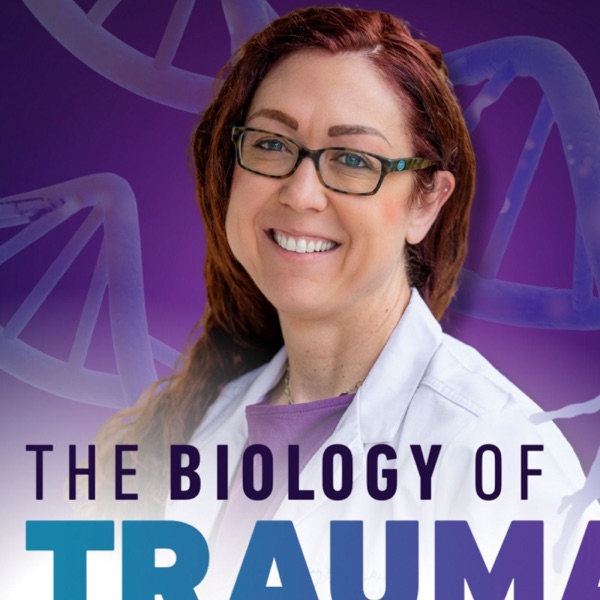
The Biology of Trauma® With Dr. Aimie
People are done dancing around the topic of trauma. They're ready to face this square-on. None
of the current systems are getting to the root of the issue in the current model. Their biology has
been affected on a cellular level, and that is now what's preventing the important work that
they're trying to do.
The Biology of Trauma® podcast is the missing piece to that puzzle. It's a practical living manual for the human body in a modern, traumatizing world. Join your host, Dr. Aimie Apigian—a medical physician and expert in attachment, trauma, and addiction—as she challenges outdated trauma paradigms and introduces a new model for healing.
- Mental Health chart
- #110
- Episodes
- 252
- Releases
- Weekly
- Typical length
- 29 min
- On air since
- 2022
- Latest episode
- 9 hours ago
Episodes
252 episodes, newest first
-
22 min
Stuck in Functional Freeze? Start With Small Doses of Safety
Episode 204
Show notes
You push yourself through every day, and the push never gets easier.
What will surprise you is that the way out of functional freeze starts smaller than you think, and that safety itself can feel scary at first.
In this solo episode, Dr. Aimie explains why the body holds on to a freeze response, why we cannot think our way out of it, and the order the body follows to come back out: safety, support, then expansion.
She walks you through a one-minute microdosing safety practice, explains why too much safety too fast can bring rebound anxiety, and shares how to give your freeze short, planned time instead of fighting it.
WHAT YOU'LL LEARN:
• 00:00 How do you get out of functional freeze?
• 00:59 What is functional freeze?
• 03:02 Why doesn't the freeze go away on its own?
• 05:32 Safety, support, then expansion
• 07:15 A microdosing safety practice
• 11:44 Why feeling safe can feel scary
• 15:31 Stop fighting the freeze
• 19:21 How to practice a full collapse"For a nervous system that has been in fear its whole life, bringing it a moment of safety can feel scary." ~ Dr. Aimie Apigian
If you are always pushing through and can't seem to rest, this episode is for you.
RESOURCES:
• Take the free 2-Minute Assessment for Stored Trauma and find out which pattern of stored trauma your body has been running.
• Get The Biology of Trauma book. Chapter 12, "The Map and Framework for the Journey."This episode is educational and is not medical advice. Please work with your own qualified healthcare provider for decisions about your care.
-
29 min
How Do I Get Out of Freeze When I'm Afraid of It?
Episode 203
Show notes
You push through every day, and an exhaustion stays underneath.
What will surprise you is that the fear of the freeze is often what keeps you in it, and that the way out starts with letting the body move through it.
In this solo episode, Dr. Aimie answers a question she hears nearly every week: how do I get out of freeze when I'm afraid of it? She explains functional freeze, a trauma response that never completed, and how we override it with caffeine, busyness, sugar and stress.
She shares how she lived in functional freeze as a resident physician, why pushing through drains the tank, how she learned to stop fearing her own freeze, and what to do if you are in a shutdown right now.
WHAT YOU'LL LEARN:
• 00:00 How do I get out of freeze when I’m afraid of it?
• 01:33 How to recognize functional freeze
• 03:17 The gas pedal and the emergency brake
• 07:22 Why we push through
• 09:00 How pushing through leads to chronic illness
• 10:54 The fear of the freeze
• 15:10 How I stopped fearing my own freeze
• 19:37 Uncoupling the fear from the freeze
• 24:32 What changes when you stop pushing
• 25:57 If you are in a shutdown right now"Freeze is one layer. The fear of the freeze is a second layer. And that second layer is often what keeps us stuck." ~ Dr. Aimie Apigian
If you are always pushing through and always exhausted underneath it, this episode is for you.
RESOURCES:
• Take the free 2-Minute Assessment for Stored Trauma and find out which pattern of stored trauma your body has been running.
• Get The Biology of Trauma book. Chapter 12, "The Map and Framework for the Journey."This episode is educational and is not medical advice. Please work with your own qualified healthcare provider for decisions about your care.
-
26 min
Why Am I Lonely but Too Tired to Socialize?
Episode 202
Show notes
You can feel lonely and still not want to be around anyone.
What will surprise you is that inflammation itself can create a feeling of disconnection, and loneliness feeds that inflammation back.
In this solo episode, Dr. Aimie answers a question from a participant in her practitioner training: why do I feel lonely, but also not want to be around people? She explains the difference between being alone and feeling lonely, why healthy habits did not offset the health cost of loneliness in a study of 277,489 adults, and how stored trauma creates a part that hides and a part that craves connection.
She walks through the loop between loneliness and inflammation, and what to do as the holidays come closer, whether you are with family, with friends or on your own: blood sugar, sleep, a containment hug and words of support for the lonely part of you.
WHAT YOU'LL LEARN:
• 00:00 – 03:12 Being Alone vs Feeling Lonely
• 03:12 – 06:19 Why Healthy Habits Don’t Offset Loneliness
• 06:19 – 08:56 Stepping Back From Family
• 08:56 – 11:58 Low Energy, Inflammation and Disconnection
• 11:58 – 14:39 The Loneliness-Inflammation Loop
• 14:39 – 18:15 Blood Sugar and Comfort Foods
• 18:15 – 20:56 Sleep and the Containment Hug
• 20:56 – 24:23 What to Say to the Lonely Part
• 24:23 – 26:01 Stress Loneliness or Trauma Loneliness?"I'm not trying to make the loneliness go away. I'm trying to make the loneliness know that it actually isn't all alone." ~ Dr. Aimie Apigian
If you feel lonely but too tired to be around people, or you have stepped back from family on your healing journey, this episode is for you.
RESOURCES:
• Get the free Stress or Trauma Guide and learn whether your nervous system has been running a stress response or a trauma response.
• Get The Biology of Trauma book. Chapter 9 describes the pattern of disconnection.This episode is educational and is not medical advice. Please work with your own qualified healthcare provider for decisions about your care.
-
31 min
Can Early Life Stress Show Up in My Gut? Dr. Emeran Mayer
Episode 201
Show notes
A hard start in life can still be shaping your gut decades later.
What will surprise you is that your gut microbes can sense when you are stressed, and they change how they treat your gut wall.
Dr. Aimie speaks with Dr. Emeran Mayer, gastroenterologist, neuroscientist and Distinguished Research Professor at UCLA, about how early life stress reaches the gut, the immune system and the brain. He explains increased stress responsiveness, his term for how a difficult birth or childhood becomes biology, and why it does not mean you are doomed.
They also talk about why brain fog may start in the gut, the mucus layer that protects the gut wall, and the foods that help it, from diverse fiber to fermented foods.
WHAT YOU'LL LEARN:
• 00:00 – 00:38 Introduction
• 00:38 – 02:44 The First 1,000 Days
• 02:44 – 06:31 Early Stress Doesn't Mean You're Doomed
• 06:31 – 08:44 Hard Births and Stress Responsiveness
• 08:44 – 10:56 How Early Stress Shows Up in the Gut
• 10:56 – 14:27 Your Gut Microbes Can Sense Stress
• 14:27 – 17:28 From Gut to Brain: LPS and Brain Fog
• 17:28 – 19:17 The Gut's Protective Mucus Layer
• 19:17 – 21:42 The Interconnected Plate
• 21:42 – 24:01 Why Food Diversity Matters
• 24:01 – 26:46 Foods That Protect the Mucus Layer
• 26:46 – 30:13 Dr. Mayer's Key Message
• 30:13 – 31:12 Closing Reflection and Stress or Trauma Guide"When a gut microbe is exposed to the stress hormone norepinephrine, it changes its genes and becomes more aggressive toward the bowel wall." ~ Dr. Emeran Mayer
If you had a difficult birth or a stressful childhood and have lived with gut symptoms or brain fog for years, this episode is for you.
RESOURCES:
• Get the free Stress or Trauma Guide and learn the physical difference between a stress response and a trauma response in under two minutes.
• Get The Biology of Trauma book. Chapter 11 explains how early life shapes the filter through which the body meets every later stress.
• The Mind-Gut Connection by Dr. Emeran Mayer.This episode is educational and is not medical advice. Please work with your own qualified healthcare provider for decisions about your care.
-
23 min
Can I Safely Feel Emotions I Buried? Dr. Howard Schubiner
Episode 200
Show notes
Emotions held down for decades are still shaping your body.
What will surprise you is that the way back can start very small, even with one finger.
This is Part 2 of a two-part conversation. Part 1 is here.
➡Trauma Pattern Quiz: https://draimie.co/4jIXc9V
Dr. Aimie continues her conversation with Dr. Howard Schubiner, internist, Clinical Professor at Michigan State and an early mentor of hers. He describes what changes in the body when an emotion held down for decades is finally felt and expressed, and why safety and self-compassion make that possible.
They talk about why neuroplastic symptoms are reversible, how compassion, curiosity and calm answer the question pain is asking, and where to start when your capacity is very low.
WHAT YOU'LL LEARN:
• 00:00 What changes when buried emotions are finally felt?
• 01:14 What does it mean that neuroplastic symptoms are reversible?
• 03:36 How does the nervous system learn its default response?
• 04:31 What changes in the body when emotions are expressed?
• 07:15 How do you make it safe to feel buried emotions?
• 10:37 How can compassion, curiosity and calm change pain?
• 13:49 Where do you start when capacity is very low?
• 18:23 How do you train the nervous system with patience?
• 20:45 Why ask whether your symptoms are neuroplastic?
• 22:29 How can you see your own patterns of stored emotions?"Sadness turns right into compassion. Anger gets expressed, and you let it go." ~ Dr. Howard Schubiner
If you have held your emotions down for years and wonder whether it is safe to feel them, this episode is for you.
RESOURCES:
• Take the free 2-Minute Assessment for Stored Trauma and see which patterns of stored trauma are most active for you.
• Get The Biology of Trauma book. Chapter 3 explains capacity and the critical line of overwhelm.
• Unlearn Your Pain by Dr. Howard Schubiner.
• The Foundational Journey, a clear path for stabilizing your internal state and nervous system.This episode is educational and is not medical advice. Please work with your own qualified healthcare provider for decisions about your care.
-
20 min
Is My Pain Coming From My Brain? Dr. Howard Schubiner
Episode 199
Show notes
Pain that no test has fully explained is still real pain.
What will surprise you is that the brain decides whether to turn on pain, and it treats emotional danger from childhood or from an unjust world as danger.
This is Part 1 of a two-part conversation
Dr. Aimie welcomes back Dr. Howard Schubiner, internist, Clinical Professor at Michigan State and author of Unlearn Your Pain. He describes how a child who learned to keep the peace grows into an adult whose brain still reacts to everyday stress as danger, and why he sees racism and injustice as sources of pain.
They talk about why chronic pain, fatigue and POTS keep rising while the body has not changed, why neuroplastic symptoms are real and reversible, and how someone with rheumatoid arthritis can carry both structural and neuroplastic pain.
WHAT YOU’LL LEARN:
• 00:00 Why would the brain create pain?
• 02:02 Can emotional pain cause physical pain?
• 04:23 How does a childhood without safety become pain later?
• 07:32 Can racism and injustice cause chronic pain?
• 10:08 Why are chronic pain, fatigue and POTS becoming more common?
• 14:37 Can rheumatoid arthritis pain be neuroplastic?
• 18:27 How can the nervous system learn it is safe?“Not all pain is due to injury. It’s our job to sort it out because emotional pain can cause physical pain, and that’s a fact. And that’s how we’re wired.” ~ Dr. Howard Schubiner
If you live with pain that no test has fully explained, this episode is for you.
RESOURCES:
• Take the free 2-Minute Assessment for Stored Trauma and see which patterns of stored trauma are most active for you.
• Get The Biology of Trauma book.
• Unlearn Your Pain by Dr. Howard Schubiner.
• The Foundational Journey, a clear path for stabilizing your internal state and nervous system.This episode is educational and is not medical advice. Please work with your own qualified healthcare provider for decisions about your care.
-
27 min
Where Do I Start With Flaring Mast Cells? Dr. Bruce Hoffman
Episode 198
Show notes
You react to everything. You want to find the cause and get rid of it.
What will surprise you is that the most common place people start, binders, chelation or a mold detox, may be the very thing that makes a reactive body worse.
This is Part 2 of a two-part conversation. Part 1 is here:Apple ·Spotify ·show notes.
Dr. Aimie and Dr. Bruce Hoffman talk about where to start when the body reacts to everything. Dr. Hoffman shares the order he used for 30 years with his most complex patients: safety first, then daylight and natural rhythms, self-regulation, POTS, and then calming the mast cells, with binders, chelation and mold treatment much later.
They also cover which medications calm mast cells, why supplements alone rarely do, how to tell a Herxheimer reaction from a mast cell reaction, and why mast cell labs so often come back normal.
WHAT YOU'LL LEARN:
• 00:00 Where do you start when your body reacts to everything?
• 02:57 Why does safety come first for highly reactive patients?
• 04:03 What are the health cycle principles?
• 06:48 What order did Dr. Hoffman use with his most complex patients?
• 08:11 How do you stabilize mast cells beyond histamine?
• 10:50 Can supplements stabilize mast cells?
• 12:45 Why not start with binders or antibiotics?
• 16:19 Herxheimer or mast cell reaction: how can you tell?
• 19:29 What is a therapeutic trial?
• 21:11 Why wait 3 to 6 months before chelation?"I never approached the toxic load until I've got them stabilized in the health cycle principles, self-regulation, POTS, and mast cells." — Dr. Bruce Hoffman
If you have tried detox after detox and your body only gets more reactive, this episode is for you.
RESOURCES:
• Get the free Companion Guide to Mast Cell Reactivity. Every term and medication from this conversation explained in plain words, in the order it comes up. [Swap for the tracked Apple show notes link, campaign ep198-stabilize-mast-cells, needs a Lead Magnet Inventory row]
• Get The Biology of Trauma book. Chapter 12 lays out the biology lens that follows this same sequence. [VERIFY chapter]
• Dr. Bruce Hoffman’s website and his Substack, The New Medical Curriculum.
• The Foundational Journey, a clear path for stabilizing your internal state and nervous system.This episode is educational and is not medical advice. Please work with your own qualified healthcare provider for decisions about your care.
-
30 min
Why Do My Mast Cells React to Stress? Dr. Bruce Hoffman
Episode 197
Show notes
[COMPANION GUIDE NAME]: Every term from this conversation explained in plain words, in the order it comes up.
First it was one food. Now it is smells, supplements, heat and stress, and the list keeps growing.
What will surprise you is that mast cells respond to your total load, and a sensitized system can react to the thought of a trigger alone.
This is Part 1 of a two-part conversation. [Part 2 is here: EP 198 LINK]
Dr. Aimie sits down with Dr. Bruce Hoffman, who spent 30 years treating highly reactive, complex chronically ill patients. He explains why stress, from early trauma or daily life, is the largest trigger of mast cell activation he sees, and why the trigger list grows as toxins, processed food and indoor living add to the load.
Dr. Aimie breaks down the cell danger response, the footprint childhood trauma leaves as oxidative damage, and the two-way loop that keeps mast cells and the nervous system setting each other off.
WHAT YOU'LL LEARN:
• 00:00 Why are so many people reacting to everything?
• 02:52 How does early childhood trauma load the mast cells?
• 05:39 What is the cell danger response?
• 09:16 Why does childhood trauma show up as oxidative damage today?
• 12:32 Why does the trigger list keep getting longer?
• 14:39 What sets the threshold for mast cell activation?
• 17:58 Can mast cells react to a threat that is only predicted?
• 22:19 How do mast cells keep the nervous system on alert?
• 24:10 Why do people react to the supplements meant to help them?
• 27:21 Why does a roadmap create safety?"You don't even have to have the threat. You can just think about it and your mast cells degranulate." — Dr. Bruce Hoffman
If you react to more foods, smells and supplements every year and no one can tell you why, this episode is for you.
RESOURCES:
• Get the free [COMPANION GUIDE NAME]. Every term from this conversation explained in plain words, in the order it comes up
• Get The Biology of Trauma book. Chapter 4 covers the cell danger response
• Never Bet Against Occamby Dr. Lawrence Afrin -
31 min
How long does it take to heal a dysregulated nervous system?
Episode 196
Show notes
➡ Full show notes + resources:
In this solo episode, Dr. Aimie explains what dysregulation actually is and why it never exists on its own. She walks through the patterns of stored trauma that feed it, and the four questions you can use to tell whether your nervous system is healing.
She also shares why children's nervous systems change faster than adults', what a patient in the ICU taught her about changing slowly, and why biology is the most neglected piece of nervous system repair.
WHAT YOU'LL LEARN
00:00 Intro: How Long Does Healing Take?
02:06 How the Nervous System Responds to Change
03:52 Overreacting, Underreacting, and Responding
06:26 Why Dysregulation Can't Create Health
08:14 The Five Steps of the Body's Trauma Response
10:57 Stuck in the Body Trauma Loop
12:35 Dissociation and Immobilization
15:03 Energy Conservation and Depletion
16:58 Why Dysregulation Never Happens Alone
18:49 The Fifth Pattern: When Trauma Becomes Disease
21:48 The Time Factor: Why Healing Takes Longer for Adults
25:53 Why Change Must Be Paced: A Lesson from the ICU
27:37 The Biology Piece: How to Accelerate Healing
29:35 Free Assessment and Closing"The longer that the nervous system has lived this way, the slower that change has to go in order for the nervous system to integrate that change over time." — Dr. Aimie Apigian
If you have been working on your healing for years and cannot tell whether any of it is working, this episode is for you.
RESOURCES:
Take the free 2-Minute Assessment for Stored Trauma. Get a picture of your patterns now, so you have something to measure your healing against.
Get The Biology of Trauma book. The fifth pattern, disease, is in Chapter 10, When Trauma Becomes Disease.This episode is educational and is not medical advice. Please work with your own qualified healthcare provider for decisions about your care.
-
25 min
Why Are My Autoimmune Symptoms Worse in Perimenopause?
Episode 195
Show notes
Your labs keep coming back acceptable. Your symptoms keep getting harder to hold. And you have probably landed on one of two conclusions: either something is wrong with you that nobody has found yet, or something is wrong with how you are handling it.
I want to offer a third.
Three things change at the same time in this decade, and each one is invisible on its own.
Your immune baseline was set decades before perimenopause. Estrogen, which your immune system has been reading as an instruction every day for years, stops declining in a straight line and starts swinging. And cortisol, which is one of the most powerful anti-inflammatory signals your body makes, stops being received even while your body is producing more of it.
That third one is why a normal lab result can be a false negative. The all clear is being sent. It is not landing.
In this episode I walk through all three, and I translate the research into language you can use with your own provider. I also tell you why I stopped calculating ACE scores, what a hazard ratio actually means when you read one about your own health, and what has to be stabilized before anything else will hold.
Perimenopause does not create the autoimmunity. It does not create the pattern either. It removes the margin that had been holding that pattern quietly, which is why it feels like it arrived out of nowhere.
In this episode:
• Why a cortisol test can read normal while inflammation gets worse
• The four immune control points estrogen sits at
• Why unpredictable estrogen costs more than declining estrogen
• What "seventy percent increased risk" really means
• Why I stopped calculating ACE scores
• What has to come first, and why most people start at the wrong endResources:
• Take the free 2-Minute Assessment for Stored Trauma: https://biologyoftrauma.scoreapp.com/?utm_source=podcast&utm_medium=podcast_audio&utm_campaign=ep195-autoimmunity-perimenopause&utm_content=show-notes
• The Biology of Trauma by Dr. Aimie Apigian: https://www.amazon.com/dp/1637746237?tag=draimie-20
• Full show notes: https://www.biologyoftrauma.com/post/episode-195-why-autoimmune-symptoms-get-worse-in-perimenopause -
30 min
I don't ask about your past. Here's what I ask
Episode 194
Show notes
I do not ask about your past. I do not get out the checklist of adverse childhood experiences. I am not calculating your ACE score. And I know how strange that sounds coming from a physician who works with stored trauma.
What I look at is the impact of your past on your today, because that is where it is still leaving its footprint.
In this episode I walk you through the assessment I teach practitioners, so you can run it on yourself. Three domains, one repeating pattern, and the equation that decides whether a stressor stays a stress or tips you into overwhelm.
Then I take you to the part that surprises people most. Trauma work runs on energy. If your body does not have the capacity, the work cannot integrate no matter how willing you are. Which means the most useful place to start is sometimes sleep, or brain inflammation, rather than the trauma itself. That is still trauma work.
I also tell you about the pattern I carried for thirty years, and how it changed without me ever going looking for the reason.
In this episode:
• Why the word trauma gets in the way of finding trauma
• The three domains I ask about, and the one pattern that runs through all of them
• Your capacity against your stress load, and what happens when capacity is small
• Where stress ends and overwhelm begins
• Why perimenopause costs more capacity than most women expect
• The nervous system dashboard, and the three things that feed it
• Why I sometimes tell someone not to do the trauma work yet
• How to find your biggest block without handing yourself the whole listFind your pattern: Take the free 2-Minute Assessment for Stored Trauma
The book: The Biology of Trauma by Dr. Aimie Apigian
This podcast is educational and is not medical advice. Consult your own physician about your health.
-
31 min
Why Depression May Be an Early Sign of Autoimmunity
Episode 193
Show notes
Your labs confirmed the autoimmune diagnosis. The hardest symptom turned out to be the one nobody prepared you for.
Dr. Aimie goes solo on depression and autoimmunity, and which one actually comes first. The answer is less orderly than the one most people are given, and it changes what to do about it.
➡️ Full show notes and research: CLICK HERE
Most people are told depression is a reasonable response to being ill. Dr. Aimie interrupts that conclusion with what the research shows: each condition carries close to double the risk of the other, depression turns up in the two years before a diagnosis is made, and roughly a quarter of the link between early adversity and autoimmune disease appears to travel through mental health on the way.
She also walks through why this depression rarely feels like sadness, and why the medication may have underperformed. She was on two of them herself, and the hardest part was not the depression.
WHAT YOU'LL LEARN:
0:00 The hardest symptom of an autoimmune diagnosis
02:41 — Why is depression treated as the reasonable response to a diagnosis?
04:49 — What does double the risk actually mean for you?
07:58 — What is a dose-response pattern and why does it matter?
09:45 — Where does the childhood adversity evidence stop?
12:19 — What does it mean that depression mediates part of the link?
13:54 — What happens when your cells stop responding to cortisol?
15:55 — Why does this feel like the flu rather than sadness?
20:48 — Why has working on your thoughts not moved it?
22:55 — Why do antidepressants underperform here?
24:54 — What does the infliximab trial actually prove?
28:48 — Where do you start when both are running?"Depression is part of the road from I was healthy to I now have an autoimmune diagnosis." — Dr. Aimie Apigian
If the antidepressant did not do much and you quietly concluded something was wrong with you, this episode is for you.
RESOURCES:
Take the FREE 2-Minute Assessment for Discovering Your Pattern of Stored Trauma: You cannot change a pattern you cannot see. Find your primary pattern of responding when life becomes too much, then see how the other four show up.
Get The Biology of Trauma: Disease is one of the five patterns of stored trauma.
Nothing in this episode is a recommendation to change or stop a medication. Talk to the prescriber who knows your history.
This episode is educational and is not medical advice. Please work with your own qualified healthcare provider for decisions about your care.
-
22 min
Gut or thyroid first in chronic freeze? Dr. Amie Hornaman
Episode 192
Show notes
You have been doing the work. The therapy, the somatic practices, the self-care. And your body still will not come online.
You have also been doing the gut protocol. Months of it. And the exhaustion has not lifted.Here is what almost nobody tells you. The thyroid governs gut motility. When it runs low and slow, the bloating and the constipation you have been treating from the gut end may have been downstream of the thyroid the whole time. So you can do everything right, in the right order, and still be working the wrong end of the problem.
This is Part 2 with Dr. Amie Hornaman, known as the Thyroid Fixer. She was misdiagnosed six different times in her twenties before anyone found it.
In this episode she gets practical about selenium, about which system to start with, and about why she thinks adrenal fatigue is overdiagnosed. She also gives a number for how long before your energy and stress resilience actually shift, with the caveat that belongs beside it.
WHAT YOU'LL LEARN:
Which to treat first when your gut and thyroid are both struggling
How a slow thyroid produces constipation, bloating and SIBO
The foundational nutrients she starts everyone on, and why selenium leads
Why one morning cortisol reading cannot tell you what you think it does
How long before energy, mood and stress resilience begin to moveThe full show notes have the research behind the SIBO connection, every quote from the episode, the chapter list, and the optimal lab ranges to ask about.
Read the full show notes: https://www.biologyoftrauma.com/post/gut-or-thyroid-first-when-you-are-in-chronic-freeze
RESOURCES:
Get the Stress or Trauma Guide
Part 1 of this conversationBy listening to this podcast, you agree not to use it as medical, psychological, or mental health advice to treat any condition in yourself or others. This podcast is for informational and educational purposes only. Always consult your own qualified health provider.
-
37 min
Stuck in Freeze? The Thyroid Piece Nobody Checked
Episode 191
Show notes
You have been doing the work. You understand your patterns. And you are still waking up unable to face the day.
When the body decides survival is the priority, it stops converting thyroid hormone into the form your cells can use. It produces an inactive version instead, called reverse T3, and that version blocks the active hormone at the cell door. The result is a body running low and slow. It is the same physiology I call chronic functional freeze.
Dr. Amie Hornaman ranks reverse T3 as the single most important thyroid marker, ahead of free T3, and it is a marker almost nobody orders. She also holds that stress and trauma on their own can raise it.
This is Part 1 of a two part conversation.
➡️ Full show notes, research and timestamps: https://www.biologyoftrauma.com/post/can-a-thyroid-problem-keep-me-in-chronic-freeze
WHAT YOU'LL LEARN:
• Why a normal TSH does not settle the question of whether your thyroid is involved
• What reverse T3 is, and why Dr. Hornaman ranks it above free T3
• How stress and trauma can shift thyroid function directly
• Why the hibernation state and chronic functional freeze are the same physiology
• What happens to the thyroid in the year after an injury or accident
• Why you cannot think your way out of a decision the body made below thoughtRESOURCES:
• Take the free 2-Minute Assessment for Stored Trauma: https://biologyoftrauma.com/quiz
• Stress or Trauma Guide
• The Biology of Trauma: https://www.biologyoftrauma.com/book
• The Thyroid Fix by Dr. Amie HornamanPart 2 releases August 20, 2026.
-
23 min
Can I Recover From Medical Trauma? Dr. Jim Jackson (Part 2)
Episode 190
Show notes
Most trauma has a place you can avoid. Medical trauma lives inside your body, so there is nowhere to go.
Dr. Aimie sits down with Dr. James Jackson for the second half of their conversation on medical trauma. What will surprise you is how much recovery is available while the symptoms are still present.
This is Part 2 of a two part conversation. Part 1 is here.
➡ Full show notes + resources: https://bit.ly/BOT190
Dr. Jackson works with people recovering after critical illness, and he is direct about something most clinicians avoid saying. Patients have been taught that recovery means every symptom is erased. That standard fails most bodies. He offers a different measure, along with the markers that actually move.
Dr. Aimie also shares why she left general surgery residency after four years, and the one question she started asking her patients that changed everything about how she practiced.
WHAT YOU'LL LEARN:
02:55 — Why do you carry the source of a medical trauma with you?
05:35 — What is acceptance and commitment therapy?
06:37 — How can you be fine right now?
07:09 — Why did Dr. Aimie leave general surgery residency?
08:17 — What happens when you ask a patient what their diagnosis means to them?
11:40 — Why should no one else decide what counts as a big trauma?
13:33 — Why is overselling recovery a problem?
14:46 — What does a rich recovery actually look like?
15:32 — What are the objective markers that recovery is happening?
17:02 — How should we talk about post-traumatic growth?
20:22 — Why can no one recover from medical trauma alone?
"If the trauma happened in your body, you're carrying that around. You're carrying it around, and you can't avoid it. It's always there." — Dr. James Jackson
If you have quietly decided you are not recovering because something still hurts, this episode is for you.
RESOURCES:
• Take the free 2-Minute Assessment for Discovering Your Pattern of Stored Trauma. You cannot change a pattern you cannot see. Find your primary pattern of responding when life becomes too much, then see how the other four show up.
• Get The Biology of Trauma. Avoidance and the pattern of disconnection are on page 117, chapter nine, The Patterns of Pain: Recognizing Stored Trauma in the Body.
• Reclaiming Your Life from Medical Trauma by Dr. James C. Jackson, PsyD.This episode is educational and is not medical advice. Please work with your own qualified healthcare provider for decisions about your care.
-
26 min
Medical Trauma Has a Name, with Dr. Jim Jackson (Part 1)
Episode 189
Show notes
A hospital saved your life, and now you plan your route so you do not drive past it. That has a name, and the name is medical trauma.
Medical trauma is a trauma response that comes from a medical experience. It can follow an ICU stay, a hard surgery, or an emergency C-section. Post-intensive care syndrome, or PICS, describes new or worsened problems in thinking, mood, and physical function after critical illness.
Full show notes: https://www.biologyoftrauma.com/post/why-do-i-avoid-the-doctor-now-medical-trauma-and-post-intensive-care-syndrome-with-dr-james-jacks
Dr. James Jackson of Vanderbilt co-founded one of the first clinics in the country for survivors of critical illness. He sat on front porches across the South asking people what their life was like after the ICU, and he heard the same story hundreds of times. In this Part 1 conversation with Dr. Aimie, he names the one sign he watches for above all others, why so many doctors have never heard of PICS, and how long recovery actually takes.
This is Part 1 of two. Part 2 is here:
Take the free 2-minute assessment for stored trauma at https://biologyoftrauma.com/quiz. Find your primary pattern of responding when life becomes too much. You cannot change a pattern you cannot see.
The Biology of Trauma book: https://www.biologyoftrauma.com/book
Reclaiming Your Life from Medical Trauma, by Dr. James C. Jackson, PsyD.
Full show notes: https://www.biologyoftrauma.com/post/why-do-i-avoid-the-doctor-now-medical-trauma-and-post-intensive-care-syndrome-with-dr-james-jacks
This content is educational and is not medical advice. It is not intended to diagnose or treat any condition. Always consult your own qualified health provider.
-
29 min
What Type of Anxiety Do I Have? Dr. Nicole Cain (Part 2)
Episode 188
Show notes
A new mom was losing weight without trying. Her heart raced. Waves of panic arrived without warning. Her doctor congratulated her on the weight and offered her something for the anxiety.
Her anxiety had been doing its job the whole time. It was a message from her thyroid.
In Part 2, Dr. Aimie and Dr. Nicole Cain, author of Panic Proof, walk through the last six of the nine body systems that can produce anxiety. Nervous system, endocrine, immune system, depressive, anger, and trauma anxiety. Each one leaves a different signature, and each one asks for something different.
You will hear why anger rises as you come out of chronic functional freeze, and how trauma work shifted one woman's biology down to what showed up on objective testing.
In This Episode You'll Learn:
01:00 — What is nervous system anxiety?
02:53 — Which herb supports a nervous system worn down by stress?
03:42 — What blood work should I ask for?
04:37 — How did Charlotte's anxiety turn out to be her thyroid?
07:17 — What is immune system anxiety?
08:35 — Why does an antihistamine sometimes settle anxiety?
09:07 — How does inflammation in the brain create anxiety?
11:33 — Can my gums be affecting my anxiety?
13:01 — What is depressive anxiety, and what can an SSRI set off?
17:07 — What is anger anxiety, and how do I cool it down?
18:57 — Why am I angrier as I come out of freeze?
20:36 — Can trauma work change a condition like PCOS?Resources/Guides:
Get the free guide, Is It Stress or Trauma? Discover your primary pattern of responding when life becomes too much.
Read Panic Proof by Dr. Nicole Cain. All nine types, with quizzes and checklists.
The Biology of Trauma book. The biology underneath these anxiety types.
Part 1 of this conversation covers cardiac, gut, and thought anxiety.
This episode includes a description of a child being physically hurt by a parent, and discusses SSRIs, benzodiazepines, and herbs. This podcast is for educational purposes and is not medical advice. Always consult your own qualified health provider before changing any medication, supplement, or herb.
➡️ Full show notes with links and resources:
-
35 min
Why Do I Feel Anxious for No Reason? with Dr. Nicole Cain (Part 1)
Episode 187
Show notes
You feel anxious. Nothing has happened. Nothing is wrong on paper.
Dr. Aimie learned in the emergency room that anxiety is never one thing. Someone would come in and say the word, and her job was to work out why. It could be a hard week. It could be a heart attack. Same word, two entirely different bodies.
She still runs that checklist on herself. Then she read Dr. Nicole Cain's book Panic Proof and found the same approach mapped into nine types, each one named for the body system driving it.
In this Part 1 conversation, they cover the first three. Cardiac, gut, and thought anxiety. You will learn how to tell fear from anxiety from panic, why the first place you feel it is your best clue, and why the same word describes both high energy activation and shutdown.
This is Part 1 of two.
WHAT YOU'LL LEARN:
• 03:15 Why anxiety gets treated as one condition
• 06:33 Fear, anxiety, and panic as three different states
• 08:07 The green, yellow, and red zones
• 09:31 How your body measures how much danger you are in
• 11:08 Your canary, and why the first signal matters
• 12:25 High energy anxiety or shutdown
• 13:27 Flop, fawn, fracture, and perimenopause
• 15:24 The therapeutic order
• 17:09 Cardiac anxiety, and when to see a cardiologist
• 19:28 Gut anxiety and the gut-brain axis
• 21:11 What a food and mood journal revealed
• 22:34 Thought anxiety and looping thoughts
• 25:07 Parts work, and the moment it landed for MiguelRESOURCES:
• Get the free guide, Is It Stress or Trauma? For working out whether what you carry is ordinary stress, or something past that line.
• Get The Biology of Trauma book. Read Chapter 3, on our critical line and our capacity. It covers how the body reads danger.
• Panic Proof by Dr. Nicole Cain
• Dr. Nicole Cain's websiteThis episode includes a personal disclosure about thoughts of suicide connected to a food reaction. Content here is educational and is not medical advice.
-
35 min
Is Not Trying Laziness, or Survival? With Josh Trent (Part 2)
Episode 186
Show notes
You know the thing that would help. You have known for a while. You still have not done it.
Dr. Aimie recognized herself in the research on learned helplessness. For a long stretch of her life she expected everything to be hard, expected to fail, and quietly stopped trying without ever deciding to. It is not laziness. It is a body that learned effort did not matter and powered the effort down.
In this Part 2 conversation, recorded in Josh Trent's Austin studio, they talk about what separates resting from escaping, why the drive built on your own wound eventually stops working, and how a little safety is enough to take the next step.
This is Part 2 of two. Part 1 is here: https://www.biologyoftrauma.com/post/why-do-we-escape-instead-of-rest-josh-trent-on-emotional-epigenetics
WHAT YOU'LL LEARN:
• 02:04 How to tell resting from escaping
• 04:25 The three questions behind your purpose
• 06:48 Why the fuel of your own wound stops working
• 07:58 Grieving the old identity
• 10:05 Why showing up takes borrowed energy
• 13:24 Conditioned happiness and the opposite he found
• 17:18 The Seabiscuit story and learned helplessness
• 21:45 Recognizing the pattern in someone else
• 26:49 What most people misunderstand about a leader
• 30:20 Freedom fuels flow, fear fuels force
• 31:27 Why curiosity needs safety firstRESOURCES:
• Take the free 2-Minute Assessment for Stored Trauma. Discover your primary pattern of responding when life becomes too much, then see how the other four show up.
• Get The Biology of Trauma book. Read Chapter 13, on why the body will not rest until it feels safe, and how to start building that safety.
• Josh Trent hosts the Wellness + Wisdom PodcastFull show notes: https://www.biologyoftrauma.com/post/why-is-not-trying-a-survival-response-not-a-weakness-with-josh-trent-part-2
-
29 min
Josh Trent on Why We Escape Instead of Rest (Part 1)
Episode 185
Show notes
You finally have an evening with nothing in it. Twenty minutes later you are on your phone.
Josh Trent spent most of his life in a body that did not know how to rest. A clench in his stomach. A breath that stayed high in his chest. His first memory is of being a boy watching the adults around him be angry, unable to change it and unable to leave. The bracing stayed for thirty years.
Dr. Aimie and Josh talk about why stillness can feel unsafe, what separates real rest from escape, and why so many practitioners hold grief in a diaphragm that will not drop.
This is Part 1 of two. Part 2 releases July 30.
WHAT YOU'LL LEARN:
• 01:22 How one question from childhood shaped an entire life
• 05:11 What happens when you know something is missing
• 09:24 How patterns get passed down through a family
• 13:49 The moment feeling became the way back in
• 17:12 Feeling an emotion in your body for the first time
• 18:38 Why practitioners carry grief in their bodies
• 19:31 What worries a wellness leader most about his own industry
• 23:57 Why social media makes it harder to feel
• 26:20 The difference between rest and escapeRESOURCES:
• Take the free 2-minute assessment for stored trauma. Find your primary pattern of responding when life becomes too much, then see how the other four show up.
• Is it stress or is it trauma?The guide that walks through the difference.
• Josh Trent hosts the Wellness + Wisdom Podcast.Full show notes: https://www.biologyoftrauma.com/post/why-do-we-escape-instead-of-rest-josh-trent-on-emotional-epigenetics
Mental Health lists
More Mental Health shows picked out from the charts










More in Mental Health
Placed highest on Apple Podcasts' Mental Health chart right now