Podcast
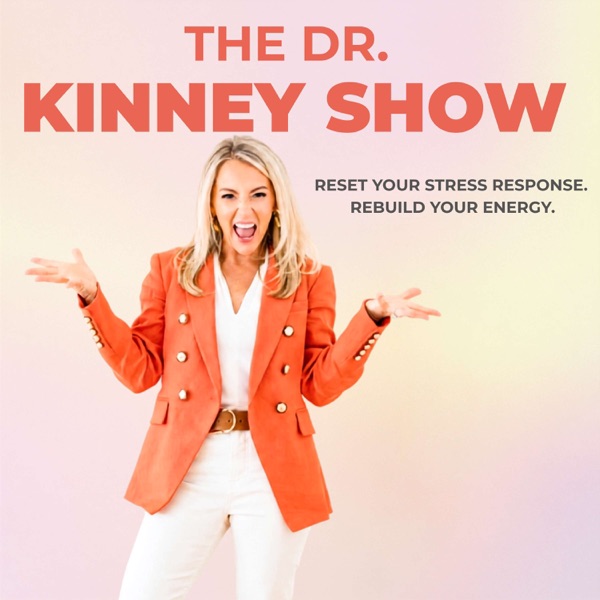
The Dr. Kinney Show
On The Dr. Kinney Show, Erin goes beyond the symptoms to explore what may actually be happening beneath the surface. Through solo episodes and conversations with leading experts, she breaks down cortisol, hormones, the nervous system, metabolism, blood sugar, thyroid health, chronic infections, nutrition, movement, and the hidden stressors that can keep your body feeling stuck.
Her goal is to make the science of your body easier to understand and give you practical tools you can actually use to feel better, build resilience, and support your health for the long term.
Take the free Cortisol Debt Assessment:
https://www.drerinkinney.com/the-cortisol-debt-score
Order The Cortisol Cure:
https://www.drerinkinney.com/the-cortisol-cure
Learn more about Dr. Erin Kinney:
https://www.drerinkinney.com
- Episodes
- 236
- Releases
- Weekly
- Typical length
- 25 min
- On air since
- 2020
- Latest episode
- 2 days ago
Episodes
236 episodes, newest first
-
40 min
S2E8: How Your Relationship Impacts Your Stress
Season 2, Episode 8
Show notes
Welcome back to the Dr. Kinney Show!
In this episode, I’m joined by Melissa Nanavati, relationship coach, TEDx speaker, author, and someone who knows firsthand what it takes to build an intentional relationship while pursuing big goals.
Melissa and I dive into the connection between relationships, stress, and your energy. Your primary relationship can be one of the greatest sources of support and joy in your life, but unresolved issues, unmet needs, and things left unsaid can also become major energy drains.
We talk about why high performers can be incredibly successful professionally while still struggling to communicate at home, how to identify hidden energy leaks in your relationship, and practical tools you can use to have better conversations with your partner.
In this episode, we discuss:
- Melissa’s experience going on more than 100 first dates before meeting her husband
- Why shifting her mindset around dating made the process less exhausting
- Why high performers may struggle with relationships even when they excel in other areas of life
- How giving everything to your career can leave very little energy for your partner
- Why even 20 minutes of intentional presence can make a difference in a relationship
- The three relationship energy leaks, unseen efforts, unmet needs, and unresolved issues
- Why leaving issues unresolved can quietly drain your energy
- How to create a relationship culture instead of relying on unspoken expectations
- Why Melissa and her husband committed early in their relationship to never let an issue fester
- How being specific about what support looks like sets your partner up for success
- Why “make me feel supported” may not be specific enough for your partner to understand what you actually need
- How feeling supported can allow your nervous system to relax
- Why assuming positive intent can completely change the way you interpret your partner’s behavior
- The question Melissa recommends asking when you are frustrated with your partner
- How to separate facts from the story you are telling yourself about a situation
- Why curiosity may be even more important than courage during difficult conversations
- How to apologize for the impact of your actions without arguing about your intent
- Why an apology should not immediately be followed by “but”
- Melissa’s BRAVE framework for navigating difficult conversations
- Why hard conversations should happen when both partners are regulated
- How physical touch, eye contact, and sitting together can help remind you that you are on the same team
- Why every difficult conversation should end with a clear action plan
- How relationship check ins can help couples identify what each person needs before resentment builds
- Why your needs and your partner’s needs can change depending on the season of life you are in
- How Melissa and her husband protected their relationship while preparing for his 60 day solo expedition across Antarctica
- Why high performing couples need to have conversations about what season they are currently in
- How tracking hormonal changes can help couples better understand periods of increased sensitivity and stress
- Small ways you can support your partner during their most demanding seasons
- How a strong, supportive relationship can become a deposit into your cortisol bank account instead of another drain
One of the biggest takeaways from this conversation is that healthy relationships rarely happen by accident.
Just like you put systems, planning, and intentionality into your career, you can bring those same skills into your relationship. That does not mean making your relationship feel like another job. It means creating enough clarity and communication that both people know what the other person needs.
Sometimes the smallest changes can make the biggest difference. Ask better questions, assume positive intent, say what you actually need, and remember that you and your partner are on the same team.
Free BRAVE Scripts
Melissa is sharing her BRAVE Scripts with Dr. Kinney Show listeners. This five step framework is designed to help you approach difficult conversations with more clarity, regulation, and intention.
Get the free BRAVE Scripts:
https://melissananavati.com/bravescripts
Connect with Melissa Nanavati
Learn more about Melissa, her relationship coaching, and her resources:
Instagram:
https://www.instagram.com/melissananavati/
YouTube, Peak Performance Love:
https://www.youtube.com/@PeakPerformanceLove
Connect with Dr. Kinney
Explore resources, tools, and more from Dr. Erin Kinney:
Take the free Cortisol Debt Score and discover where you stand:
https://www.drerinkinney.com/the-cortisol-debt-score
Learn more about my latest book, The Cortisol Cure:
https://www.drerinkinney.com/the-cortisol-cure
Join The Cortisol Cure Community
-
48 min
Medical Trauma Brain: Healing After the Illness Is Over
Season 2, Episode 7
Show notes
Welcome back to the Dr. Kinney Show!
In this episode, I’m joined by Amy Kurtz, health coach, patient advocate, and author of But You Look Fine: Trapped in the Hell Between Sick and Well and How to Break Free.
Amy shares her decades-long journey with chronic illness, misdiagnosis, and eventually receiving a diagnosis of late stage neurological Lyme disease and co-infections after seeing 36 doctors. But even after her physical health improved, she realized another part of healing had been overlooked: her brain and nervous system were still acting as if she were in danger.
That experience led Amy to develop the term Medical Trauma Brain, which describes the emotional and psychological aftermath that can remain after living through debilitating chronic or acute illness.
In this episode, we discuss:
- Amy’s journey with chronic symptoms beginning at age 14
- What it was like to spend years searching for answers and being told her tests looked normal
- The emotional, financial, and physical toll of seeing doctor after doctor
- Finally receiving a diagnosis of late stage neurological Lyme disease and co-infections
- Why getting the right diagnosis can bring both relief and grief
- What Amy means by Medical Trauma Brain
- Why the body can heal while the mind and nervous system remain stuck in survival mode
- The hypervigilance and fear that can remain after years of illness
- Why even a small symptom can make someone fear that everything is coming back
- How medical gaslighting can cause patients to lose trust in their own bodies
- Why finding a provider who listens and makes you feel safe is so important
- The difference between being physically better and truly feeling like yourself again
- Why healing from illness can include grieving the life you thought you were going to have
- How chronic illness can make it difficult to stay present even after the physical crisis has passed
- Why nervous system regulation can be an important part of the recovery process
- The importance of learning to feel safe in your body again
- Why rest, boundaries, support, and self-advocacy matter during recovery
- Simple practices Amy and I use to help calm the nervous system
- Why consistency matters more than finding one perfect regulation technique
One of the most powerful ideas in this conversation is that healing does not always end when the illness does.
You can be grateful that your body is doing better and still grieve what you went through. You can physically recover and still feel anxious, hypervigilant, or disconnected from yourself. Those experiences do not cancel each other out.
If you have ever felt like everyone around you thinks you should be “fine” because your illness is over, this conversation is a reminder that the aftermath deserves care too.
Guided Meditation Resource
I mention BrainTap by Dr. Patrick Porter and a guided meditation called “I Am a Personal Success Magnet,” which I have used consistently for years. Because I’ve trained my brain to associate that meditation with relaxation, even listening to the beginning of it can help signal to my nervous system that it is time to calm down.
Search for BrainTap by Dr. Patrick Porter and “I Am a Personal Success Magnet” to explore the meditation mentioned in this episode.
Connect with Amy Kurtz
Visit https://www.amykurtz.com/ to learn more about Amy, take her Patient Persona Quiz, and explore her work.
Follow Amy on Instagram at @_amykurtz.
But You Look Fine: Trapped in the Hell Between Sick and Well and How to Break Free is available wherever books are sold.
Connect with Dr. Kinney
Explore resources, tools, and more from Dr. Erin Kinney:
Take the free Cortisol Debt Score and discover where you stand:
https://www.drerinkinney.com/the-cortisol-debt-score
Learn more about my latest book, The Cortisol Cure:
https://www.drerinkinney.com/the-cortisol-cure
Join The Cortisol Cure Community
-
16 min
S2E6 How Your Self-Talk Can Shape the Way You Feel
Season 2, Episode 6
Show notes
Welcome back to the Dr. Kinney Show!
In this solo episode, I’m talking about the stories we tell ourselves and how the language we use about our bodies, our health, and our lives can keep us stuck in patterns we may no longer want.
Whether it is saying “I’m so busy,” “I’m always tired,” “I can’t lose weight,” or “my body hates me,” those phrases can become part of the way we experience ourselves. This does not mean ignoring real symptoms or pretending everything is fine. Instead, it is about becoming aware of the story you are repeating and finding a more supportive way to respond to what your body is trying to tell you.
In this episode, I discuss:
• Why your body is always listening to the way you speak about yourself
• How long-term symptoms can become part of the story you expect to keep living
• Why changing your language does not mean ignoring or dismissing real symptoms
• How I realized I was constantly reinforcing the story that I was tired
• Why curiosity can be more helpful than fear when a symptom appears
• How to ask what your body may need instead of immediately assuming the worst
• Why every person’s body has its own language
• The importance of slowing down enough to check in with yourself
• How negative self-talk around weight, fatigue, stress, and chronic illness can become deeply ingrained
• Why recognizing your patterns is the first step toward changing them
• How shifting “busy” to “full” can change the way you experience your life
• Why finding joy, connection, hobbies, and things you love can change the way you feel
• How repeatedly reliving an old trauma can keep it feeling present
• Why healing can include processing what happened while also beginning to create a new story
• A simple exercise for identifying the story you are currently telling and the one you want to live insteadIf you have been struggling with chronic symptoms, health anxiety, stress, or a feeling that your body is working against you, I want you to start with curiosity and compassion.
Ask yourself: What story am I telling about my body or my life that may no longer be serving me? Then think about the story you actually want to be living.
Your body is not your enemy. Instead of fighting it, begin listening to it, supporting it, and becoming intentional about the language you use every day.
Your homework this week is to notice the stories you repeat about yourself, your health, and your life, and begin building a bridge toward a story that feels more supportive, hopeful, and aligned with how you want to feel.
Connect with Dr. Kinney
Explore resources, tools, and more from Dr. Erin Kinney:
Take the free Cortisol Debt Score and discover where you stand:
https://www.drerinkinney.com/the-cortisol-debt-score
Learn more about my latest book, The Cortisol Cure:
https://www.drerinkinney.com/the-cortisol-cure
Join The Cortisol Cure Community
-
10 min
The Cortisol Cure Is Here: Listen to the Introduction
Season 2, Episode 6
Show notes
Today is a very special day: The Cortisol Cure is officially out in the world!
To celebrate, I’m sharing something a little different on the podcast, an exclusive excerpt from the audiobook, read by me.
In this episode, you’ll hear the introduction to The Cortisol Cure and the story behind a message I’ve spent years teaching my patients: cortisol is not the enemy.
Cortisol is one of the hormones your body relies on to create energy, respond to stress, heal, and keep you functioning. The problem begins when we continually ask our bodies to spend more than they have the opportunity to earn back.
That’s the idea behind what I call your Cortisol Bank Account, and it completely changes the way we think about stress, burnout, and many of the symptoms we’ve been told we simply have to live with.
If you’ve ever wondered why you’re exhausted even though you’re doing “all the right things,” why your body suddenly seems less resilient to stress, or why you just don’t feel like yourself anymore, this is where I want you to begin.
Press play for a special listen to the opening of The Cortisol Cure.
The Cortisol Cure: The Secret to Resetting Your Stress Response, Boosting Energy & Feeling Better Than Ever is available NOW in hardcover, ebook, and audiobook wherever books are sold.
Get your copy here: https://www.drerinkinney.com/the-cortisol-cure
-
25 min
S2 E5: Could Epstein-Barr Be Behind Your Fatigue, Anxiety, or Thyroid Issues?
Season 2, Episode 5
Show notes
Welcome back to the Dr. Kinney Show!
In this solo episode, I’m doing a deeper dive into Epstein-Barr virus, one of the most common viruses I see reactivated in patients dealing with unexplained fatigue, joint pain, brain fog, anxiety, thyroid issues, and other chronic symptoms.
Epstein-Barr virus can stay dormant in the body for years after the initial infection. But when your immune system becomes overwhelmed or your body is under prolonged stress, the virus can reactivate and become a major internal stressor. I explain what that can look like, how it affects your cortisol and energy, what testing to ask your provider for, and some of the approaches I use to help support the immune system and lower viral load.
In this episode, I discuss:
• What Epstein-Barr virus is and how it relates to mono
• Why Epstein-Barr can remain dormant in the body for years
• What can cause the virus to reactivate
• Why reactivated Epstein-Barr can become a major internal stressor
• Common symptoms including extreme fatigue, joint pain, muscle aches, brain fog, poor exercise recovery, and anxiety
• The connection between Epstein-Barr and autoimmune thyroid conditions like Hashimoto’s and Graves’ disease
• Why Epstein-Barr reactivation can make perimenopause symptoms feel more intense
• The four Epstein-Barr antibody tests I commonly look at and what they can tell you
• Why the early antigen IgG can be important when evaluating reactivation
• How white blood cells, lymphocytes, monocytes, and CD57 cells can provide more information about immune function
• Why rest and nervous system regulation are foundational when supporting the body through Epstein-Barr reactivation
• How medicinal mushrooms, olive leaf, cat’s claw, zinc, and other tools may be used to support immune function
• Why antiviral medications may help lower viral load but do not replace supporting the immune system
• The relationship between thyroid function, cortisol, body temperature, and viral activity
• Why doing all the supplements without changing a chronically stressful lifestyle may keep the body from fully recoveringIf you’ve been dealing with fatigue that sleep does not fix, unexplained joint pain, anxiety, thyroid issues, or symptoms that seem to flare when your body is under stress, Epstein-Barr may be one piece worth investigating with your provider.
The biggest takeaway is that treatment is not only about attacking the virus. Your immune system needs enough energy and downtime to do its job. Supporting your nervous system, prioritizing rest, and understanding what is happening inside your body can be just as important as any supplement or medication.
Connect with Dr. Kinney
Explore resources, tools, and more from Dr. Erin Kinney:
Take the free Cortisol Debt Score and discover where you stand:
https://www.drerinkinney.com/the-cortisol-debt-score
Learn more about my latest book, The Cortisol Cure:
https://www.drerinkinney.com/the-cortisol-cure
Join The Cortisol Cure Community
-
52 min
S2 E4: Autoimmunity and the Good Girls with Sara Hirsh Bordo
Season 2, Episode 4
Show notes
Welcome back to the Dr. Kinney Show!
In this episode, I’m joined by Sara Hirsh Bordo, documentary filmmaker, author, and the voice behind Autoimmunity and the Good Girls. This conversation explores the deep connection between women’s health, self-betrayal, chronic illness, and the stories we learn to live by.
Sara shares her personal journey with autoimmune disease, Hashimoto’s, melanoma, Epstein-Barr, mold toxicity, heavy metals, and the moment that led her to ask a life-changing question: if the wrong choices made me sick, could the right choices make me well? From there, she began examining the patterns of self-compromise, people-pleasing, caretaking, and emotional suppression that so many women carry, especially those who were raised to be “good.”
In this episode, we discuss:
• Sara’s journey from documentary filmmaker to author
• The story behind Autoimmunity and the Good Girls
• How the body speaks through both science and story
• The connection between self-compromise and immune system compromise
• Why so many women with autoimmune disease struggle to receive care or ask for help
• How being raised as the “good girl” can shape the nervous system and the immune system
• Why self-betrayal can show up in the body as symptoms
• The difference between giving of yourself and giving up yourself
• Why boundaries are essential for healing
• How women often silence themselves, even in doctors’ offices
• The importance of finding providers who make you feel safe, heard, and supported
• Why curiosity is such an important part of healing
• How to begin taking inventory of what you actually like, need, and want
• Why healing can start with one brave little step at a timeThis conversation is an invitation to look at symptoms with curiosity instead of fear, and to begin asking where you may have been taught to abandon yourself in order to be accepted, loved, or seen as good. Sara’s work reminds us that healing is not about becoming someone new. It is about coming home to the real self that has been there all along.
Connect with Sara Hirsh Bordo:
https://autoimmunityandthegoodgirls.com/Visit goodgirlsbook.com to learn more about Autoimmunity and the Good Girls.
You can also connect with Sara on Instagram and find Autoimmunity and the Good Girls in print, ebook, and audiobook wherever books are sold.
Connect with Dr. Kinney
Explore resources, tools, and more from Dr. Erin Kinney:
https://www.drerinkinney.com/Take the free Cortisol Debt Score and discover where you stand:
Take the Cortisol Debt ScorePre-order The Cortisol Cure by September 22, 2026, and submit your proof of purchase to receive your first year of access to The Cortisol Cure Community at no additional cost:Pre-order The Cortisol CureJoin The Cortisol Cure Community
-
17 min
S2 E3: Stop Saying You’re So Busy: How Language Shapes Your Stress
Season 2, Episode 3
Show notes
Welcome back to the Dr. Kinney Show!
In this solo episode, I’m talking about what happens in your brain and body when you constantly tell yourself and others, “I’m so busy.” After noticing how often this phrase came up in conversations, I started experimenting with not saying it, and instead talking about calm, rest, gardening, reading, and the things I was doing to protect my peace.
I dive into how the stories we repeat shape our nervous system, why “busy” keeps the body in a cortisol spend state, and how we can begin to train the part of the nervous system that helps us relax. This episode is about shifting the way we talk about stress, stepping out of hustle culture, and building the ability to move between doing and resting in a healthier way.
In this episode, I discuss:
• Why saying “I’m so busy” can keep your nervous system in fight or flight
• How busyness can become a badge of importance or success
• Why your brain responds to the story you keep telling yourself
• How busy seasons can drain your cortisol bank account, even when the things you’re doing are good
• What happened when I stopped telling people I was busy
• Why downtime can actually help you feel like you have more time
• The difference between being a human being and a human doing
• Why exercise can be beneficial, but is still an energy spend
• The stress muscle and relaxed muscle analogy
• Why relaxing can feel uncomfortable if you have not trained that muscle
• How to start building your relaxed muscle with small, consistent reps
• Why a regulated nervous system can help you become a better partner, parent, employee, and person
• How The Cortisol Cure can help you change the way you understand stress, burnout, and recoveryIf you’ve been wearing busyness like a badge or feeling like you never have enough time, this episode is an invitation to try something different. Stop telling your brain you are constantly busy and start asking yourself how you actually want to feel. The more you practice calm, rest, and regulation, the stronger that relaxed muscle becomes.
Connect with Dr. Kinney
Explore resources, tools, and more from Dr. Erin Kinney:
https://www.drerinkinney.com/Take the free Cortisol Debt Score and discover where you stand:
Take the Cortisol Debt ScorePre-order The Cortisol Cure by September 22, 2026, and submit your proof of purchase to receive your first year of access to The Cortisol Cure Community at no additional cost:Pre-order The Cortisol CureJoin The Cortisol Cure Community
-
27 min
S2 E2: What Is Your Cortisol Debt Score?
Season 2, Episode 2
Show notes
Welcome back to the Dr. Kinney Show!
In this solo episode, I’m diving deeper into the cortisol bank account framework and introducing the Cortisol Debt Assessment, a quiz I created to help you understand how much energy your body is spending versus how much it is earning.
We often know our financial credit score, how much money is coming in, and how much is going out, but most of us do not have that same awareness when it comes to our cortisol, energy, and stress load. This episode breaks down how external stressors, like work, relationships, parenting, and responsibilities, combine with internal stressors, like nutrient deficiencies, food sensitivities, blood sugar dips, hormone imbalances, or stealth infections, to impact your body’s ability to function and heal.
In this episode, I discuss:
• What the Cortisol Debt Assessment is and why I created it
• How your cortisol bank account works
• Why cortisol is the hormone that helps you handle stress, wake up, reduce inflammation, and get things done
• The difference between external stressors and internal stressors
• Why stress is not always bad, but it is always an energy spend
• How good things, like a dream job, a wedding, kids, or work you love, can still drain your energy
• What your external life load score can tell you about boundaries, sleep, and energy protection
• What your internal hidden load score can reveal about what may be happening inside your body
• Why a high internal score may be a sign to talk with a trusted provider and get lab work done
• The four cortisol debt profiles: balanced, overspending, moderate cortisol debt, and deeply depleted
• Why pushing harder with exercise, dieting, or doing more can backfire when your cortisol account is low
• How resting heart rate can help you understand whether your workouts are supporting or draining you
• Why support, boundaries, sleep, protein, hydration, and nervous system regulation are essential for rebuilding your energy
• How to use the assessment as a check-in tool throughout different seasons of life
If you’ve been feeling tired, wired, depleted, inflamed, or like your body is trying to get your attention, this episode will help you look at stress in a more practical way. Your score is not a diagnosis and it is not a grade. It is information that can help you better understand where your energy is going, where your body may need support, and what changes can help you start rebuilding your cortisol bank account.
Connect with Dr. Kinney
Explore resources, tools, and more from Dr. Erin Kinney:
https://www.drerinkinney.com/Take the free Cortisol Debt Score and discover where you stand:
Take the Cortisol Debt ScorePre-order The Cortisol Cure by September 22, 2026, and submit your proof of purchase to receive your first year of access to The Cortisol Cure Community at no additional cost:Pre-order The Cortisol CureJoin The Cortisol Cure Community
-
16 min
S2 E1: The Cortisol Cure: Why I Took a Pause and What I Learned
Season 2, Episode 1
Show notes
Welcome back to the Dr. Kinney Show!
In this solo episode, I’m back after taking an intentional pause from the podcast, and I’m sharing what I’ve been working on behind the scenes: my upcoming book, The Cortisol Cure. This episode is all about presence, timing, trusting the process, and understanding why sometimes a pause needs to be longer than we expected.
I talk about the journey of getting a book deal, writing the book, and preparing for the launch, but I also dive into the core message of The Cortisol Cure: cortisol is not the enemy. It is one of the body’s most important hormones, and when we understand how it functions as our body’s energy currency, we can begin to look at stress, burnout, symptoms, and healing in a completely different way.
In this episode, I discuss:
• Why I took an intentional pause from the podcast
• My word for 2026 and why presence has been so important this year
• The story of how The Cortisol Cure went from proposal to book deal
• What I learned about timing, trust, and letting go of forcing the process
• Why writing the book required real downtime and space
• How introversion, energy, and creative work shaped my writing process
• Why cortisol is not the enemy
• The Cortisol Bank Account framework and how it simplifies stress
• Why stress is really an energy spend
• How symptoms can show up when the body is running on empty
• Why low cortisol can contribute to fatigue, mood changes, digestion issues, sleep struggles, and burnout
• How the book helps you understand your symptoms through the lens of cortisol, energy, and nervous system balance
• How to preorder The Cortisol Cure and access the Cortisol Cure Community
If you’ve been feeling tired, overwhelmed, burned out, or confused by symptoms that don’t seem to make sense, this episode will help you start seeing stress in a new way. Instead of viewing stress as something to fear, I want to help you understand where your energy is going, how to replenish it, and why earning more than you spend is the key to helping your body heal.
Connect with me:
Visit https://www.drerinkinney.com/the-cortisol-cure to learn more about the book, preorder The Cortisol Cure by September 22, 2026, and submit your proof of purchase to receive access to the Cortisol Cure Community https://www.drerinkinney.com/cortisol-cure-community
Connect on Instagram
Connect on Facebook
-
17 min
S1 E227: The Connection Between Stealth Infections and Your Hormone Levels (recap)
Season 1, Episode 227
Show notes
Could hidden infections like Lyme disease or Epstein-Barr be the root cause of your hormonal imbalances?
Welcome back to the Dr. Kinney show! In this episode, I’m discussing the critical relationship between stealth infections, such as Lyme disease and Epstein-Barr virus, and hormonal imbalances.
We’ll look at how these low-grade infections can influence thyroid function, adrenal output, and sex hormone levels and the importance of comprehensive infectious workups for patients experiencing hormonal dysregulation.
We’ll also look at the need for holistic treatment approaches and practical advice on necessary lab tests for hormones and discuss the need for trustworthy healthcare providers for managing complex health issues.
In Today’s Episode We Discuss
· Common Symptoms and Initial Patient Assessment
· The Role of Stealth Infections in Hormonal Imbalances
· Importance of Comprehensive Infectious Workup
· Types of Stealth Infections to Screen For
· Impact of COVID and Other Infections on Hormones
· Comprehensive Hormonal Workup
· Working with Healthcare Providers
Low-grade infections like Lyme disease and Epstein-Barr can significantly impact your thyroid, adrenal glands, and sex hormones. It’s important to pursue comprehensive infectious workups and partner with trustworthy healthcare providers when managing these complex issues.
Where We Can Connect
Listen on Your Favorite Podcast Platform
Follow & Review On Apple Podcasts
Are you following the podcast? If you’re not, I want to encourage you to follow today so you don’t miss any future episodes! I have so many amazing guests and topics lined up, I would hate for you to miss a single one! Click here to follow on Apple Podcasts.
Could I ask a big favor? If you are loving the show, I would LOVE it if you would leave me a review on Apple Podcasts. I read each and every one!
Wondering how to leave a review? Click here to review, then select “Ratings and Reviews” and “Write a Review”. So easy and so appreciated!
-
15 min
S1 E226: How Changing Your Mindset Can Change Your Health (recap)
Season 1, Episode 226
Show notes
How much do your thoughts and words actually influence your health and healing process?
Welcome back to the Dr. Kinney show! In this episode, I’m diving into why your mindset plays such a huge role in your health and healing.
I see so many patients get stuck in negative thought cycles that seem impossible to break. The truth is, your brain can’t tell the difference between what’s happening in reality and what’s going on in your head. This means that you can actually transform your body just by changing the way you think.
Positive energy is real! It has a genuine impact on your body. This goes for how you talk to yourself, and how others speak to you - whether it’s a friend, colleague, family member, or partner. Words hold a lot of power.
You can acknowledge what's going on with your health while still focusing on the small victories that keep you in a positive mindset. When you stay in that space, that’s when real change happens.
In Today’s Episode We Discuss
· The Power of Mindset in Healing
· Understanding the Law of Attraction
· The Brain's Role in Perception
· Impact of Words on the Body
· Practical Steps to Shift Your Mindset
· Recognizing and Celebrating Progress
Remember to take it one step at a time—celebrate your progress, however small, and be mindful of the words you use both with yourself and others. You have more control over your health than you might realize, and every positive thought brings you closer to healing.
Where We Can Connect
Listen on Your Favorite Podcast Platform
Follow & Review On Apple Podcasts
Are you following the podcast? If you’re not, I want to encourage you to follow today so you don’t miss any future episodes! I have so many amazing guests and topics lined up, I would hate for you to miss a single one! Click here to follow on Apple Podcasts.
Could I ask a big favor? If you are loving the show, I would LOVE it if you would leave me a review on Apple Podcasts. I read each and every one!
Wondering how to leave a review? Click here to review, then select “Ratings and Reviews” and “Write a Review”. So easy and so appreciated!
-
32 min
S1 E225: How To Balance Your Hormones by Adjusting Your Exercise Routine (Recap)
Season 1, Episode 225
Show notes
Have you ever considered that your exercise routine might be doing more harm than good for your hormonal health?
Welcome back to the Dr. Kinney show! In this episode, I’m talking about the complex relationship between exercise and hormonal health, with a particular focus on female hormones.
We’ll look at the impacts of different types of exercise on the thyroid, adrenal glands, and sex hormones, such as estrogen and progesterone and how both over-exercising and under-exercising can disrupt hormone balance, leading to issues such as PMS, weight gain, and stress-related symptoms.
I will also offer practical insights on how to tailor exercise routines to support hormonal health and emphasize the importance of relaxation practices, especially during stressful periods.
In Today’s Episode We Discuss
· Understanding Hormones and Their Functions
· The Female Hormone Cycle Explained
· Thyroid and Adrenal Hormones
· Impact of Exercise on Hormones
· Exercise and Adrenal Fatigue
· Balancing Exercise with Hormonal Health
· Managing Stress and Exercise
· Tips for a Healthy Exercise Routine
If you’re feeling out of sync, pay attention to what your body is telling you. Rest and relaxation are just as important as movement, and sometimes, less is more when it comes to exercise, especially if you’re dealing with hormonal imbalances like PMS, weight gain, or stress.
Where We Can Connect
Listen on Your Favorite Podcast Platform
Follow & Review On Apple Podcasts
Are you following the podcast? If you’re not, I want to encourage you to follow today so you don’t miss any future episodes! I have so many amazing guests and topics lined up, I would hate for you to miss a single one! Click here to follow on Apple Podcasts.
Could I ask a big favor? If you are loving the show, I would LOVE it if you would leave me a review on Apple Podcasts. I read each and every one!
Wondering how to leave a review? Click here to review, then select “Ratings and Reviews” and “Write a Review”. So easy and so appreciated!
-
26 min
S1 E224: Adrenal Fatigue: What Happens When You Burn Yourself Out (recap)
Season 1, Episode 224
Show notes
Why do you still feel drained, even after a full night's sleep? Could it be 'Cortisol Debt'?
Welcome back to the Dr. Kinney show! In this episode, we’re exploring the critical role that rest plays in healing, with a particular focus on adrenal fatigue and burnout. I like to explain cortisol as the body’s 'currency.' Much like financial budgeting, rest helps us 'earn' energy, while our daily activities and stress 'spend' it.
When we don't get enough rest, we end up in what I call 'cortisol debt,' and that’s when symptoms like fatigue, anxiety, and even skin issues start to appear. I really want to emphasize how important it is to incorporate restorative practices like meditation and acupuncture into your routine. These practices help the body recover and manage stress more effectively.
Throughout the episode, I’ll also be breaking down the body’s stress response and explaining exactly how prolonged stress leads to adrenal fatigue. My hope is that by the end of this episode, you’ll feel inspired to prioritize relaxation and rethink some of your habits to reduce stress in your life.
In Today’s Episode We Discuss
· Understanding Cortisol and Energy
· The Concept of Cortisol Debt
· Symptoms of Adrenal Fatigue
· The Importance of Rest and Meditation
· The Stress Response Explained
· Long-term effects of Chronic Stress
· Rebalancing Your Body's Energy
It’s important to remember your energy is like currency, and by incorporating more rest, meditation, and even acupuncture, you can help your body stay balanced and strong. As you move forward, my advice is to listen to your body. Prioritize relaxation, give yourself permission to rest, and make self-care a non-negotiable part of your routine.
Where We Can Connect
Listen on Your Favorite Podcast Platform
Follow & Review On Apple Podcasts
Are you following the podcast? If you’re not, I want to encourage you to follow today so you don’t miss any future episodes! I have so many amazing guests and topics lined up, I would hate for you to miss a single one! Click here to follow on Apple Podcasts.
Could I ask a big favor? If you are loving the show, I would LOVE it if you would leave me a review on Apple Podcasts. I read each and every one! Wondering how to leave a review? Click here to review, then select “Ratings and Reviews” and “Write a Review”. So easy and so appreciated!
-
38 min
S1 E223: Healing from SIBO and the Gut-Body Connection with Dr. Ana Rodriguez (recap)
Season 1, Episode 223
Show notes
The gut truly is like the root from which everything else grows, and if it’s not functioning well, you’re bound to have some negative impacts on your health.
In this episode of The Dr. Kinney Show, I sat down with the latest member of my team, Dr. Ana Rodriguez, to talk about SIBO or small intestine bacterial overgrowth. She’s sharing what it is, the symptoms you might be experiencing, and the treatment options you have if this is what you’re dealing with.
Topics covered in this episode include:
• What SIBO is and how it can impact your health
• The symptoms you might be feeling if you’re experiencing SIBO
• The different treatment pathways you can take to heal from SIBO
• The importance of motility in your body to heal from this type of intestinal issue
• The factors that are causing SIBO to be on the riseIf you have SIBO, there are treatments available that can be a huge game-changer in your health. Tune in to learn more!
How we can connect:
Connect on Instagram
Connect on Facebook
-
16 min
S1 E222: Is Your Lymphatic System Holding You Back? Everything You Need to Know (recap)
Season 1, Episode 222
Show notes
How well do you understand your lymphatic system?
In this solo episode of The Dr. Kinney Show, I’m diving into this topic because it is a really important system and it doesn't get talked about enough. Your lymphatic system has an impact on every single other system in the body, and if it isn’t in good health, it can be really hard to make progress in other areas of your health.
Topics covered in this episode include:
• What your lymphatic system is and all of the jobs it has in your body
• Why this system is so important for your overall health
• What can cause a blockage in your lymphatics
• How to improve your lymphatic drainage system
• Signs of lymphatic stagnationThis system is incredibly important to your overall health so don’t miss this episode!
Resources Mentioned:
Check out our favorite lymphatic drainage tool: https://ballancerpro.com/
How we can connect:
Connect on Instagram
Connect on Facebook
-
19 min
S1 E221: Top Tips to Overcome Your Health Anxiety (recap)
Season 1, Episode 221
Show notes
Let’s talk about health anxiety.
In this episode of The Dr. Kinney Show, I want to address something that has been coming up a lot lately with the patients I see in my private practice- anxiety about your health. This is something that so many people struggle with, myself included, and I want to share some ways that you can overcome it.
Topics covered in this episode include:
• My experience as a hypochondriac
• The importance of working with someone who really understands health anxiety
• The power your brain has to manifest symptoms
• Why you need to look at your symptoms as something your body is trying to tell you
• The practice you need to do to rewire your brain when you have health anxiety
• Ways to shift your thought process about how your body is functioning
• Why baby steps are so important when you have health anxietyIf you struggle with health anxiety, you aren’t alone! These are my top tips for coping with it. https://www.drerinkinney.com/130
How we can connect:Connect on Instagram
Connect on Facebook
-
24 min
S1 E220: Thyroid Check: How To Find Out if You Have Hypothyroidism Even If Your Labs Are Normal (recap)
Season 1, Episode 220
Show notes
Do you have all the hypothyroid symptoms even though you’re being told your thyroid is normal?
In this episode, I'll be addressing a common concern among my patients—the thyroid. I want to help you understand the importance of accurate testing to determine whether your thyroid is functioning optimally so you can identify any issues and get the treatment plan you need.
Topics covered in this episode include:
• The classic signs and symptoms that something is going on with your thyroid
• The tests that you need to have done to check your thyroid function and what the results mean
• The thyroid medications and treatments available to youJoin me as I discuss the intricacies of thyroid health to empower you with the knowledge needed to ensure your thyroid is in optimal condition. Check it out now!
How we can connect:
Connect on Instagram
Connect on Facebook
-
20 min
S1 E219: The Truth About Cortisol: Dispelling Common Myths (recap)
Season 1, Episode 219
Show notes
Welcome back to the Dr. Kinney Show! In today's episode, we’re discussing the complexities of Cortisol.
While often labelled as merely a 'Stress Hormone,' cortisol plays a crucial role in our body's response to stress and overall energy management.
In this episode, I talk about the importance of maintaining proper cortisol levels, the consequences of both high and low cortisol, and how they can impact your health and well-being. I also discuss the need for balance and practical strategies for building up cortisol levels through rest and relaxation.
Be sure to listen to learn why cortisol is essential for your energy, inflammation control, mood, and much more.
In Today’s Episode We Discuss
· Misconceptions About Cortisol
· The Importance of Cortisol
· Cortisol as an Energy Hormone
· Adrenaline vs. Cortisol
· Cortisol and Inflammation
· Symptoms of Low Cortisol
· Personal Experiences and Advice
· Practical Tips for Cortisol Management
I want to emphasize the importance of maintaining balanced cortisol levels through proper rest and relaxation. Remember, it's crucial to adopt a whole-person approach to health, exploring various healing methods and staying informed about the latest health technologies.
Where We Can Connect
Listen on Your Favorite Podcast Platform
Follow & Review On Apple Podcasts
Are you following the podcast? If you’re not, I want to encourage you to follow today so you don’t miss any future episodes! I have so many amazing guests and topics lined up, I would hate for you to miss a single one! Click here to follow on Apple Podcasts.
Could I ask a big favor? If you are loving the show, I would LOVE it if you would leave me a review on Apple Podcasts. I read each and every one!
Wondering how to leave a review? Click here to review, then select “Ratings and Reviews” and “Write a Review”. So easy and so appreciated!
-
49 min
S1 E218: Learning to Listen: Healing Through Self-Compassion and Mindset
Season 1, Episode 218
Show notes
Welcome back to the Dr. Kinney Show!
This week, I’m joined by Sara Corckran, mindset and positive psychology coach, speaker, and author of Grit and Grace: How to Find Clarity and Optimism in Overwhelming Situations. Sara’s story and work beautifully bridge mindset and medicine, showing how the way we think about our challenges can change how we move through them.
In this conversation, we talk about the power of slowing down, listening to your body, and learning to truly care for yourself, not just by doing more, but by being more intentional. Sara shares how her own journey through caregiving, cancer, and healing reshaped her understanding of resilience, self-compassion, and what it means to live in alignment with your body and mind.
In this episode, we discuss:
• Sara’s personal journey through adversity and what inspired Grit and Grace
• How positive psychology tools can shift your mindset and your healing
• Why loving yourself and letting others in can be so hard, and how to start
• The importance of gratitude and reframing adversity as opportunity
• How listening to your body can prevent burnout and disease
• The “thermometer” of self-awareness and what it teaches us
• The connection between slowing down, creativity, and nervous system balance
• Why boundaries, rest, and unplugging are acts of self-respect
• How mindset influences physical healing and recovery
• The value of support, and why we’re not meant to do life aloneThis episode is a warm, real reminder that healing isn’t about perfection, it’s about presence, self-kindness, and learning to tune in to what your body and mind have been trying to tell you all along.
Connect with Sara Corckran:
• Visit corckrancoaching.com to learn more about her coaching programs and upcoming offerings
• Follow her on Instagram and Substack for uplifting insights and mindset tools
• Pick up Grit and Grace: How to Find Clarity and Optimism in Overwhelming Situations on Amazon or at your favorite local bookstoreHow we can connect:
Connect on Instagram
Connect on Facebook
-
25 min
S1 E217: The Truth About Ozempic, Semaglutide, and Weight Loss Medications
Season 1, Episode 217
Show notes
Welcome back to the Dr. Kinney Show!
In this solo episode, I’m diving deep into one of the most talked-about topics in wellness right now, GLP-1 medications, including Ozempic, Wegovy, and semaglutide. There’s a lot of information (and misinformation) circulating about these drugs, and I want to explain how they actually work, when they can be incredibly effective, and when they can cause more harm than good.
I break down the glucose-insulin connection, what insulin resistance really means, and why inflammation often begins with blood sugar imbalance. I also share how these medications can be used as a powerful tool for improving insulin sensitivity, reducing inflammation, and supporting hormone balance, when used thoughtfully and at the right time.
In this episode, I discuss:
• How glucose and insulin function together to fuel your body
• What happens when insulin resistance develops and why it leads to fatigue, weight gain, and inflammation
• How GLP-1 medications like semaglutide work to increase insulin sensitivity
• Why microdosing or using the lowest therapeutic dose can be safer and more effective
• The difference between short-term weight loss and long-term metabolic health
• Common side effects and how to avoid them with proper dosing and timing
• The importance of building muscle and eating enough protein before starting a GLP-1 medication
• How these medications can reduce “food noise” and improve mental clarity
• The unexpected benefits for hormone balance, PCOS, and menopause symptoms
• Why GLP-1s should be seen as a supportive tool, not a quick fixWhether you’re curious about GLP-1 medications for weight management, inflammation, or metabolic health, this episode will help you understand how to use them in a way that truly supports your body’s healing process.
How we can connect:
Connect on Instagram
Connect on Facebook
Alternative Health lists
More Alternative Health shows picked out from the charts









More in Alternative Health
Placed highest on Apple Podcasts' Alternative Health chart right now