Podcast
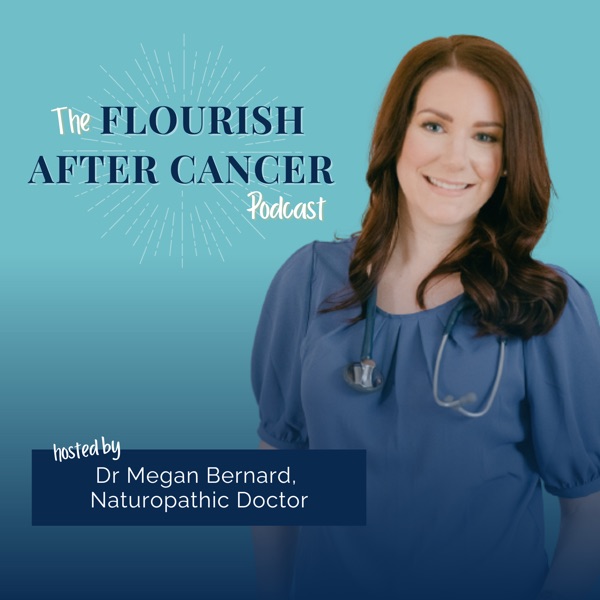
The Flourish After Cancer Podcast
Join me, Dr Megan Bernard, Naturopathic Doctor, and guest experts as we teach you how to not just survive, but to thrive past cancer. Using research-backed information with a holistic spin, I’ll dive deep into the best nutrition, supplements, lifestyle changes, and testing to help you to feel better faster after treatment and to reduce your risk of cancer coming back.
- Alternative Health chart
- #118
- Episodes
- 66
- Releases
- Weekly
- Typical length
- 34 min
- On air since
- 2025
- Latest episode
- 1 week ago
Episodes
66 episodes, newest first
-
18 min
65: Ozone Therapy After Cancer: What We Know and What Still Needs Research
Episode 69
Show notes
If you’ve spent any time on social media since your diagnosis, you’ve probably seen ozone therapy. Maybe it was someone sitting with two IVs while their blood ran through a filter, and a caption that made it sound like it fixes everything. When you’re in treatment or just finished, it’s hard to know whether that’s worth a closer look or just one more expensive thing to add to the pile.
In this episode of The Flourish After Cancer Podcast, I talk with Joanie Jackson, a board-certified family nurse practitioner. She’s the founder of Freedom Integrative Wellness Clinic and Freedom Integrative Cancer Center in Fort Mill, South Carolina. Joanie is certified in ozone and mistletoe therapy, and she works with patients before, during, and after cancer treatment.
We walk through what ozone is and the different ways it’s given, from EBOO, a two-IV procedure, to rectal ozone, which uses no needles at all. We also cover how she times it around chemo and radiation, which blood markers she tracks, and where the research still has gaps.
⚠️ This is a must-listen if:
• You’ve seen ozone or EBOO on social media and want to know what it involves
• You’re curious about integrative options but feel stuck between your oncologist and everything you read online
• Chemo has made IVs hard for you, and you’re wondering what other options exist
• You want to know which blood markers an integrative provider might track
• You want a clear picture of what’s known and what still needs research✨ In this episode, you’ll learn:
• What ozone (O3) is and how it differs from the oxygen we breathe
• How EBOO, IV ozone, and rectal ozone differ in intensity, time, and cost
• Why Joanie individualizes every dose and schedules ozone just before the next chemo session
• Which markers she tracks, including LDH, inflammatory markers, fibrinogen, and VEGF
• Why ozone is considered off-label in the US, and which studies she’d like to see💡 You’ll leave this episode with:
• A realistic picture of what ozone therapy involves
• Questions to bring to your oncologist and to any integrative provider
• An understanding of why timing and individualized dosing matter
• More confidence advocating for yourself without feeling torn🔗 Episode Relevant Resources:
• Learn more about Joanie Jackson and Freedom Integrative Wellness:https://www.freedomintegrativewellness.com
• Follow Freedom Integrative Wellness on Instagram:https://www.instagram.com/freedomintegrativewellnessI’m Dr. Megan, a licensed naturopathic doctor. My team and I have worked with hundreds of women globally to rebuild their health after cancer and reduce recurrence risk using science-backed nutrition, lifestyle, and targeted supplement strategies — so they can feel confident, strong, and free to enjoy life again.
✨ Let’s Connect!
Book a free Roadmap Call and let’s chat about how we can help:https://flourishaftercancer.com/nextstepsFollow me:
Instagram: @MeganBernardND
Facebook: @MeganBernardND
Website:https://flourishaftercancer.com/Medical Disclaimer: The information provided in these videos and podcasts is for educational purposes only and is not intended to diagnose, treat, cure, or prevent any disease. Consult with a qualified healthcare provider before making any changes to your diet, medications, or lifestyle. Content is not a substitute for professional medical advice or care.
-
28 min
64: Cancer Is A Metabolic Disease, Here’s Why That’s Great
Episode 68
Show notes
You’ve been told to lower your stress after cancer, and you’ve probably felt the quiet pressure of that advice every time life refused to cooperate. A scan date, a lab result, a hard conversation at home, and suddenly managing stress becomes one more thing you feel like you’re failing at. 😮💨
In this episode, I sit down with Dr. Donese Worden, a naturopathic medical doctor and researcher who has spent more than two decades studying metabolic oncology. We talk about the metabolic side of cancer and the tiny organelles at the center of it, your mitochondria.
We cover why she calls mitochondria the motherboard of your body and why the goal is stress resilience rather than a stress-free life. We also get into how your muscles help your body handle glucose, and why a bag full of supplements with no plan behind it can create more problems than it solves.
⚠️ This is a must-listen if:
• You’ve heard cancer described as metabolic and want to understand what that means for you
• You feel like you’re failing at “reducing stress” because life keeps happening
• You have a cabinet full of supplements and no clear sense of how they work together
• You’re short on time and energy and want movement that fits where you are
• You want two doctors talking openly about what the science supports today and what’s still being studied✨ In this episode, you’ll learn:
• What mitochondria do beyond making energy, including helping regulate detox pathways and whether a damaged cell repairs itself or self-destructs
• Why active muscle works as a glucose sink, and what emerging research says about short bursts of movement
• Why short, acute stress can be protective while chronic stress is the one to work on
• Why stacking supplements without a plan can burden your liver and kidneys and interact with treatment
• How Dr. Worden thinks about hope, data, and the reality that you’re more than a statistic💡 You’ll leave this episode with:
• A clear picture of the basics that support metabolic health: food, movement, sleep, and stress resilience
• Permission to stop chasing a stress-free life
• A realistic way to move your body on low-energy days
• More confidence asking what the evidence supports before adding something new🔗 Episode Relevant Resources
Learn more about Dr. Donese Worden: https://drworden.com
Dr Donese Worden on Instagram: @DrDoneseWorden
I’m Dr. Megan, a licensed naturopathic doctor. My team and I have worked with hundreds of women globally to rebuild their health after cancer and reduce recurrence risk using science-backed nutrition, lifestyle, and targeted supplement strategies — so they can feel confident, strong, and free to enjoy life again.
✨ Let’s Connect!
Book a free Roadmap Call and let’s chat about how we can help: https://flourishaftercancer.com/nextsteps
Follow me:
Instagram: @MeganBernardND
Facebook: @MeganBernardND
Website: https://flourishaftercancer.com/Medical Disclaimer: The information provided in these videos and podcasts is for educational purposes only and is not intended to diagnose, treat, cure, or prevent any disease. Consult with a qualified healthcare provider before making any changes to your diet, medications, or lifestyle. Content is not a substitute for professional medical advice or care.
-
31 min
63: The Mistake Most Cancer Survivors Make Trying to Block Cancer
Episode 67
Show notes
Whether you were just diagnosed or finished treatment years ago, the instinct is usually the same: find the thing that fights the cancer. "What's the best cancer-killing supplement for my type of cancer?" "Am I doing enough?" "What if I'm missing the one thing that matters?" 😮💨
But timing matters as much as the tool you choose. The same supplement or nutrition change can help in one phase of care, do very little in another, and sometimes even get in the way.
In this episode, I walk you through the two phases of cancer care using the picture of a boat in a storm, so you can figure out where you are right now and what your body needs from you in this season.
⚠️ This is a must-listen if:
• You're newly diagnosed or in chemo and searching for the "best" cancer-killing supplement
• You're in radiation, recovering from surgery, on hormone-blocking medication, or in immunotherapy and wondering what to do now
• Your care team told you you're done, and you're left wondering who is helping you prevent a recurrence
• You finished treatment months or even years ago and still don't feel like yourself
• You want to stop guessing and know what to focus on, and when✨ In this episode, you'll learn:
• How to tell whether you're in phase one (the storm) or phase two (dry dock)
• Why protecting your healthy "bystander" cells and organ systems comes first during harsh treatment
• The 90/10 principle, and why cancer-killing supplements are only a small part of the job
• What repairing, strengthening, and optimizing your body looks like once treatment stabilizes
• Why it's easier to resolve inflammation now than to wait years down the road💡 You'll leave this episode with:
• A clear picture of which phase you're in right now
• A better sense of where to put your energy and what can wait
• Relief from the pressure to find the one perfect supplement
• Reassurance that there's still so much you can do, even if treatment ended a decade ago
• More confidence in your body's ability to handle whatever comes nextI'm Dr. Megan, a licensed naturopathic doctor. My team and I have worked with hundreds of women globally to rebuild their health after cancer and reduce recurrence risk using science-backed nutrition, lifestyle, and targeted supplement strategies — so they can feel confident, strong, and free to enjoy life again.
✨ Let's Connect! Book a free Roadmap Call and let's chat about how we can help: https://flourishaftercancer.com/nextsteps
Follow me: Instagram: @MeganBernardND Facebook: @MeganBernardND Website: https://flourishaftercancer.com/
Medical Disclaimer: The information provided in these videos and podcasts is for educational purposes only and is not intended to diagnose, treat, cure, or prevent any disease. Consult with a qualified healthcare provider before making any changes to your diet, medications, or lifestyle. Content is not a substitute for professional medical advice or care.
-
33 min
62: Fearing Estrogen To Stop Breast Cancer...Or Missing The Real Drivers Of Recurrence?
Episode 66
Show notes
If you've had ER+ breast cancer, estrogen probably feels like the enemy, and every food label, lotion, and supplement bottle comes with the same question: "Is this raising my estrogen?" 😮💨
Here's the hopeful part. Lowering recurrence risk was never about chasing estrogen to zero. It's about what your body does with the estrogen it already has.
In this episode, I walk you through where your estrogen comes from, which forms are more harmful or more protective, and how your body clears it, plus the four areas you can support to keep that system working in your favor. 💛
🔗 Episode Relevant Resources
• The Breast Cancer Freedom Workshop: https://flourishaftercancer.com/freedom
• E60 Can You Take Estrogen To Treat Menopause After Breast Cancer?: https://flourishaftercancer.com/post/e60⚠️ This is a must-listen if:
• Estrogen has felt like something to fear since your ER+ diagnosis.
• You've cut foods or products to avoid estrogen and don't know if it's helping.
• You want to know where DIM, sulforaphane, and estrogen testing fit.✨ In this episode, you'll learn:
• Why "more estrogen means more risk" is too simple.
• How your liver turns estrogen into more protective (2-OH) or more harmful (4-OH and 16-OH) forms.
• How fiber and gut health decide whether estrogen leaves your body or gets recirculated.
• What urine, saliva, and GI testing can show you.💡 You'll leave this episode with:
• Relief from the idea that your estrogen has to go to zero.
• A clear picture of the four areas that shape your estrogen: exposure, liver, epigenetics, and elimination.
• Simple starting points like cruciferous vegetables, more fiber, and less alcohol.I’m Dr. Megan, a licensed naturopathic doctor. My team and I have worked with hundreds of women around the world to rebuild their health after cancer and reduce their risk of recurrence through science-backed nutrition, lifestyle, and targeted supplement strategies—so they can feel confident, strong, and free to enjoy life again.
✨ Let’s Connect!
Book a free Roadmap Call to discuss how we can help:https://flourishaftercancer.com/nextsteps
Follow me:
• Instagram: @MeganBernardND
• Facebook: @MeganBernardND
• Website:https://flourishaftercancer.com/Medical Disclaimer: The information provided in these videos and podcasts is for educational purposes only and is not intended to diagnose, treat, cure, or prevent any disease. Consult a qualified healthcare provider before making changes to your diet, medications, or lifestyle. This content is not a substitute for professional medical advice or care.
-
36 min
61: Is A Mammogram Your Best Screening Option For Recurrence Risk?
Episode 65
Show notes
A viral claim swept across social media a few months ago: a prominent breast surgeon said that mammograms cause breast cancer.
The fear spread quickly, and so did the confusion. If you’re a woman navigating life after breast cancer, that kind of claim isn’t just noise. It’s the kind of thing that can keep you up at night, wondering whether the test meant to protect you might actually be putting you at risk.
In this episode of The Flourish After Cancer Podcast, I break down what the research actually says about mammograms, the real math behind radiation exposure, how mammograms compare with ultrasounds, MRIs, QT scans, and thermography, and why breast density might be the part of your screening picture that no one has explained to you yet.
✨ This episode is designed to help you:
• Understand the actual radiation numbers instead of relying on scary headlines
• Learn what your BI-RADS category and breast density mean for your screening plan
• Choose your next screening step with clarity instead of fear 💛⚠️ This is a must-listen if:
• You’ve seen headlines about mammograms and radiation and don’t know what to believe
• You’ve been told you have dense breasts but don’t know what that actually means for you
• You want to make screening decisions with clarity instead of fear
• You’ve wondered whether there’s a “better” option than a standard mammogram
• You want to understand the real trade-offs among mammograms, ultrasounds, MRIs, and other tests—not just opinions✨ In this episode, you’ll learn:
• How much radiation exposure comes from a mammogram compared with everyday life
• Why overdiagnosis is one of the most valid concerns surrounding mammograms—and what it actually means
• How mammograms compare with ultrasounds, QT scans, MRIs, and thermography
• Why breast density affects the accuracy of your results
• What your BI-RADS category indicates and whether you may need additional imaging💡 You’ll leave this episode with:
• A clearer, less fear-driven understanding of what a mammogram actually does
• Specific questions to ask your provider about breast density and BI-RADS categories
• A simple framework for weighing the benefits and limitations of each screening option
• More confidence in advocating for the imaging that’s right for your body🔗 Episode Resources:
• Join me live for the Breast Cancer Freedom Workshop, October 13–15:https://flourishaftercancer.com/freedom
• E32: Is It Really Gone? How to Check for Recurrence Without a Scan:https://youtu.be/z2hi-cpbQK0I’m Dr. Megan, a licensed naturopathic doctor. My team and I have worked with hundreds of women around the world to rebuild their health after cancer and reduce their risk of recurrence through science-backed nutrition, lifestyle, and targeted supplement strategies—so they can feel confident, strong, and free to enjoy life again.
✨ Let’s Connect!
Book a free Roadmap Call to discuss how we can help:https://flourishaftercancer.com/nextsteps
Follow me:
• Instagram: @MeganBernardND
• Facebook: @MeganBernardND
• Website:https://flourishaftercancer.com/Medical Disclaimer: The information provided in these videos and podcasts is for educational purposes only and is not intended to diagnose, treat, cure, or prevent any disease. Consult a qualified healthcare provider before making changes to your diet, medications, or lifestyle. This content is not a substitute for professional medical advice or care.
-
36 min
60: Can You Take Estrogen To Treat Menopause After Breast Cancer?
Episode 64
Show notes
Hot flashes, joint pain, night sweats, and decreasing bone strength—many survivors are told the same thing by their doctor: “Hormone therapy is completely off the table for you.”
But that isn’t the full picture.
In this episode of The Flourish After Cancer Podcast, I break down what 25 menopause and oncology specialists found about hormone therapy after breast cancer.
✨ This episode is designed to help you:
• Understand the difference between local vaginal and systemic hormone therapy
• Learn what your long-term risk actually depends on
• Walk away with questions worth bringing back to your doctor 💛📝 The Flourish Process for Supporting Menopause Options After Breast Cancer
• Review your quality of life and the symptoms MHT could help, including hot flashes, night sweats, and joint pain.
• Review your long-term heart, bone, and brain health, including your PREVENT score, DEXA results, and family history.
• Explore nonhormonal options first and weigh their effectiveness.
• Consider vaginal estrogen early, even without symptoms—it is different from systemic hormone therapy.
• Consider your individual risk of recurrence, which is covered in the next episode.
• Consider the form of MHT—patch versus oral—since each is absorbed differently.⚠️ This is a must-listen if:
• You were told hormone therapy is simply off the table after breast cancer.
• You’re dealing with hot flashes, joint pain, or night sweats and don’t know what’s safe to try.
• You’re worried about your bone, heart, or brain health now that estrogen isn’t in the picture.
• You want a real framework instead of a one-line answer from your doctor.💡 You’ll leave this episode with:
• A clear framework for reviewing your symptoms, long-term risk, and options.
• Language to bring back to your doctor instead of accepting a blanket “no.”
• Relief in knowing that this decision is yours to make based on your priorities and risk.🔗 Relevant Episode Resources:
• Join me live for the Breast Cancer Freedom Workshop, October 13–15: http://flourishaftercancer.com/freedomI'm Dr. Megan, a licensed naturopathic doctor. My team and I have worked with hundreds of women globally to rebuild their health after cancer and reduce recurrence risk using science-backed nutrition, lifestyle, and targeted supplement strategies — so they can feel confident, strong, and free to enjoy life again.
✨ Let’s Connect!
Book a free Roadmap Call and let’s chat about how we can help:
https://flourishaftercancer.com/nextsteps
Follow me:
Instagram: @MeganBernardND
Facebook: @MeganBernardND
Website: https://flourishaftercancer.com/
Medical Disclaimer: The information provided in these videos and podcasts is for educational purposes only and is not intended to diagnose, treat, cure, or prevent any disease. Consult with a qualified healthcare provider before making any changes to your diet, medications, or lifestyle. Content is not a substitute for professional medical advice or care.
-
32 min
59: The Cancer-Fighting Compounds in These Vegetables and How to Get More of Them
Episode 63
Show notes
Broccoli, cabbage, kale, and Brussels sprouts.
Your mom probably told you to eat them—but she probably never told you why.
Every vegetable in this family produces the same type of starting compound, then does something different with it once it’s inside your body.
In this episode, I break down the cruciferous vegetable family and the specific compounds found in each one, why those compounds matter for your internal environment after cancer, and what the research actually shows about broccoli, cabbage, kale, and more.
⚠️ This is a must-listen if:
• You’ve been told to “eat more vegetables” without ever being told why.
• You want to understand the difference between general cancer information and a plan built for your body.
• You’re curious about what the research actually shows—not just what wellness culture repeats.
• You want simple changes that don’t give you one more thing to obsess over.
✨ In this episode, you’ll learn:
• Why broccoli, cabbage, and kale each specialize in different compounds, even though they come from the same plant family.
• How sulforaphane activates your body’s own detoxification and antioxidant genes through the NRF2 pathway.
• How I3C and DIM shift estrogen metabolism toward a more protective pathway.
• What the current research shows—and where the evidence is still limited to laboratory and animal studies rather than human trials.
• Why eating a variety of vegetables from this family matters more than staying loyal to one favorite.
💡 You’ll leave this episode with:
• A clear understanding of what’s happening inside your body when you eat these vegetables.
• Simple, practical ways to get more from what you’re already cooking.
• Language to help explain this to the people in your life who still won’t touch a vegetable.
• A better understanding of one more piece of your internal environment—based on evidence instead of guesswork.
The Cruciferous Vegetable Family at a Glance
Every cruciferous vegetable contains glucosinolates—plant compounds that are converted into the active compounds your body uses. Each vegetable specializes in a particular glucosinolate that becomes an active compound with its own potential role in cancer recurrence prevention.
•Broccoli and broccoli sprouts
- Glucosinolate: Glucoraphanin
- Becomes: Sulforaphane
- Anticancer impact: Activates your body’s own detoxification and antioxidant genes.
•Cabbage, mustard greens, and horseradish
- Glucosinolate: Sinigrin
- Becomes: Allyl isothiocyanate
- Anticancer impact: Supports cell repair and helps reduce inflammation.
•Kale, cabbage, and Brussels sprouts
- Glucosinolate: Glucobrassicin
- Becomes: I3C, then DIM
- Anticancer impact: Shifts estrogen breakdown toward a more protective pathway.
I'm Dr. Megan, a licensed naturopathic doctor. My team and I have worked with hundreds of women globally to rebuild their health after cancer and reduce recurrence risk using science-backed nutrition, lifestyle, and targeted supplement strategies — so they can feel confident, strong, and free to enjoy life again.
✨ Let’s Connect!
Book a free Roadmap Call and let’s chat about how we can help:
https://flourishaftercancer.com/nextsteps
Follow me:
Instagram: @MeganBernardND
Facebook: @MeganBernardND
Website: https://flourishaftercancer.com/
Medical Disclaimer: The information provided in these videos and podcasts is for educational purposes only and is not intended to diagnose, treat, cure, or prevent any disease. Consult with a qualified healthcare provider before making any changes to your diet, medications, or lifestyle. Content is not a substitute for professional medical advice or care.
-
28 min
58: Your Muscle Sends Signals That Can Kill Cancer Cells
Episode 62
Show notes
You've heard "move more" a hundred times since your diagnosis, and it never quite explains why.
What if the advice was never vague, just incomplete.
There's a real trial, published in the New England Journal of Medicine in 2025, showing that a structured exercise program lowered the risk of cancer coming back by 28 percent, and lowered the risk of death by 37 percent, compared to usual care.
That's the kind of result a new drug has to prove in a randomized controlled trial. This one came from walking and support, nothing you have to buy.
In this episode of The Flourish After Cancer Podcast, I break down what's happening in your blood sugar, your hormones, your muscle, and your immune system every time you move, and why muscle itself works more like a messenger than an engine.
⚠️ This is a must-listen if:
• You've been told to "exercise more" but no one explained why it matters for recurrence
• You feel exhausted in a way that seems bigger than just being tired
• You used to be active and feel a quiet grief over how far you've drifted from that
• You're not sure what's safe to do around surgery sites or lymphedema risk
• You want a real starting point instead of another generic plan✨ In this episode, you'll learn:
• Why skeletal muscle functions as an endocrine organ, and what myokines actually do in your bloodstream
• What the 2025 colon cancer trial proved, and why the benefit held even without weight loss
• How a 15-year breast cancer study found lower recurrence risk even in women who started being active after treatment
• Why the research shows exercise isn't one-size-fits-all across cancer types or hormone status
• What's really behind low motivation after treatment, from nutrient depletion to unresolved pain💡 You'll leave this episode with:
• A clear, science-backed reason to see exercise as part of your recovery, not just a wellness suggestion
• Permission to stop blaming yourself for low energy that has a physical cause
• A short list of who can help you build a safe, appropriately paced plan
• A better sense of where you actually fall on the path from walking to strength workI'm Dr. Megan, a licensed naturopathic doctor. My team and I have worked with hundreds of women globally to rebuild their health after cancer and reduce recurrence risk using science-backed nutrition, lifestyle, and targeted supplement strategies — so they can feel confident, strong, and free to enjoy life again.
✨ Let's Connect! Book a free Roadmap Call and let's chat about how we can help: https://flourishaftercancer.com/nextsteps
Follow me:
Instagram: @MeganBernardND
Facebook: @MeganBernardND
Website: https://flourishaftercancer.com/Medical Disclaimer: The information provided in these videos and podcasts is for educational purposes only and is not intended to diagnose, treat, cure, or prevent any disease. Consult with a qualified healthcare provider before making any changes to your diet, medications, or lifestyle. Content is not a substitute for professional medical advice or care.
-
23 min
57: The Test That Could Explain Your Post-Cancer Fatigue (And Address Cancer Risk)
Episode 61
Show notes
Brain fog that won't lift. Energy crashes an hour after lunch. Cravings you can't outrun, no matter how disciplined you are.
You've probably chalked it up to stress, age, or just life after cancer. But what if it's actually one hormone—and it's not the one anyone's testing?
In this episode of The Flourish After Cancer Podcast, I talk about fasting insulin, why it's a more sensitive marker than glucose, what it has to do with cancer specifically, and the exact words to use to get it added to your next blood draw.
This conversation is designed to help you:
• Understand why normal glucose doesn't mean normal insulin
• See how this one marker connects to brain fog, cravings, and stubborn belly fat
• Learn what to actually ask for at your next blood draw🔗 Episode Relevant Resources:
• Related episode, E08: Is Your IGF-1 Fueling or Fighting Cancer? https://flourishaftercancer.com/post/e8
• Blood work clarity guide: https://flourishaftercancer.com/bloodworkhandout
• How to get your blood work ordered: https://flourishaftercancer.com/post/e48
• Full episode notes and blog: https://flourishaftercancer.com/blog/e57⚠️ This is a must-listen if:
• You have brain fog or energy crashes that don't match your sleep
• Your cravings feel impossible to outrun no matter how disciplined you are
• Your glucose has always come back normal, but something still feels off
• You've been told your labs are fine and you're still not convinced
• You want to know exactly what to ask your doctor to add to your next blood draw✨ In this episode, you'll learn:
• Why fasting insulin can be a problem for years before glucose ever moves
• How high insulin drives IGF-1, and why that matters for hormone-sensitive cancers
• The difference between a "normal" lab range and an optimal one for recurrence prevention
• What symptom pattern shows up when insulin is quietly running high
• The categories that actually move fasting insulin, and why doing all of them at once isn't the goal💡 You'll leave this episode with:
• A marker to ask for that your standard cancer follow-up likely isn't testing
• A clearer read on symptoms you may have written off as stress or age
• Relief that this is something you can act on now, before it becomes a bigger problem
• A next step for finding out which lever matters most for your body firstI'm Dr. Megan, a licensed naturopathic doctor. My team and I have worked with hundreds of women globally to rebuild their health after cancer and reduce recurrence risk using science-backed nutrition, lifestyle, and targeted supplement strategies — so they can feel confident, strong, and free to enjoy life again.
✨ Let’s Connect!
Book a free Roadmap Call and let’s chat about how we can help:
https://flourishaftercancer.com/nextstepsFollow me:
Instagram: @MeganBernardND
Facebook: @MeganBernardND
Website:https://flourishaftercancer.com/https://flourishaftercancer.com/Medical Disclaimer: The information provided in these videos and podcasts is for educational purposes only and is not intended to diagnose, treat, cure, or prevent any disease. Consult with a qualified healthcare provider before making any changes to your diet, medications, or lifestyle. Content is not a substitute for professional medical advice or care.
-
31 min
56: The Cortisol Conversation No One’s Having After Cancer
Episode 60
Show notes
You're exhausted, but not the kind of tired that sleep fixes. Wired at night, dragging in the morning, and nobody's mentioned why. There's a piece of the recovery conversation that rarely comes up: what cancer, and everything involved in treating it, does to your cortisol.
In this episode, I talk about your cortisol rhythm during and after cancer, why it shapes your sleep, blood sugar, inflammation, and immune function, and how a simple test shows you your own pattern instead of guessing what's going on.
This conversation is designed to help you:
• Understand the difference between normal stress and a disrupted cortisol rhythm
• See how sleep, blood sugar, and inflammation are all connected to this one system
• Learn how to actually look at your pattern instead of guessing at it 😮💨✨ In this episode, you'll learn:
• Why burnout, adrenal fatigue, and HPA axis dysfunction are often describing the same underlying pattern
• How a healthy cortisol rhythm is supposed to work, and what it looks like when it's off
• Why cancer and its treatment stack cortisol spikes with almost no recovery window in between
• How cortisol connects to your sleep, blood sugar, inflammation, and immune function
What a four-point cortisol test actually measures, and why it's a starting point, not a diagnosis💡 You'll leave this episode with:
• Language for what you've been feeling, instead of it being mistaken for "just anxiety" or "just depression"
• A clearer picture of how stress recovery fits into your overall cancer recovery plan
• Relief that this pattern is fixable, not something you're stuck managing forever
• A next step for getting real data on your own cortisol rhythm instead of guessing🔗 Episode Relevant Resources:
Watch the Cancer Recurrence Prevention Blueprint training: https://flourishaftercancer.com/blueprintI'm Dr. Megan, a licensed naturopathic doctor. My team and I have worked with hundreds of women globally to rebuild their health after cancer and reduce recurrence risk using science-backed nutrition, lifestyle, and targeted supplement strategies — so they can feel confident, strong, and free to enjoy life again.
✨ Let’s Connect!
Book a free Roadmap Call and let’s chat about how we can help:
https://flourishaftercancer.com/nextstepsFollow me:
Instagram: @MeganBernardND
Facebook: @MeganBernardND
Website:https://flourishaftercancer.com/https://flourishaftercancer.com/Medical Disclaimer: The information provided in these videos and podcasts is for educational purposes only and is not intended to diagnose, treat, cure, or prevent any disease. Consult with a qualified healthcare provider before making any changes to your diet, medications, or lifestyle. Content is not a substitute for professional medical advice or care.
-
37 min
55: Where chatGPT Can (And Can’t) Help Your Cancer Recovery
Episode 59
Show notes
You've probably typed your labs into ChatGPT at some point, or asked it a question you were too tired to bring up at your next appointment.
Maybe you got an answer back that felt more personal than anything your medical team has said in months.
In this episode of The Flourish After Cancer Podcast, I talk about where AI helps your recovery, and where it quietly falls short, even when the answer feels confident and complete.
✨ In this episode, you'll learn:
• Why an AI-generated answer can feel more personalized than it actually is
• How AI can filter your own information back to you, giving you what you want to hear instead of what you need
• Why AI can't tell the difference between a lab number that's a warning sign and one that just needs time
• What AI does well, and where a real clinician still has to take over💡 You'll leave this episode with:
• A clearer sense of when AI is a helpful tool and when it isn't
• Better questions to bring to your own appointments
• Less pressure to have every health decision figured out on your own
• More confidence trusting your care team alongside the tools you already useI'm Dr. Megan, a licensed naturopathic doctor. My team and I have worked with hundreds of women globally to rebuild their health after cancer and reduce recurrence risk using science-backed nutrition, lifestyle, and targeted supplement strategies — so they can feel confident, strong, and free to enjoy life again.
✨ Let’s Connect!
Book a free Roadmap Call and let’s chat about how we can help:
https://flourishaftercancer.com/nextstepsFollow me:
Instagram: @MeganBernardND
Facebook: @MeganBernardND
Website:https://flourishaftercancer.com/Medical Disclaimer: The information provided in these videos and podcasts is for educational purposes only and is not intended to diagnose, treat, cure, or prevent any disease. Consult with a qualified healthcare provider before making any changes to your diet, medications, or lifestyle. Content is not a substitute for professional medical advice or care.
-
34 min
54: My Oncologist Said I Probably Shouldn’t Take These Supplements
Episode 58
Show notes
"My oncologist said I probably shouldn't take these supplements."
You've heard some version of this. Usually it comes with one word attached: interacts. And then the conversation stops there, with no real explanation of what that actually means or how much it actually matters.
In this episode of The Flourish After Cancer Podcast, I walk through the exact process I use to evaluate a supplement, the same kind of process your care team uses when weighing medication decisions, so you understand why that "probably shouldn't" answer happens, and when it's worth a second conversation.
This isn't about telling you your oncologist is wrong. It's about giving you a better answer than "we just don't know." 💛
⚠️ This is a must-listen if:
• You've been told to stop a supplement with little to no explanation
• You feel caught between what your oncologist says and what you're reading online
• You want to understand how interaction warnings actually get decided
• You're tired of guessing whether "we don't know" means "unsafe" or just "unstudied"
• You want to feel less afraid of supplements without ignoring real risk✨ In this episode, you'll learn:
• Why a lack of research is not the same as evidence of harm
• How to read the evidence ladder from theoretical to multiple human studies
• What the A through X interaction categories actually mean
• Why "shown in humans" can mean four people or four hundred, and why that matters
• How to ask what outcome a study actually measured, not just what it foundI’m Dr Megan, a board-certified naturopathic doctor. My team and I have worked with hundreds of women globally to rebuild their health after cancer and reduce recurrence risk using science-backed nutrition, lifestyle, and targeted supplement strategies — so they can feel confident, strong, and free to enjoy life again.
✨ Let’s Connect!
Book a free Roadmap Call and let’s chat about how we can help:
https://flourishaftercancer.com/nextstepsFollow me:
Instagram: @MeganBernardND
Facebook: @MeganBernardND
Website:https://flourishaftercancer.com/Medical Disclaimer: The information provided in these videos and podcasts is for educational purposes only and is not intended to diagnose, treat, cure, or prevent any disease. Consult with a qualified healthcare provider before making any changes to your diet, medications, or lifestyle. Content is not a substitute for professional medical advice or care.
-
40 min
53: There Is No Anticancer Diet. But This Works.
Episode 57
Show notes
"What's the best anticancer diet?" Keto, Mediterranean, plant-based, vegan, raw. You've probably tried at least one of them, and you're still wondering if you picked the right one 😮💨
Here's the honest answer: there isn't one best anticancer diet Not because nutrition doesn't matter, but because the question assumes one diet could be right for every body that's been through cancer treatment
In this episode of The Flourish After Cancer Podcast, I walk you through the exact 6-step process my team and I use to build individualized eating plans for our clients, starting with the symptoms your body is already showing you.
This episode is designed to help you:
• Stop cycling through diets and start reading what your body is asking for
• Understand what food does for cancer recurrence risk, and what it doesn't
• Build an eating plan you'll enjoy following 💛🔗 Episode Relevant Resources
• E38 Phytoestrogens: The Fear, The Facts, and What Matters
• E28 Cancer Recurrence Risk Isn't Fixed: What Epigenetics Shows Us⚠️ This is a must-listen if:
• You keep asking "what should I eat" and getting a different answer everywhere you look
• You've tried keto, plant-based, or anti-inflammatory eating and still don't feel like yourself
• You're dealing with brain fog, joint pain, or gut issues since treatment
• You want a way of eating that reduces recurrence risk and still leaves room for real life✨ In this episode, you'll learn:
• Why symptoms like brain fog, joint pain, and constipation are information pointing toward specific foods
• What food does in the body, and why it never goes into battle with a tumor
• Why two women with the same diagnosis can need completely different eating plans
• The 6 steps that turn "eat healthy" into a plan built on your data
• Where diagnosis-specific foods like soy, green tea, and flax fit, and why foundations come firstI’m Dr Megan, a board-certified naturopathic doctor. My team and I have worked with hundreds of women globally to rebuild their health after cancer and reduce recurrence risk using science-backed nutrition, lifestyle, and targeted supplement strategies — so they can feel confident, strong, and free to enjoy life again.
✨ Let’s Connect!
Book a free Roadmap Call and let’s chat about how we can help:
https://flourishaftercancer.com/nextstepsFollow me:
Instagram: @MeganBernardND
Facebook: @MeganBernardND
Website:https://flourishaftercancer.com/Medical Disclaimer: The information provided in these videos and podcasts is for educational purposes only and is not intended to diagnose, treat, cure, or prevent any disease. Consult with a qualified healthcare provider before making any changes to your diet, medications, or lifestyle. Content is not a substitute for professional medical advice or care.
-
39 min
52: Should You Consider GLP-1s For Cancer Survivorship?
Episode 56
Show notes
The weight shifted during treatment, and now everyone seems to have an opinion about GLP-1s
Maybe your GP mentioned it, maybe a friend is on one and feels amazing, or maybe you're already taking it and quietly wondering:
"Is this helping my recovery, or getting in the way of it?" "Does losing weight this way lower my recurrence risk?" "What happens to my muscle, my bones, my gut?" 😮💨
In this episode of The Flourish After Cancer Podcast, I walk you through what GLP-1 medications do in the body, what the early research suggests about cancer biology, and where they fall short for women after treatment.
This is a must-listen if:
• You've gained weight since treatment and wonder if a GLP-1 is right for your situation
• You're already on one and want to know how to protect your muscle, gut, and nutrient status
• Your glucose and HbA1c look "normal" but no one has ever checked your fasting insulin
• You keep hearing GLP-1s mentioned for cancer prevention and want the real state of the evidence
• You want a clear way to decide instead of following the trendIn this episode, you'll learn:
• What GLP-1s do in the pancreas, stomach, and brain, and why that lowers insulin and glucose
• Why chronically elevated insulin drives IGF-1 and a pro-cancer internal environment
• What the early research on GLP-1 receptors and tumor cells does and doesn't show
• Where GLP-1s fall short after treatment: muscle loss, GI effects, and the root cause they leave untouched
• When a GLP-1 or a microdose moves up your priority list, and when it doesn'tEpisode Relevant Resources
• Work with my team and me in The Roadmap To Recovery:https://flourishaftercancer.com/nextsteps
I’m Dr Megan, a board-certified naturopathic doctor. My team and I have worked with hundreds of women globally to rebuild their health after cancer and reduce recurrence risk using science-backed nutrition, lifestyle, and targeted supplement strategies — so they can feel confident, strong, and free to enjoy life again.
✨ Let’s Connect!
Book a free Roadmap Call and let’s chat about how we can help:
https://flourishaftercancer.com/nextstepsFollow me:
Instagram: @MeganBernardND
Facebook: @MeganBernardND
Website:https://flourishaftercancer.com/Medical Disclaimer: The information provided in these videos and podcasts is for educational purposes only and is not intended to diagnose, treat, cure, or prevent any disease. Consult with a qualified healthcare provider before making any changes to your diet, medications, or lifestyle. Content is not a substitute for professional medical advice or care.
-
43 min
51: Your Blood Work Has A Cancer Marker Hiding In Plain Sight
Episode 55
Show notes
Your oncologist looked at your blood work and said everything looks fine. And maybe it does — on paper. But "fine" and "optimal" are not the same thing.
There's a number sitting right there on your CBC, on almost every blood draw you've ever had, that most people are never taught to read. It's not a scary cancer marker. It's a window into how sharp your immune system is right now — and how much quiet inflammation your body is carrying.
In this episode of The Flourish After Cancer Podcast, we dig into the NLR — the neutrophil-to-lymphocyte ratio — what it actually measures, what pushes it in the wrong direction, and what you can start doing today to shift it back. Because this number isn't fixed. It reflects what's happening inside your body right now — and right now is changeable. 💛
Episode Relevant Resources
• E08 Is Your IGF-1 Fueling or Fighting Cancer?
• E26 Inflammation, Immune Balance, and Cancer Recurrence
• E32 Is It Really Gone? How to Check for Recurrence Without a ScanIn This Episode
• What the NLR is and why it's already sitting in your standard CBC
• What neutrophils and lymphocytes reveal about your immune surveillance
• The four everyday drivers that quietly push your NLR in the wrong direction
• Why one number is never the answer — and how we read it properly
• What actually moves the NLR back downYou'll leave this episode with:
• A clearer understanding of what your blood work is really saying
• Four specific levers you can start moving right now
• The confidence to ask better questions at your next appointment
• A calmer, more empowered way to think about preventionI’m Dr Megan, a board-certified naturopathic doctor. My team and I have worked with hundreds of women globally to rebuild their health after cancer and reduce recurrence risk using science-backed nutrition, lifestyle, and targeted supplement strategies — so they can feel confident, strong, and free to enjoy life again.
✨ Let’s Connect!
Book a free Roadmap Call and let’s chat about how we can help:
https://flourishaftercancer.com/nextstepsFollow me:
Instagram: @MeganBernardND
Facebook: @MeganBernardND
Website:https://flourishaftercancer.com/Medical Disclaimer: The information provided in these videos and podcasts is for educational purposes only and is not intended to diagnose, treat, cure, or prevent any disease. Consult with a qualified healthcare provider before making any changes to your diet, medications, or lifestyle. Content is not a substitute for professional medical advice or care.
-
51 min
50: The Unsung Hero of Blocking Cancer: Your Lymphatic System
Episode 54
Show notes
Your lymph nodes were removed. Nobody warned you what that means for the years after treatment, and your medical team probably hasn't brought it up since. If you've been wondering whether massage is safe, whether you're at risk for lymphedema, or how to actually support your immune system through your lymphatic system, this episode answers all of it.
In this episode of The Flourish After Cancer Podcast, Dr. Megan Bernard sits down with Babz Tobin, occupational therapist, certified lymphedema therapist, and founder of LymphFlow Yoga, to break down how the lymphatic system works, why it matters across all cancer types, and what you can do to support it starting today. You'll walk away understanding the difference between general lymphatic support and managing an active lymphedema diagnosis, and knowing exactly where to start.
Episode Relevant Resources
•
Babz Tobin, OT, CLT:
• Website: https://www.balancewithbabz.com/
• YouTube: https://www.youtube.com/@balancewithbabz
• Instagram: @balancewithbabzyoga and @lymphflowyogaIn This Episode
• Why your lymphatic system is inseparable from your immune system, and what that means for cancer recurrence prevention
• The truth about massage and lymphatic drainage after cancer treatment, including whether it can spread cancer cells and how to think through the risk-benefit question with your care team
• How to move lymph fluid without any equipment, using breath, movement, and a two-minute self-drainage routine you can do before exercise
• What lymphedema is, who is at risk after cancer treatment, and why catching it early changes everything
• Hot tubs, saunas, compression on planes: what the 2024 evidence-based consensus guidelines say, and how to apply it to your life without saying no to everythingResearch cited:
• Brunelle CL, et al. "Evidence-based recommendations regarding risk reduction practices for people at risk of or with breast cancer-related lymphedema: consensus from an expert panel." Medical Oncology. 2024 Oct 23; 41(11): 298. DOI: 10.1007/s12032-024-02510-6 | PubMed: https://pubmed.ncbi.nlm.nih.gov/39438352/
• Wong HCY, et al. MASCC clinical practice guidance for the prevention of breast cancer-related arm lymphoedema. EClinicalMedicine. 2024; 68: 102441. DOI: 10.1016/j.eclinm.2024.102441
• National Lymphedema Network therapist directory at nln.orgI’m Dr Megan, a board-certified naturopathic doctor. My team and I have worked with hundreds of women globally to rebuild their health after cancer and reduce recurrence risk using science-backed nutrition, lifestyle, and targeted supplement strategies — so they can feel confident, strong, and free to enjoy life again.
✨ Let’s Connect!
Book a free Roadmap Call and let’s chat about how we can help:
https://flourishaftercancer.com/nextstepsFollow me:
Instagram: @MeganBernardND
Facebook: @MeganBernardND
Website:https://flourishaftercancer.com/Medical Disclaimer: The information provided in these videos and podcasts is for educational purposes only and is not intended to diagnose, treat, cure, or prevent any disease. Consult with a qualified healthcare provider before making any changes to your diet, medications, or lifestyle. Content is not a substitute for professional medical advice or care.
-
48 min
49: The 4 Types of Women After Cancer Treatment. Which One Are You?
Episode 53
Show notes
You've done everything right. The grocery list, the supplements, the meal prep, the research tabs that stopped making sense weeks ago. And underneath all of it, there's still this quiet, nagging question: is any of this actually working? If staying cancer-free has started to feel like a second full-time job, the problem isn't that you need to do more. It's that no one has helped you figure out what actually deserves your attention.
In this episode of The Flourish After Cancer Podcast, Dr. Megan Bernard walks you through four distinct patterns she's seen in over 1,000 women working to prevent recurrence after cancer treatment. Each pattern looks different on the surface, but they all share the same root problem: too much unfocused effort, not enough direction. You'll leave this episode knowing exactly which pattern describes you, why it's costing you more than you realize, and what needs to shift.
Episode Relevant Resources
• The Cancer Recurrence Prevention Blueprint (free training!): https://flourishaftercancer.com/blueprint
In This Episode
• Why cancer recurrence prevention is roughly 80 to 90% about your body's internal environment, and why that number explains why most supplement routines aren't moving the needle
• The four types of women Dr. Megan sees most often in practice: The Researcher, The Rule Follower, The Overwhelmed Juggler, and The Healthy But Still Worried Woman, and how to identify which one you are
• Why The Researcher's 12-supplement-a-day routine is most likely someone else's plan, and what getting your own personal data actually changes
• How The Rule Follower's sense of control is costing her joy and connections, and the 80/20 shift that makes a cancer prevention plan livable long-term
• Why The Overwhelmed Juggler's inconsistency is almost never a personal failure, and why the plan, not the person, usually needs to changeI’m Dr Megan, a board-certified naturopathic doctor. My team and I have worked with hundreds of women globally to rebuild their health after cancer and reduce recurrence risk using science-backed nutrition, lifestyle, and targeted supplement strategies — so they can feel confident, strong, and free to enjoy life again.
✨ Let’s Connect!
Book a free Roadmap Call and let’s chat about how we can help:
https://flourishaftercancer.com/nextstepsFollow me:
Instagram: @MeganBernardND
Facebook: @MeganBernardND
Website:https://flourishaftercancer.com/Medical Disclaimer: The information provided in these videos and podcasts is for educational purposes only and is not intended to diagnose, treat, cure, or prevent any disease. Consult with a qualified healthcare provider before making any changes to your diet, medications, or lifestyle. Content is not a substitute for professional medical advice or care.
-
31 min
48: Why Standard Labs Fall Short After Cancer (And How To Get More Ordered)
Episode 52
Show notes
You show up to every follow-up. You ask the questions. And every time, you hear the same thing — "your labs look fine." But fine isn't what you're after. You want to feel amazing, confident, and clear on what you can actually do to protect your health long-term. The problem isn't your doctor. The problem is that the blood work being ordered wasn't designed to answer the questions you're actually asking.
In this episode of The Flourish After Cancer Podcast, Dr. Megan Bernard breaks down why comprehensive blood work is one of the most powerful tools available to you after cancer, and why most women never receive it. She walks you through why your oncologist isn't ordering it (and why that's not their fault), and gives you practical, actionable tips for how to get it ordered yourself. You'll walk away knowing exactly how to navigate the system, advocate for your health, and start getting real answers about what's happening inside your body right now.
Episode Relevant Resources
• Blood Work Clarity Guide For Cancer Thrivers
In This Episode
• Why standard post-cancer labs are only designed to check for one thing and what they were never built to show you
• The difference between "normal" and "optimal" on your lab results, and why that distinction matters deeply after cancer
• Why your oncologist isn't ordering comprehensive blood work and why it's not a failure of your care, just a different phase requiring a different toolkit
• How to use your symptoms as leverage to get more comprehensive testing ordered at your next appointment
• What to do when your doctor says no, including options you probably didn't know existedI’m Dr Megan, a board-certified naturopathic doctor. My team and I have worked with hundreds of women globally to rebuild their health after cancer and reduce recurrence risk using science-backed nutrition, lifestyle, and targeted supplement strategies — so they can feel confident, strong, and free to enjoy life again.
✨ Let’s Connect!
Book a free Roadmap Call and let’s chat about how we can help:
https://flourishaftercancer.com/nextstepsFollow me:
Instagram: @MeganBernardND
Facebook: @MeganBernardND
Website:https://flourishaftercancer.com/Medical Disclaimer: The information provided in these videos and podcasts is for educational purposes only and is not intended to diagnose, treat, cure, or prevent any disease. Consult with a qualified healthcare provider before making any changes to your diet, medications, or lifestyle. Content is not a substitute for professional medical advice or care.
-
35 min
47: Protein After Cancer Treatment- Why You Need More (And Why the Fears Don’t Hold Up)
Episode 51
Show notes
A pattern that comes up regularly in cancer recovery communities is women who are genuinely trying to do everything right and ending up under-fueled, exhausted, and still not feeling like themselves because fear-based headlines have convinced them that one of their most powerful recovery nutrients is dangerous.
In this episode of The Flourish After Cancer Podcast, Dr. Megan Bernard addresses the most common fears around protein and cancer head-on and walks through what the research actually says about each one. She makes the case for why protein is one of the most critical tools for recovery after cancer treatment, why the fears are rooted in real but incomplete science, and why avoiding protein is not playing it safe. You'll walk away with a clear, grounded understanding of what your body actually needs, and why the most important thing to balance is the evidence, not the fear.
Episode Relevant Resources
• The First 4 Steps To Staying Cancer Free After Cancer:
• E08 Is Your IGF-1 Fueling or Fighting Cancer?
• E16 Three Keys To Losing Weight After CancerIn This Episode
• Why you cannot starve cancer by avoiding protein and what protein restriction actually depletes instead (your immune system, your muscle, your bones)
• The truth about glutamine, mTOR, and methionine: why each fear is rooted in real research that is being applied without the context your body actually needs
• Why IGF-1 is something to test and monitor, not something to restrict protein over, and how Dr. Megan's team approaches it as a data point, not a threat
• The surprising reason protein matters for bone health after cancer treatment, especially for women whose hormones were impacted by therapy
• How much protein women after cancer actually needI’m Dr Megan, a board-certified naturopathic doctor. My team and I have worked with hundreds of women globally to rebuild their health after cancer and reduce recurrence risk using science-backed nutrition, lifestyle, and targeted supplement strategies — so they can feel confident, strong, and free to enjoy life again.
✨ Let’s Connect!
Book a free Roadmap Call and let’s chat about how we can help:
https://flourishaftercancer.com/nextstepsFollow me:
Instagram: @MeganBernardND
Facebook: @MeganBernardND
Website:https://flourishaftercancer.com/Medical Disclaimer: The information provided in these videos and podcasts is for educational purposes only and is not intended to diagnose, treat, cure, or prevent any disease. Consult with a qualified healthcare provider before making any changes to your diet, medications, or lifestyle. Content is not a substitute for professional medical advice or care.
-
31 min
46: A Hard Truth for Every Cancer Survivor Who Lives on Google
Episode 50
Show notes
You came out of treatment and you did what any responsible, motivated woman would do — you started researching. Supplements, diets, protocols, Facebook groups, podcasts. You built a list. And every single thing on that list had worked for someone. Just not necessarily for you. Because here's what nobody said out loud: most anticancer advice online is someone else's prescription. Not yours.
In this episode of The Flourish After Cancer Podcast, Dr. Megan Bernard breaks down the difference between cancer information and a cancer recovery plan and why having a lot of the first one, without the second, might be keeping you more stuck and scared than you realize. She walks through why DIY research can't give you what you actually need, why someone else's protocol can't work for your body, and what a plan built on your data, your history, and your body actually looks like. You'll walk away understanding that you're not failing at recovery. You were just never given a real plan.
Episode Relevant Resources
• The First 4 Steps To Staying Cancer Free After Cancer
• E43 If This Is So Important, Why Doesn't My Oncologist Do It?
• E22 How To Block Cancer Recurrence by Changing The Tumor NeighbourhoodIn This Episode
• Why most anticancer advice online is someone else's prescription — what worked for her might be completely useless for you, or worse, pulling your time, money, and energy away from what your body actually needs
• Why Google can't give you an unbiased picture — how your previous searches are quietly shaping what cancer recovery advice you see, and what your practitioner is seeing that you're not
• The real reason you can't stop researching — including the pattern Dr. Megan sees most often in high-achieving women after cancer that keeps them stuck in information overload long after treatment ends
• What a real recovery plan is actually built on — and where to go if you're ready to stop collecting information and start building something designed specifically for your bodyI’m Dr Megan, a board-certified naturopathic doctor. My team and I have worked with hundreds of women globally to rebuild their health after cancer and reduce recurrence risk using science-backed nutrition, lifestyle, and targeted supplement strategies — so they can feel confident, strong, and free to enjoy life again.
✨ Let’s Connect!
Book a free Roadmap Call and let’s chat about how we can help:
https://flourishaftercancer.com/nextstepsFollow me:
Instagram: @MeganBernardND
Facebook: @MeganBernardND
Website:https://flourishaftercancer.com/Medical Disclaimer: The information provided in these videos and podcasts is for educational purposes only and is not intended to diagnose, treat, cure, or prevent any disease. Consult with a qualified healthcare provider before making any changes to your diet, medications, or lifestyle. Content is not a substitute for professional medical advice or care.
Alternative Health lists
More Alternative Health shows picked out from the charts







More in Alternative Health
Placed highest on Apple Podcasts' Alternative Health chart right now