Podcast
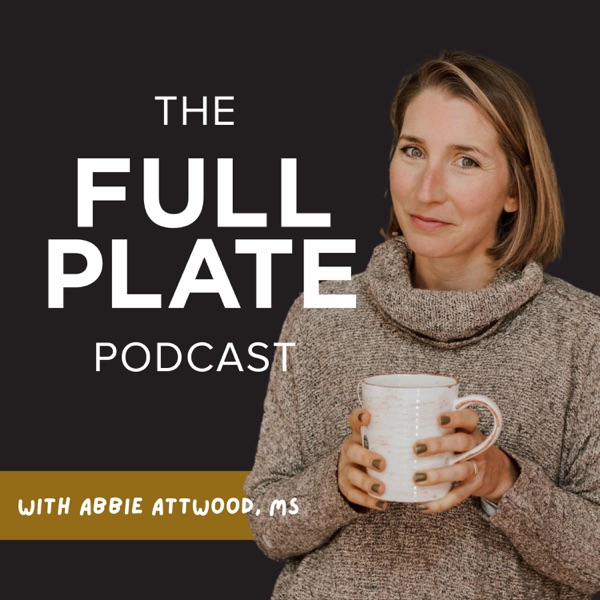
The Full Plate Podcast with Abbie Attwood, MS
Full Plate is a podcast about healing from diet culture, creating peace with food, reclaiming body autonomy and trust, and taking a weight-inclusive approach to our well-being. Each week, Abbie interviews guests or answers listener questions that explore our relationship to food and our bodies. Abbie is an anti-diet nutritionist with a master’s in nutrition and integrative health. She is also the founder and owner of Abbie Attwood Wellness, a virtual private practice dedicated to weight-inclusive care, food freedom, body image healing, and dismantling diet culture. Find Full Plate on Instagram @fullplate.podcast Abbie is @abbieattwoodwellness This show is ad-free and listener-supported. For bonus episodes and more content, join us on Patreon: http://www.patreon.com/fullplate
- Nutrition chart
- #95
- Episodes
- 240
- Releases
- Weekly
- Typical length
- 40 min
- On air since
- 2022
- Latest episode
- 16 hours ago
Episodes
240 episodes, newest first
-
1 hr 3 min
Is Diet Culture a Cult? Beauty, Patriarchy, and the Worship of Thinness with Paula Atkinson
Show notes
Today’s episode is free for everyone. Full Plate is made possible by paid subscribers. To receive bonus posts and support the pod, consider upgrading to paid. It really means the world, so, thank you!
Paula Atkinson is a psychotherapist and Licensed Independent Clinical Social Worker who has spent decades working with people around trauma, disordered eating, body image, internalized weight stigma, anxiety, grief, and relationships. For ten years, she was also a professor of Weight & Society at George Washington University, where she taught about our culture’s obsession with thinness, the history and politics of body ideals, and the oppression of larger bodies.
Listen for more on:
Paula’s experience growing up in a fat body, developing an eating disorder, and discovering how differently people treated her when her body became smaller
Why Paula thinks of thinness as a cult, and what makes its promises so difficult to walk away from
The relationship between beauty, patriarchy, white supremacy, and the policing of bodies
How attractiveness became tied to women’s survival, and why beauty standards shift alongside social and political power
Thinness as a moral hierarchy, and the promises of purity, superiority, and belonging
GLP-1s, starvation, and the normalization of suppressing our bodies’ most basic needs
Why understanding body hatred as a systemic issue can change the way we approach recovery
The grief of letting go of the promises attached to thinness, even when we know they aren't real
What to do when you know the body hierarchy is b******t but still struggle with your own body (hint: seething feminist rage)
Find more about Paula here. Follow her on Instagram here. And if you’re not following Full Plate on Instagram, make sure to do that here!
Support the show on Substack for bonus episodes, community engagement, and access to "Ask Abbie" at http://abbieattwoodwellness.substack.com/subscribe
Apply for Abbie’s Group Membership for live sessions every other week and a community of support from healing from diet culture:
https://www.abbieattwoodwellness.com/circle-monthly-group
Social media:
Find the show on Instagram: @fullplate.podcast
Find Abbie on Instagram: @abbieattwoodwellness
This is a public episode. If you'd like to discuss this with other subscribers or get access to bonus episodes, visit https://abbieattwoodwellness.substack.com/subscribe
-
34 min
Hungry for Connection: On Loneliness, Body Image, and Disordered Eating with Dr. Vanessa Scaringi and Kate Garland, LCSW
Show notes
This is a free preview of a paid episode. To hear more, visit https://abbieattwoodwellness.substack.com
What if our struggles with food and body image have as much to do with our need for safety and connection as they do with food itself?
Upgrade to paid to hear the second half of the conversation right HERE.
Today I'm welcoming back Dr. Vanessa Scaringi and Kate Garland, therapists, eating disorder specialists, and authors of Hungry for Connection: Heal Your Relationships with Food and People in an Insecurely Attached World.
In our first conversation, we explored attachment theory and how our relationships with other people can shape our relationships with food and our bodies. This time, we're taking that conversation further, looking at how diet culture, weight-loss messaging, and the world we're living in can make it difficult to trust ourselves and feel like we belong.
Part One: Free for everyone
In the first part of our conversation, we explore:
*How attachment theory helps us understand our relationships with food and other people
*Why fitting in and genuinely belonging are two very different things
*The connection between loneliness, disordered eating, and our need for safety
*How our relationships can influence our ability to trust ourselves
*Why so much of diet culture recovery involves more than talking about food or bodies
Part Two: For paid subscribers
Upgrade right here to get access to part two.
In the second half, we get into:
*The GLP-1 era and how increased weight-loss pressure is impacting people trying to make peace with food and their bodies
*Why diet culture is so good at selling us belonging and acceptance
*The exhausting pressure to optimize ourselves and how that disrupts our connection with self and others
*How to learn to trust yourself again, and why it doesn’t mean always making the “right” decision
*How we can loosen our dependence on external rules and reassurance
*Why disordered eating isn’t an individual failure, and who gets let off the hook when we treat it like one.
I hope you enjoy this conversation!
Connect with today's guests:
Hungry for Connection: Heal Your Relationships with Food and People in an Insecurely Attached World
CALM Counseling — Austin, Texas
Kate & Vanessa on Instagram
Support the show on Substack for bonus episodes, community engagement, and access to "Ask Abbie" at http://abbieattwoodwellness.substack.com/subscribe
Apply for Abbie’s Group Membership for live sessions every other week and a community of support from healing from diet culture:
https://www.abbieattwoodwellness.com/circle-monthly-group
Social media:
Find the show on Instagram: @fullplate.podcast
Find Abbie on Instagram: @abbieattwoodwellness
-
1 hr 16 min
“I Refuse to Be Good”: The Politics of Thinness and the Cost of Obedience with Savala Nolan, Author of “Good Woman: A Reckoning”
Show notes
I’ve been thinking a lot lately about what it means to be a good woman. Particularly in light of what’s been happening at Cornell, the actions of this administration, and the ways we’re watching people and institutions respond to injustice, violence, and abuses of power.
And I keep coming back to this conversation with Savala Nolan.
Savala Nolan is an essayist, speaker, and teacher whose work explores race, gender, power, and the body. She is the author of Good Woman: A Reckoning, which is the book at the center of our conversation. It’s a beautiful, challenging examination of what it means to be raised to be “good” in a culture that has very specific ideas about what goodness looks like for women.
Tune in for more on:
* The myth that being “good” (thin, quiet, agreeable) will keep women safe
* The connection between dieting, thinness, patriarchy, and social control
* Why the endless pursuit of body improvement can keep us from fully participating in our own lives.
* What happens when we stop performing the familiar rituals of body shame and food guilt.
* The discomfort and freedom of becoming a woman who no longer follows the expected rules.
* Raising girls who feel empowered to question authority and resist harmful expectations.
* Race, white supremacy, and the particular ways white women are rewarded for maintaining the status quo.
* Midlife as rupture: dieting, divorce, and the unraveling of social conditioning
* Body liberation as a daily practice — especially in the age of GLP-1s
* What it means to become “illegible” to misogynistic culture
* Savala's powerful question: Where am I being asked not to bear witness?
This conversation is about so much more than food or body image. It's about the price of belonging, what we're taught to ignore in order to remain acceptable, and the difference between being perceived as good and actually living according to our values.
Whether you're hearing it for the first time or revisiting it with me, I hope it gives you something to think about long after the episode ends.
Find Savala on IG: https://www.instagram.com/savalanolan/
Order "Good Woman" here: https://www.harpercollins.com/products/good-woman-savala-nolan?variant=43871718604834
Savala's Substack: https://savala.substack.com/
Support the show on Substack for bonus episodes, community engagement, and access to "Ask Abbie" at abbieattwoodwellness.substack.com/subscribe
Support the show: Enjoying this podcast? Please support the show on Substack for bonus episodes, community engagement, and access to "Ask Abbie" at abbieattwoodwellness.substack.com/subscribe
Apply for Abbie's monthly membership: https://www.abbieattwoodwellness.com/circle-monthly-group
This is a public episode. If you'd like to discuss this with other subscribers or get access to bonus episodes, visit https://abbieattwoodwellness.substack.com/subscribe
-
27 min
“You’re Here for a Reason”: Living Fully When Eating Disorder Recovery is Still Unfinished with Johanna Scoglio
Show notes
This is a free preview of a paid episode. To hear more, visit https://abbieattwoodwellness.substack.com
What if you’ve been working on your relationship with food and your body for years…and you’re still struggling? Does that mean you’re doing recovery wrong?
This is at the heart of today’s bonus episode of Full Plate, and I think it’s a conversation we desperately need more of.
(To hear the full conversation, become a paid subscriber right here.)
Eating disorder stories are often told from one of two places: from the absolute depths of the struggle, or from the other side, where everything gets wrapped up into a neat recovery story. But most healing happens somewhere in between.
Johanna Scoglio, author and mental health educator, joins me to talk about living with and healing from an eating disorder that has been part of her life for more than 25 years—and what changed when she stopped measuring recovery by whether she could make every thought, urge, or struggle disappear.
Johanna shares honestly about rigid definitions of recovery, weight-centered care, all-or-nothing approaches to food and exercise, and the feeling that struggling meant she was failing.
But we also get into something I think will resonate deeply with anyone who has been doing this work for a long time: the sheer exhaustion of always working on recovery, and figuring out how much of your life to devote to healing.
Listen for more on:
* Why eating disorders are so often about much more than food or body image
* The difference between being “high functioning” and actually being okay
* How perfectionism can follow us straight into recovery
* What Johanna wishes had been different about eating disorder treatment
* Weight stigma and the issues with using weight as a marker of illness or recovery
* Why an all-or-nothing approach to movement can create its own harm
* Harm reduction as an alternative to shame, compliance, and perfection
* Including exercise without an all-or-nothing approach
*The exhaustion that can come from working on recovery for years
* What Johanna believes is the real thing she's healing from (and it has nothing to do with food)
* Learning to trust yourself, your emotions, and your own inner wisdom
* What it means to create a meaningful life while you’re still “in the water”
🎧 To hear the full conversation, become a paid subscriber right here.
Paid subscriptions directly support Full Plate and make it possible for me to continue having long, nuanced, independent, sponsor-free conversations like this one.
If you’ve ever wondered, Why am I still struggling with this?, I really hope this one meets you where you are and offers a way forward.
Johanna Scoglio is an author, educator, and mental health advocate dedicated to reducing stigma and creating compassionate spaces for those navigating eating disorders. She lives in North Carolina with her husband, four bonus children, and their puppy, Copa. Her memoir is called: When the Water Still Holds Me: Letters Through the Tides of a Long-Term Eating Disorder.
Support the show on Substack for bonus episodes, community engagement, and access to "Ask Abbie" at http://abbieattwoodwellness.substack.com/subscribe
Apply for Abbie’s Group Membership for live sessions every other week and a community of support from healing from diet culture:
https://www.abbieattwoodwellness.com/circle-monthly-group
Social media:
Find the show on Instagram: @fullplate.podcast
Find Abbie on Instagram: @abbieattwoodwellness
-
48 min
You Understand Diet Culture, So Why Do You Still Hate Your Body? with Stephanie Dodier
Show notes
Today I’m speaking with Stephanie Dodier, a non-diet nutritionist, certified Intuitive Eating counselor, and cognitive behavior coach. Our conversation covers a lot of ground, but constantly circles this question:
What happens when you understand all of this diet culture stuff intellectually…but it still doesn’t quite feel true for you and your body?
We get into:
* The difference between eating something because you genuinely enjoy it and eating it because diet culture told you to
* Why satisfaction and pleasure matter in having a calm, compassionate relationship with food
* How gender, body size, and other identities affect who is “allowed” pleasure with food
* Why Intuitive Eating can feel like it “isn’t sticking”
* The connection between food, body control, self-worth, and belonging
* How patriarchy and cultural conditioning shape our beliefs about our bodies
* Why understanding diet culture intellectually is different from embodying new beliefs
* Why body image work can feel less straightforward than healing our relationship with food
* What embodiment can actually look like in everyday life
* Stephanie’s experience learning to wear short sleeves after years of hiding her arms
* How community helps us grow stronger roots outside of diet culture
* A practical exercise for separating facts from the thoughts and beliefs we’ve attached to them
Stephanie's work is focused on behavioral science, human psychology and body image. Her podcast is called It's Beyond the Food, and you can find her on Instagram at @stephdodier.
Apply for Abbie’s Group Membership for live sessions every other week and a community of support from healing from diet culture:
https://www.abbieattwoodwellness.com/circle-monthly-group
Support the show on Substack for bonus episodes, community engagement, and access to "Ask Abbie" at http://abbieattwoodwellness.substack.com/subscribe
Social media:
Find the show on Instagram: @fullplate.podcast
Find Abbie on Instagram: @abbieattwoodwellness
This is a public episode. If you'd like to discuss this with other subscribers or get access to bonus episodes, visit https://abbieattwoodwellness.substack.com/subscribe
-
6 min
Beyond GLP-1 Weight Loss: Weight Regain, Long-Term Use, and Pharma Influence with Ragen Chastain (Part Two)
Show notes
This is a free preview of a paid episode. To hear more, visit https://abbieattwoodwellness.substack.com
This is part two of my conversation with Ragen Chastain. We pick up with the question of what happens when people stop taking GLP-1 medications, and whether “taking them for life” is actually supported by the research.
From there, Ragen takes us deeper into the research on weight regain, body composition changes, and the increasingly broad claims that GLP-1 medications can treat everything from cardiovascular disease to mental health concerns. We also talk about pharmaceutical influence on healthcare providers, what happens when doctors are working from incomplete or biased information, and how patients can advocate for themselves when / if their doctor presents a GLP-1 as the answer.
This is a bonus episode for paid subscribers. To join us, upgrade here.
And if you’re already a paid subscriber: thank you for making this possible. I genuinely mean that.
In this episode, you’ll hear:
* What the research actually tells us about weight regain after stopping GLP-1 medications
* The idea that GLP-1 medications need to be taken for life
* Weight regain, muscle loss, and changes in body composition
* How researchers define “maintaining” weight loss and why those definitions matter
* The way GLP-1 research is presented in headlines, abstracts, and public conversations
* Claims that GLP-1 medications may benefit conditions beyond type 2 diabetes and weight loss
* Why the dose being studied matters when we’re trying to understand health outcomes
* How pharmaceutical companies influence healthcare providers through research, education, and financial relationships
* The difference between a doctor being malicious and a doctor being misinformed
* What happens when GLP-1 medications are presented as a solution to almost every health concern
* How weight stigma can shape which treatments are offered to higher-weight patients
* BMI-based denials of care and the way weight loss can become a prerequisite for receiving healthcare
* Questions patients can ask when a provider recommends a GLP-1
* How to advocate for weight-inclusive care, even when there is a power imbalance between doctors and patients
* Why informed consent requires more than simply being told that a medication “works”
* What Ragen hopes people take away from the larger conversation about weight, health, and healthcare
Ragen Chastain is a researcher, writer, speaker, and board-certified patient advocate who has spent more than 20 years examining the intersections of weight science, weight stigma, and healthcare. She brings a research- and statistics-informed perspective to a conversation that is often dominated by pharmaceutical marketing, influencer anecdotes, and very simplified claims about what these medications do.
Find Ragen at https://weightandhealthcare.substack.com/ and on instagram at @ragenchastain
Support the show on Substack for bonus episodes, community engagement, and access to "Ask Abbie" at http://abbieattwoodwellness.substack.com/subscribe
Apply for Abbie’s Group Membership for live sessions every other week and a community of support from healing from diet culture:
https://www.abbieattwoodwellness.com/circle-monthly-group
Social media:
Find the show on Instagram: @fullplate.podcast
Find Abbie on Instagram: @abbieattwoodwellness
-
40 min
GLP-1 Medications: What We Know About Safety, Food Noise, and Weight Loss with Ragen Chastain
Show notes
GLP-1 medications like Ozempic, Wegovy, Mounjaro, and Zepbound have gone from relatively niche diabetes medications to one of the biggest (and most controversial) stories in health and wellness.
As you may have noticed, I’ve taken a bit of a hiatus from the podcast the past couple of months while I’ve been recovering from a SCAD heart attack.
Today, I'm back with a brand new conversation about weight loss drugs with Ragen Chastain, a researcher, writer, speaker, and board-certified patient advocate who has spent more than 20 years examining the intersections of weight science, weight stigma, and healthcare. She brings a research- and statistics-informed perspective to a conversation that is often dominated by pharmaceutical marketing, influencer anecdotes, and very simplified claims about what these medications do.
We do a deep dive into GLP-1 medications, weight loss, food noise, hunger, weight stigma, and what we actually know about the safety and long-term effects of these drugs.
In this episode, we get into:
* Ragen’s journey from dieting and doing her own literature review to becoming a researcher and advocate in the weight-inclusive healthcare space
* What we know about the failure of long-term weight-loss interventions
* Weight-inclusive healthcare and why it shouldn’t depend on whether we believe people can or cannot lose weight
* How GLP-1 medications work, including their effects on blood sugar, gut motility, digestion, and hunger
* The difference between diabetes dosing and the higher doses used for weight loss
* What “food noise” actually means (and what it doesn’t mean)
* How diet culture and restriction can affect hunger and thoughts about food
* The medicalization of hunger
* Why the same symptoms can be interpreted and treated differently depending on the size of the person experiencing them
* Weight stigma in healthcare and the assumption that weight loss is the answer to an enormous range of health concerns
* What we know and don’t know about the long-term safety of GLP-1 medications
* Why research on a medication at one dose cannot automatically answer questions about that medication at another dose
* Study dropout and what can get lost when we look only at headlines, abstracts, and conclusions
* Conflicts of interest in pharmaceutical research
* Concerns about the quality and transparency of long-term safety data
* What happens when medications designed to suppress hunger are used in people whose bodies are otherwise regulating blood sugar normally
This is part one of the conversation. In part two (releasing next week) we’ll dig further into weight regain, body composition, how GLP-1 research is presented to the public, the explosion of claims that these medications can treat everything from cardiovascular disease to mental health concerns, pharmaceutical influence on healthcare providers, and what you can actually do when a doctor recommends a GLP-1.
Apply for Abbie’s Group Membership:
If you're looking for community and continued learning, apply for Abbie's monthly membership: https://www.abbieattwoodwellness.com/circle-monthly-group. We meet every other Thursday, and have a private online space for ongoing conversations between sessions.
Enjoying this podcast? Please support the show on Substack for bonus episodes, community engagement, and access to "Ask Abbie" at http://abbieattwoodwellness.substack.com/subscribe
Find more resources from Ragen:
Substack: https://weightandhealthcare.substack.com/
Instagram: https://www.instagram.com/ragenchastain/?hl=en
This is a public episode. If you'd like to discuss this with other subscribers or get access to bonus episodes, visit https://abbieattwoodwellness.substack.com/subscribe
-
1 hr 14 min
How to live in a body that hurts: chronic illness, disability, and body image with Dr. Jennifer Caspari
Show notes
What does it mean to live in a body that doesn’t always do what you wish it would? A body that’s unpredictable, maybe in pain, maybe exhausted — a body shaped by chronic illness, disability, or medical trauma?
This week on the podcast, I’m revisiting an episode with the deeply compassionate Dr. Jennifer Caspari, a psychologist who specializes in health psychology and lives with cerebral palsy. Her personal and professional wisdom come together in such a powerful way — this conversation felt like a breath of fresh air in a world that so often asks us to override, fix, or fight our bodies.
We talk about what it means to be in relationship with your body when it doesn’t feel like it’s on your side — and how to cultivate self-compassion, presence, and joy even in the midst of that. (Her new book is a beautiful read, by the way).
Jen shares her own story — how she came into therapy, what it’s like navigating the world in a disabled body, and the mindset shifts that have helped her most during painful or difficult seasons.
We explore:
* How societal body image pressure intersects with disability and illness
* Why we don’t have to wait for symptoms to go away in order to start living
* The role of values-based living and gentle courage in hard moments
* Practical strategies for coping with chronic pain
* What it really means to practice radical acceptance
* Why chronic illness often involves grief — of function, identity, possibility
* Navigating relationships and communicating needs with loved ones
* Finding agency, even when so much feels out of your control
* Living fully with a body that’s chronically ill — and maybe always will be
Support the show: Enjoying this podcast? Please support the show on Substack for bonus episodes, community engagement, and access to "Ask Abbie" at http://abbieattwoodwellness.substack.com/subscribe
Apply for Abbie’s Group Membership:
If you're looking for support, live sessions, community, and continued learning, apply for Abbie's monthly membership: https://www.abbieattwoodwellness.com/circle-monthly-group
Social media:
Find the show on Instagram: @fullplate.podcast
Find Abbie on Instagram: @abbieattwoodwellness
Podcast Cover Photography by Anya McInroy
This podcast is ad-free and made possible by paid subscribers on Substack. Subscribe HERE.
This is a public episode. If you'd like to discuss this with other subscribers or get access to bonus episodes, visit https://abbieattwoodwellness.substack.com/subscribe
-
6 min
A Rare Diagnosis and Body Trust in Recovery
Show notes
This is a free preview of a paid episode. To hear more, visit https://abbieattwoodwellness.substack.com
https://abbieattwoodwellness.substack.com/subscribe
Today's episode is a bit different than usual. I'm sharing (solo) a bit about where I've been, what's been going on with my health, and what it all means for this podcast.
To listen, upgrade to paid right here. Paid subscribers get access to all bonus content -- including the full archive of paywalled podcast episodes and newsletters.
In the episode, I get into:
- what happened (the heart attack, the hospital stay, and how my husband and family played a role)
- trusting your body even in the middle of a crisis
- the ways a medical condition overlaps with diet culture
- holding space for how unique everyone's experience with a health condition is, even when it's the same diagnosis
- the emotional impact of a life-threatening experience
- leaning into rest as a radical act of self-care, and how hard that can be in our culture
- where I'm finding the capacity for understanding and patience with my body, and where I'm not
- what this means for the podcast and my business
Thank you so muxh for supporting me -- both as a person, and as an independent writer / producer. It means the world.
-
1 hr 10 min
The Wisdom in Dissociation: When Leaving Your Body Is a Form of Protection with Monika Ostroff, LICSW, CEDS-S
Show notes
Abbie is joined by the incredible Monika Ostroff, executive director of MEDA, clinician, author, and person with lived experience of both anorexia and DID — for one of the most illuminating conversations the show has ever had. This one will change the way you think about survival, the body, and what healing actually asks of us.
In this episode:
- What dissociative identity disorder (DID) actually is — and how it's almost nothing like what you've seen in media
- Why DID is far more common than most people realize, and why diagnosis takes so long
- The striking overlap between DID and eating disorders, and what that tells us about both
- How eating disorders function as a trauma response — and why that framing matters for recovery
- What it means to approach an eating disorder with compassion rather than shame
- The clinical and personal complexity of treating multiple eating disorder presentations within one system
- Why the "control freak" narrative around eating disorders misses the point entirely
- Monica's own lived experience with anorexia, DID, and what recovery has looked like
- The single piece of wisdom that reoriented Monica's entire relationship with herself
About Monika: Monika Ostroff, LICSW, CEDS-S is the Executive Director of the Multi-Service Eating Disorders Association, Inc (MEDA). She has over 25 years of experience in the field of eating disorders. Prior to leading MEDA, she directed several residential, partial hospital and intensive outpatient eating disorder programs in addition to having owned a thriving private practice.
Practicing from a trauma informed, social justice and staunchly HAES® aligned lens, Monika is a dedicated ally and strong advocate working to ensure access to equitable, compassionate, and affirming care for all. Find Monika: Healing My Parts on Substack, Instagram, and podcast
Support the show: Enjoying this podcast? Please support the show on Substack for bonus episodes, community engagement, and access to "Ask Abbie" at http://abbieattwoodwellness.substack.com/subscribe
Apply for Abbie’s Group Membership:
Already been at this anti-diet culture thing for a while, but want community and continued learning? Apply for Abbie's monthly membership: https://www.abbieattwoodwellness.com/circle-monthly-group
Find the show on Instagram: @fullplate.podcast
Find Abbie on Instagram: @abbieattwoodwellness
This is a public episode. If you'd like to discuss this with other subscribers or get access to bonus episodes, visit https://abbieattwoodwellness.substack.com/subscribe
-
1 hr 5 min
The Chronic Pain and Diet Culture Connection Nobody's Talking About with DK Ciccone, Author of You're Meant to Move
Show notes
I'm joined by DK Ciccone — comprehensively certified Pilates instructor, pain reprocessing therapy practitioner, and author of You're Meant to Move — for a conversation that is both deeply personal and clinically rich. We talk about what chronic pain actually is, why so many people have been dismissed or mislabeled, and what it looks like to rebuild a relationship with movement that isn't driven by fear, punishment, or diet culture.
This was originally a paid episode. Consider upgrading to a paid subscription to keep Full Plate going: https://abbieattwoodwellness.substack.com/subscribe
In this episode:
DK's journey with chronic pain and her past as a dancerHow chronic pain forms and why the pain is real even in the absence of ongoing tissue damage
The nervous system science behind pain sensitization — and why catastrophizing physically amplifies pain
Kinesiophobia: the fear of movement that develops after chronic pain, and how to work through it
Somatic tracking and pain reprocessing therapy as tools for understanding pain signalsHow to explore the difference between pain and discomfort
DK's "refuge and reach" framework for rebuilding a movement practice incrementally
Exploring functional movement versus "exercise"The research debunking weight loss as a solution for chronic pain
Why restriction and dieting actually increase chronic pain risk — and the clinical evidence behind it
How trauma and disconnection from the body compound the chronic pain experience
What embodied movement looks like when you're coming back from years of diet culture messaging
About DK Ciccone: Dana Karen ("DK") Ciccone is a comprehensively certified Pilates instructor who helps people in pain improve strength, mobility, and well-being in a weight-neutral environment. She is trained in pain reprocessing therapy through the Pain Psychology Center and is the founder of Movement Remedies, a chronic pain–focused Pilates studio and movement coaching business. Her book, You're Meant to Move: A Guide to Conquering Chronic Pain, Increasing Stress Resilience, and Reclaiming an Active Life, was released in December 2023.
Support the show: Enjoying this podcast? Please support the show on Substack for bonus episodes, community engagement, and access to "Ask Abbie" at http://abbieattwoodwellness.substack.com/subscribe
Apply for Abbie’s Group Membership:
Already been at this anti-diet culture thing for a while, but want community and continued learning? Apply for Abbie's monthly membership: https://www.abbieattwoodwellness.com/circle-monthly-group
Social media:
Find the show on Instagram: @fullplate.podcast
Find Abbie on Instagram: @abbieattwoodwellness
This is a public episode. If you'd like to discuss this with other subscribers or get access to bonus episodes, visit https://abbieattwoodwellness.substack.com/subscribe
-
1 hr 10 min
Reclaiming Childfree: Chrissy King & Claire Gould on Bodily Autonomy, Reproductive Justice, and Wanting More Than "Fine"
Show notes
This week's episode is one I have been so excited to share. I'm joined by two brilliant, generous, and deeply thoughtful guests — writer, educator, and body liberation advocate Chrissy King, and creative and founder Claire — who have co-created the Child-Free Coven, a community and mutual aid space for people who are child-free, by choice or by circumstance.
In this episode:
*What the word “childfree” actually means — and why Chrissy and Claire are actively reclaiming it
*Why being childfree is not anti-child, and the James Baldwin quote at the center of their community
*Chrissy’s story: ending a marriage, being the first woman in her lineage to have this choice, and what liberation actually feels like
*Claire’s story: knowing from her early teens, navigating a partner’s uncertainty, and how 25 years of undiagnosed endometriosis is inextricably linked to her childfree journey
*The things people say to childfree women and what to make of them
*The connection between body liberation and the childfree experience
*Race, reproductive justice, and how this conversation is profoundly different depending on who you are
*The political moment we’re in — bodily autonomy, forced birth, and what history tells us about these tactics
*What it means to pour your love, attention, and energy into the world without motherhood as the vehicle
*The difference between grief and regret
*What Chrissy means when she says she wanted more than “fine”
Resources:
Find The Childfree Coven on Substack and Instagram
Chrissy’s book: The Body Liberation Project
Claire on Instagram and Chrissy on Instagram
Rachel Cargill / Rich Auntie Supreme
Resmaa Menakem, My Grandmother’s Hands
Tricia Hersey / Rest is Resistance
Support the show: Enjoying this podcast? Please support the show on Substack for bonus episodes, community engagement, and access to "Ask Abbie" at http://abbieattwoodwellness.substack.com/subscribe
Apply for Abbie’s Group Membership: https://www.abbieattwoodwellness.com/circle-monthly-group
Find the show on Instagram: @fullplate.podcast
Find Abbie on Instagram: @abbieattwoodwellness
This is a public episode. If you'd like to discuss this with other subscribers or get access to bonus episodes, visit https://abbieattwoodwellness.substack.com/subscribe
-
6 min
Diet Culture Recovery, OCD, and Size Inclusive Fashion: Viva Voce Founder Kate Zigrang on What Healing Actually Requires (Part Two)
Show notes
This is a free preview of a paid episode. To hear more, visit https://abbieattwoodwellness.substack.com
This is part two of my conversation with Kate Zigrang, founder of Viva Voce — and this is where everything shifts.
To hear it: https://abbieattwoodwellness.substack.com/subscribe
We left off last week with Kate at a turning point: an OCD diagnosis, a doctor who finally told her the truth about her health, and something beginning to loosen. This episode is about what came next — the harder, slower, more relational work of actually stepping out of diet culture after a lifetime inside it.
We cover:
* Going no contact with her parents — the decision, the grief, and what space it created
* The complicated dynamic with her mom: over-apologizing, enmeshment, and why leaving felt both impossible and necessary
* The slow, specific work of separating her own body from her mother's — learning to look at herself without dread
* Religious deconstruction happening simultaneously with the body acceptance work and the mental health work — all three threads unraveling at once
* The Manhattan pants incident — eighteen months of traveling the world, unable to find a single pair of pants in her size anywhere in New York City, and the rage that became a turning point
* What Viva Voce actually is — a marketplace vetting brands for ethics, sustainability, and genuine size inclusivity
* Why she insists on carrying straight and plus sizes in the same space
* The pop-up strategy — and why she's bringing it to smaller cities on purpose
* A data project collecting real body measurements to understand how clothes could actually be made better
* Why belonging is at the center of every decision she makes — and what that looks like in practice
This episode is for paid subscribers. If you'd like access to this conversation and the full archive, you can subscribe here:
https://abbieattwoodwellness.substack.com/subscribe
Find Kate and Viva Voce at http://vivavoce.live and on Instagram @http://vivavoce.live
Support the show: Enjoying this podcast? Please support the show on Substack for bonus episodes, community engagement, and access to "Ask Abbie" at http://abbieattwoodwellness.substack.com/subscribe
Apply for Abbie’s Group Membership:
Already been at this anti-diet culture thing for a while, but want community and continued learning? Apply for Abbie's monthly membership: https://www.abbieattwoodwellness.com/circle-monthly-group
Find the show on Instagram: @fullplate.podcast
Find Abbie on Instagram: @abbieattwoodwellness
Podcast Cover Photography by Anya McInroy
Podcast Editing by Brian Walters
-
39 min
Inherited Body Shame, Disordered Eating, and Learning to Stop Fighting a Body You Were Always Going to Have with Kate Zigrang
Show notes
Kate Zigrang is an advocate, entrepreneur, impact investor, and the founder of Viva Voce — a size-inclusive fashion marketplace and community rooted in body justice. But before we get to what she's built, we go back to where it all started.
In this first part of a two-episode conversation, Kate takes us through her personal history with her body — from watching her mom navigate the world in a larger body and absorbing the shame that surrounded her, to puberty changing her own body in ways she wasn't prepared for, to a disordered relationship with food that developed in her late teens and went unnamed for years. We also get into her OCD diagnosis at 31 — more than a decade after onset — and what it meant to finally have language for what her brain had been doing all along.
This is a conversation about the things diet culture teaches us before we're old enough to question them, and what it actually takes to unlearn them.
We talk about:
*Growing up watching her mom be treated as a problem to be fixed, and inheriting that shame before she had words for it
*How her body changed at puberty while she was already carrying that inherited weight
*The food rules in her home growing up, the restriction and binge cycle they created, and how it planted seeds for a disordered relationship with food
*Moving away from home at 21, marriage, pregnancy, and her body changing again in ways that felt out of her control
*The wellness journey — naturopathic doctors, juice cleanses, a month-long juice fast, and crying in the shower
*Getting an OCD diagnosis at 31 and finally understanding what her brain had been doing since she was a teenager
*A doctor who told her, simply, that she was healthy — and how much that cracked open
*Finding Maintenance Phase, Aubrey Gordon, and Fearing the Black Body by Sabrina Strings, and what it meant to finally have the research match what she'd lived
Find Kate and Viva Voce at http://vivavoce.live and on Instagram @http://vivavoce.live.
Books mentioned: What We Don't Talk About When We Talk About Fat by Aubrey Gordon; Fearing the Black Body by Sabrina Strings
Get 40% off of your Hungryroot order with code abbie40
Support the show: Enjoying this podcast? Please support the show on Substack for bonus episodes, community engagement, and access to "Ask Abbie" at http://abbieattwoodwellness.substack.com/subscribe
Apply for Abbie’s Group Membership:
Already been at this anti-diet culture thing for a while, but want community and continued learning? Apply for Abbie's monthly membership: https://www.abbieattwoodwellness.com/circle-monthly-group
Find the show on Instagram: @fullplate.podcast
Find Abbie on Instagram: @abbieattwoodwellness
Podcast Cover Photography by Anya McInroy
Podcast Editing by Brian Walters
This podcast is ad-free and support comes from your support on Substack. Subscribe HERE.
This is a public episode. If you'd like to discuss this with other subscribers or get access to bonus episodes, visit https://abbieattwoodwellness.substack.com/subscribe
-
24 min
Is It OCD, Anxiety, or Disordered Eating? The Overlap, the Misdiagnosis, and Why It Matters for Recovery with Dana Colthart, LCSW
Show notes
This is a free preview of a paid episode. To hear more, visit https://abbieattwoodwellness.substack.com
Abbie sits down with Dana Colthart, LCSW, a therapist specializing in OCD and eating disorders, to explore one of the most under-diagnosed and misunderstood overlaps in mental health. From intrusive thoughts to diet culture to why you can’t logic your way into recovery, this conversation explores what's truly driving our fears, our coping strategies, and the compulsions holding us back.
The first part of this episode is free for everyone. Paid subscribers can hear the entire conversation. You can upgrade here: https://abbieattwoodwellness.substack.com/subscribe
In this episode:
* Why OCD is so much more than hand-washing and organization — and what it actually looks like
* The key difference between OCD and generalized anxiety disorder, and why misdiagnosis is so common
* How the OCD cycle works: the obsession, the compulsion, the temporary relief, and why that relief is the trap
* What reassurance-seeking is, why it counts as a compulsion, and how it shows up in relationships with food and body image
* Pure-O OCD — when the compulsions are entirely mental, and why this goes undiagnosed so often
* Taboo and shameful intrusive thoughts: why the people most disturbed by a thought are almost never the ones who’d act on it
* What ego-dystonic versus ego-syntonic means, and why that distinction matters in disentangling OCD from eating disorders
* How diet culture functions like a mass OCD delivery system — rules, rituals, fear, and relief that never quite arrives
* Why clinicians treating eating disorders are often the only voice in a client’s life saying “you don’t have to do this” — and how hard that is
* The particular cruelty of food and body-related intrusive thoughts in a world that confirms them everywhere
* How OCD and eating disorders mimic each other, overlap, and take turns — and what that seesaw can look like in recovery
* What ERP (Exposure and Response Prevention) actually is and why the discomfort is the point
* Why your brain watches your actions, not your words — and what that means for recovery
* The systemic piece: how disordered behaviors get praised in some bodies and diagnosed in others
* What to do if you’re recognizing yourself in this episode but aren’t ready to call a therapist yet
About Dana: Dana Colthart, LCSW, is the clinical director of Clear Light Therapy, a boutique practice based in Englewood, New Jersey. She provides evidence based treatment for OCD, anxiety disorders, and eating disorders, blending Exposure and Response Prevention, Acceptance and Commitment Therapy, and integrative mind body approaches. Dana is also a Certified Eating Disorder Specialist.
Support the show: Enjoying this podcast? Please support the show on Substack for bonus episodes, community engagement, and access to "Ask Abbie" at http://abbieattwoodwellness.substack.com/subscribe
Apply for Abbie’s Group Membership:
Already been at this anti-diet culture thing for a while, but want community and continued learning? Apply for Abbie's monthly membership: https://www.abbieattwoodwellness.com/circle-monthly-group
Find the show on Instagram: @fullplate.podcast
Find Abbie on Instagram: @abbieattwoodwellness
Podcast Cover Photography by Anya McInroy
Podcast Editing by Brian Walters
This podcast is ad-free and support comes from your support on Substack. Subscribe HERE.
-
56 min
Moving Without Punishment: A Weight-Neutral Approach to Exercise with Anna Maltby
Show notes
Abbie speaks with Anna Maltby — health journalist, personal trainer, and author of the How to Move newsletter — for a conversation that pulls back the curtain on the fitness industry. At the heart of this episode is: what does look like to rebuild a relationship with movement that isn’t rooted in shrinking, earning food, or “fixing” your body?
They talk about how fitness media manufactures insecurity to sell us solutions, what people are unlearning when they come to weight-neutral movement, why decoupling exercise from aesthetics can temporarily leave people unmotivated (and what to do about that), and why your squat is probably fine.
Tune in for more on:
* The “body as business card” problem in fitness and nutrition
* How magazine cover lines were engineered to exploit seasonal body insecurities
* Anna’s origin story: from Eat This Not That to anti-diet fitness journalism
* The Refinery29 moment that changed everything (shoutout to Kelsey Miller’s Anti-Diet Project column)
* What people are unlearning: trusting their bodies, eating before workouts, modifications that aren’t lesser
* Why losing aesthetic motivation can feel like losing all motivation, and how to find intrinsic intentions
* The importance of where you are in recovery before reintroducing movement
* How to experiment with movement without judging yourself on the first try
* The “you’re doing it wrong” trend and why it’s harmful even in anti-diet spaces
* Body diversity and squat mechanics (yes, really)
For more from Anna:
https://howtomove.substack.com/
https://www.instagram.com/howannamoves/
Support the show: Enjoying this podcast? Please support the show on Substack for bonus episodes, community engagement, and access to "Ask Abbie" at http://abbieattwoodwellness.substack.com/subscribe
Apply for Abbie’s Group Membership:
Already been at this anti-diet culture thing for a while, but want community and continued learning? Apply for Abbie's monthly membership: https://www.abbieattwoodwellness.com/circle-monthly-group
Social media:
Find the show on Instagram: @fullplate.podcast
Find Abbie on Instagram: @abbieattwoodwellness
This is a public episode. If you'd like to discuss this with other subscribers or get access to bonus episodes, visit https://abbieattwoodwellness.substack.com/subscribe
-
55 min
Why Girls Are Struggling With Their Bodies More Than Ever with Dr. Charlotte Markey
Show notes
Body image researcher and Rutgers University psychology professor Dr. Charlotte Markey is back for a second time on the podcast. She has spent nearly three decades researching body image, and has written books for tweens, teens, boys, girls, and adults.
We get into so much…including:
* Body image as relational: how environment and relationships shape how we feel in our bodies
* The father dynamic, achievement culture, and how a critical home environment affects girls
* Biohacking and wellness culture as diet culture in disguise
* What happens when food gets moralized into good and bad
* Parents disparaging their own bodies and how it lands on daughters
* Body dissatisfaction across racial, cultural and socioeconomic backgrounds
* Puberty: why normalizing it matters and why the conversation needs to extend beyond adolescence
* How diet culture exploits women’s hormonal life stages
* Whether there is a critical window for body image intervention
* Social media’s impact on body shame and how to learn media literacy for critical thinking and protection
* Body diversity and why the bodies we’re sold are not achievable for most people
* The protein obsession in wellness culture and why it’s concerning in adolescents
* What to do when your daughter is already struggling
* How parents can audit their own relationship with food and body in service of their kids
Charlotte Markey, Ph.D., is a world-leading expert in body image research, having studied body image and eating behavior for nearly three decades. She is passionate about understanding what makes us feel good about our bodies and helping people to develop a healthy body image and relationship with food. Charlotte is an experienced book author, research scientist, clinician, speaker, and psychology professor at Rutgers University, Camden.Her books: https://www.thebodyimagebook.com/Instagram: https://www.instagram.com/char_markeySubstack: https://drcharlottemarkey.substack.com/Find Full Plate on Instagram: https://www.instagram.com/fullplate.podcast/Find Abbie on Instagram: https://www.instagram.com/abbieattwoodwellness/Subscribe to the newsletter: https://abbieattwoodwellness.substack.com/Listen to the first episode with Dr. Charlotte Markey
Full Plate by Abbie Attwood is a reader-supported publication. To receive special posts, bonus episodes, and support this work, consider becoming paid subscriber.
This is a public episode. If you'd like to discuss this with other subscribers or get access to bonus episodes, visit https://abbieattwoodwellness.substack.com/subscribe
-
7 min
Dating in Recovery: On Vulnerability, Diet Culture in Relationships, and Finding Someone Who Can Handle the Hard Stuff (Bonus Episode)
Show notes
This is a free preview of a paid episode. To hear more, visit https://abbieattwoodwellness.substack.com
Abbie answers a listener question about one of the most complicated intersections: dating (relationships) and diet culture — especially when you're carrying a history of body shame, disordered eating, and the ongoing, nonlinear work of recovery.
Elizabeth, a listener in her early 30s, writes in about the men she keeps encountering on the apps — the gym-obsessed ones, the salad-only ones — and asks a question that cuts to the heart of it: is this my gut, or is this fear?
What you'll hear:
*Why "too sensitive" isn't a useful frame — and what to ask instead
*Safety and self-worth as the foundation of dating in recovery
*Learning to trust your intuition when diet culture has distorted it
*When to share your mental health history (and when you don't have to)
*The difference between a trigger and something to work through
*Revisiting your dating app parameters — and the biases built into them
*Abbie's own experience navigating ED recovery while dating
Then Jeb, Abbie's husband, joins for an unplanned conversation about what it was actually like when they met — both carrying things they weren't sure how to share.
*What happened when Jeb disclosed his sobriety on a rooftop, early on
*Why vulnerability can work as a filter, not just a risk
*What Jeb was looking for in a partner when he was newly out of treatment
*The moment Abbie knew he was someone she could be with through hard things
This episode is ultimately about openness — what it costs, what it protects, and what becomes possible when you find someone willing to meet you there.
This is a BONUS episode for paid subscribers on Substack. To hear it, upgrade here: https://abbieattwoodwellness.substack.com/subscribe
-
1 hr 4 min
"GLP-1 Marketing is Scorched Earth": On Culture, Ethics, and Starvation States with Virgie Tovar
Show notes
There’s a lot of noise right now around GLP-1 medications—conflicting advice, emotional stories, and a cultural shift that feels hard to name.
Abbie sits down with Virgie Tovar—author, activist, and leading voice on weight stigma—to slow things down and ask a deeper question: what is actually happening here?
They talk about how GLP-1s work, how they’re being marketed, what ethics have to do with this, and why so many people are feeling confused, overwhelmed, and even destabilized—especially those with a history of dieting or eating disorders.
As you listen, please remember: this episode zooms out and looks at the big picture and the culture around these medications. Body autonomy is not up for debate.
Tune in for more on:
What GLP-1s are—and how they drive appetite suppression and restriction
Is this really “new”? (dieting, weight loss, and long-term outcomes)
The marketing machine: confusion and co-opting body positivity
The concept of “food noise”
Virgie’s brilliant perspective on the big picture and why this feels so intense right now
Weight stigma vs. the promise of empowerment
Hunger explained: objective vs. subjective
Is there true “peace with food” through this medication?
The cultural shift: weight loss as expectation, not choice
The business behind it all: profit, scalability, and the GLP-1 “gold rush”
The core ethical question: is intentional starvation, at an industry and cultural level, ever justified?
Staying grounded: navigating conversations, protecting recovery, and finding support
This episode is available for free for everyone.
To support the show, please consider upgrading to paid on Substack for bonus episodes, community engagement, and access to "Ask Abbie" at http://abbieattwoodwellness.substack.com/subscribe
Virgie Tovar is a plus-size Latina author, lecturer, and leading expert on weight-based discrimination and body image with over a decade of experience. She is the founder of Body Image Reset, an AI app for people struggling with GLP-1 ad overwhelm. Tovar is a contributor for http://Forbes.com where she covers the plus-size market and how to end weight discrimination at work, and she's the host of GLP-1 Truth Serum, a podcast dedicated to asking critical health questions about the current explosion in injectable weight-loss medications.
Resources mentioned:
Virgie's Substack - https://virgietovar.substack.com/
Abbie’s episode on the Minnesota Starvation Study
GLP-1 Overwhelm App - http://www.glp1overwhelm.com
The Body Positive Journal by Virgie Tovar
You Have the Right to Remain Fat by Virgie Tovar
GLP-1 Truth Serum Podcast: https://virgietovar.substack.com/podcast
This is a public episode. If you'd like to discuss this with other subscribers or get access to bonus episodes, visit https://abbieattwoodwellness.substack.com/subscribe
-
6 min
“It Works Until It Doesn’t”: Under-Eating, Shrinking to Belong, and the Long Game of Taking Care of Your Body with Leslie Schilling, RD (Part Two)
Show notes
This is a free preview of a paid episode. To hear more, visit https://abbieattwoodwellness.substack.com
Today's episode is available in full for paid subscribers. You can upgrade right here. Thank you so much for your support!
This is Part 2 of my conversation with Leslie Schilling, and we get into the harder, thornier stuff—the cultural forces that make all of this so difficult to navigate, and the clinical tools Leslie uses to help people find their way through.
We cover:
— What weight suppression actually means, and why it has nothing to do with body size
— The physical toll of even "light" under-eating, and why it can feel like it's working until it suddenly isn't
— GLP-1 medications, informed consent, and what most prescribers aren't telling their patients
— The way exercise intersects with GLP-1s and why being told to work out more while your hunger cues are suppressed is a problem
— Muscle loss, sarcopenia, and why fueling your body matters more as you age
— RED-S and why it's not just for elite athletes
— "Weaponized compassion" and the way diet culture and the medical system dress up restriction as care
— How belonging and community drive so many of our behaviors around food, movement, and medication
— Body grief and the real, valid loss that comes with a changing body
— Why lowering the bar is not giving up
This episode is available in full for paid subscribers. Upgrade here to listen to the whole thing.
Part 1 is free and available wherever you listen to podcasts.
Find Leslie: Instagram: @LeslieSchilling Website: http://leslieschilling.com
Find Full Plate: Instagram: @fullplate.podcast Substack: http://abbieattwoodwellness.substack.com
About Leslie: Leslie Schilling, MA, RDN, CSCS, CEDS-C, owns a Las Vegas-based private practice specializing in nutrition counseling for disordered eating and performance nutrition for professional athletes, performers, and military personnel. In her more than 20 years in the fields of sport nutrition, eating disorders, and strength and conditioning, Leslie has served in many settings, including as a performance nutrition consultant for Cirque du Soleil and the NBA, and as an expert contributor to U.S. News & World Report. One of her favorite things to do is support registered dietitians, coaches, and other professionals working at the intersection of eating disorders and sport through professional supervision and mentorship in the Dietitian Development Hub Mighty Network Community. Check out Leslie’s latest book, Feed Yourself, about how diet culture shows up in our safest places, which is available anywhere books are sold.
Support the show: Enjoying this podcast? Please support the show on Substack for bonus episodes, community engagement, and access to "Ask Abbie" at http://abbieattwoodwellness.substack.com/subscribe
Apply for Abbie’s Group Membership:
Already been at this anti-diet culture thing for a while, but want community and continued learning? Apply for Abbie's monthly membership: https://www.abbieattwoodwellness.com/circle-monthly-group
Mental Health lists
More Mental Health shows picked out from the charts






More in Mental Health
Placed highest on Apple Podcasts' Mental Health chart right now