Podcast
The Gap
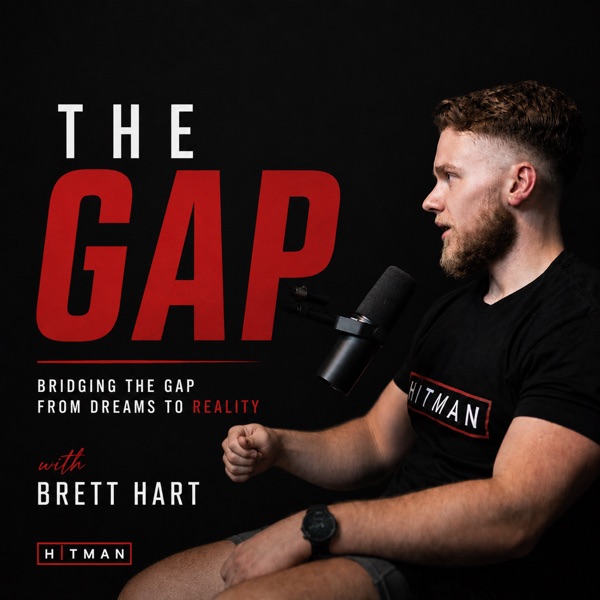
The Gap is about bridging the gap from dreams to reality.
Hosted by Brett Hart, the podcast explores performance, coaching, mindset, business, and the lessons learned through pursuing something bigger.
Through real conversations with athletes, coaches, entrepreneurs, and high performers, The Gap dives into what it actually takes to turn ambition into action
and action into results.
- Episodes
- 156
- Releases
- Weekly
- Typical length
- 1 hr
- On air since
- 2023
- Latest episode
- 1 day ago
Episodes
156 episodes, newest first
-
1 hr 9 min
#154 - Joe Pedulla - Build a Brand People Trust & a Business With Purpose
Show notes
Follow Joe on IG: https://www.instagram.com/pedullaperformance/
Learn how to start posting content here: https://www.skool.com/content-for-strength-coaches/about
Get $25 Off at OVR: https://ovrperformance.com/hitman
In this episode, Joe Pedulla discusses the importance of communication skills in business, emphasizing the need for personal branding and relationship-building over mere content volume. He shares insights on how to effectively engage clients and the significance of personal development in achieving success.
In this conversation, Joe Pedulla and Brett Hart discuss the importance of purpose, self-exploration, and the challenges of entrepreneurship, particularly in the context of personal branding and coaching. They emphasize the need for authenticity, the role of fear in personal growth, and the transformative experience of fatherhood.
Takeaways
• Communication is a skill
• Build relationships, not just content Purpose drives success
• Fear fuels personal growthChapters
• 00:00 The Evolution of Communication Skills
• 02:57 Building Relationships Through Storytelling
• 06:10 Understanding Personal Branding
• 08:48 The Importance of Personal Experience
• 12:08 Authenticity in Content Creation
• 15:07 Targeting the Right Audience
• 17:46 Valuing Your Expertise
• 21:09 The Role of Accountability in Coaching
• 23:55 Overcoming Resistance to Business Growth
• 26:58 The Mindset of Sacrifice and Growth
• 36:40 Embracing Purpose and Sacrifice
• 39:29 Breaking Free from External Control
• 42:21 The Depth of Authenticity in Content
• 45:56 Navigating the Challenges of Entrepreneurship
• 51:42 Fear as a Compass for Growth
• 56:13 The Transformative Power of Fatherhood -
25 min
#153 - The Greatest Conquest is Yourself
Show notes
What can some of history's most influential figures teach us about becoming the best versions of ourselves?
In this solo episode of The Gap, I dive into the lives of Alexander the Great, Marcus Aurelius, George Washington, and Napoleon to explore the lessons we can take from their ambition, leadership, discipline, and failures.
For years, I viewed people who accomplished extraordinary things as if they were somehow different from the rest of us. But the more I've studied history, the more I've started questioning the limitations we place on ourselves.
In this episode, I discuss:
• Why we put successful people on pedestals
• What Alexander the Great teaches us about ambition and possibility
• Marcus Aurelius and the pursuit of self-mastery
• George Washington's lessons on character and leadership
• Napoleon and the dangers of unchecked ambition
• How we can apply lessons from history to our everyday livesUltimately, this episode is about recognizing our own potential, taking ownership of our decisions, and understanding that the greatest battle we'll ever face might be the one within ourselves.
If it's humanly possible, why not you?
-
1 hr 35 min
#152 - Ashley Kowalewski - Imposter Syndrome, Authority & Becoming a Coach Worth Trusting
Show notes
Follow coach AK on IG: https://www.instagram.com/ashleykowalewski/
Links:
Join my free coaches community: https://www.skool.com/hitman-performance-1800/about
Get $25 Off at OVR: https://ovrperformance.com/hitmanIn this conversation, Ashley discusses her journey from being a javelin thrower to a strength coach, emphasizing the importance of education, resilience, and building relationships with athletes. She shares her experiences overcoming adversity, her coaching philosophy of providing over proving, and the challenges faced in both collegiate and private training environments. The conversation delves into the critique of various movement methodologies, emphasizing the importance of consistency in training, building trust with athletes, and the role of creativity in coaching.
The speakers argue against quick-fix solutions and highlight the necessity of understanding individual athlete needs for effective training outcomes. The conversation explores various themes in strength and conditioning, emphasizing the importance of diverse training methods, trust in coaching relationships, and the balance between physical and mental training. The speakers share insights on authenticity in social media and the significance of building strong relationships with athletes.
Takeaways
• Education is key to success
• Building relationships enhances performance Critique of unproven training methods
• Consistency is key for success Trust is essential in coaching
• Authenticity drives effective communicationChapters
• 00:00 Introduction and Background
• 01:59 The Impact of Early Training Experiences
• 05:53 Overcoming Adversity and Building Resilience
• 09:58 The Philosophy of Providing Over Proving
• 13:58 Building Relationships with Athletes
• 18:05 Navigating Authority and Confidence in Coaching
• 22:04 The Challenges of Training in Different Environments
• 25:50 Addressing Misconceptions in Training Methods
• 32:38 Critique of Movement Methodologies
• 39:40 The Importance of Consistency in Training
• 47:46 Building Trust and Communication with Athletes
• 56:04 Creativity in Coaching and Problem Solving
• 01:03:06 Diverse Training Approaches
• 01:08:47 The Importance of Trust in Coaching
• 01:14:08 Building Relationships and Communication
• 01:19:00 Confidence and Adaptability in Performance
• 01:24:09 Authenticity in Social Media and Coaching
• 01:30:18 Balancing Physical and Mental Training -
1 hr 10 min
#151 - Sam Davis - Direct Current, Neuro Readiness & Training With Intent
Show notes
Check out Sam's IG: https://www.instagram.com/neurologicfitness/
Join my free Skool community: https://www.skool.com/hitman-performance-1800/about
Get $25 Off at OVR: https://ovrperformance.com/hitman
In this conversation, Brett Hart and Sam Davis explore the evolution of training methodologies, focusing on neuro-based approaches and the use of the Elite NS1 device in rehabilitation. They discuss the benefits of direct current technology, the Neuro Readiness System, and how these innovations can be integrated into traditional strength training practices.
The conversation delves into the nuances of athletic training, emphasizing the balance between traditional strength training and reactive methods. Key insights include the importance of off-season training, the role of intentionality in exercises, and practical applications of training metrics, particularly in sprinting and isometric exercises.
Takeaways
• Neuro-based training enhances recovery
• Direct current devices improve performance Balance traditional and reactive training
• Intentionality is key in performanceChapters
• 00:00 Introduction and Background
• 02:01 Transition to Neuro-Based Approaches
• 03:47 Understanding the Elite NS1 Device
• 07:55 Direct Current vs. Traditional STIM Units
• 11:55 Benefits of the Volta in Rehabilitation
• 15:57 Client Experiences and Mental Shifts
• 19:57 Neuro Readiness System Overview
• 23:59 Practical Applications of NRS
• 28:05 Integrating NRS with Traditional Training
• 32:02 Personal Training Philosophy and Experimentation
• 37:05 Balancing Traditional and Reactive Training
• 40:04 The Importance of Off-Season Training
• 43:18 Understanding Athletic Performance Beyond Barbell Movements
• 46:06 The Role of Intentionality in Training
• 51:22 Diving into D B Hammer's Training Philosophy
• 57:25 Practical Applications of Training Metrics
• 01:00:19 Sprinting Mechanics and Neurological Considerations
• 01:05:54 Implementing Isometrics for Performance Enhancement -
30 min
#150 - Ego, Communication & the Reality of Being a Strength Coach
Show notes
In this episode, Brett Hart discusses his experiences and insights as a business owner and strength coach, focusing on the challenges he faces, the importance of effective communication, and reflections on his podcasting journey. He also addresses the complexities of weight management in sports and the realities of compensation in the strength and conditioning field.
Takeaways
• Ego impacts business decisions
• Effective communication is keyChapters
• 00:00 Introduction to Solo Podcast Format
• 01:54 Challenges of Business Ownership
• 06:12 The Importance of Communication in Coaching
• 11:56 Reflections on Podcasting and Collaboration
• 14:51 Navigating Weight Management in Sports
• 19:14 Compensation in Strength and Conditioning Coaching -
1 hr 30 min
#149 - Tommy Hansen - Plyometrics & Philosophy Masterclass
Show notes
Get Tommy's Plyo Course: https://www.perform4lifetrainingsystems.com/plyos-101-homepage
Tommy shares his journey from Instagram to podcasting, the lessons learned from his TCU internship, coaching insights, and the importance of overcoming self-doubt. He emphasizes the power of iteration, storytelling, and creating better human beings through training. Additionally, he discusses the gamification of warm-ups and its impact on athlete engagement. The conversation covers the impact of spike ball on training, lessons from TCU, lower body lifting volume, personal training experience, and categorizing plyometric exercises and programming. Tommy shares insights on integrating spike ball into training, lessons learned from TCU, and the impact of lower body lifting volume on plyometric training. He also discusses his personal training experience and the categorization of plyometric exercises in programming. The conversation delves into the design of plyometric programs, the integration of plyometrics into in-season training, and the role of variability and creativity in training. Tommy emphasizes the importance of immersing oneself in the training methods and being a test subject to understand and develop effective plyometric programs.
Takeaways
• The importance of iteration and storytelling in content creation
• The gamification of warm-ups and its impact on athlete engagement Spike ball as a training tool
• Importance of TCU lessons in training programs
• Balancing lower body lifting volume and plyometric training
• Personal training experience and vertical jump journey
• Categorizing and programming plyometric exercises Immerse yourself in the training methods to develop effective plyometric programs.
• Integrate plyometrics into in-season training with consideration for athlete fatigue and recovery.Chapters
• 00:00 The Journey to Podcasting
• 02:51 Lessons from TCU Internship
• 06:07 Coaching and Philosophical Insights
• 09:02 Overcoming Self-Doubt
• 11:57 The Power of Iteration and Storytelling
• 14:57 Creating Better Human Beings
• 17:58 Gamifying Warm-Ups
• 29:55 The Impact of Spike Ball on Training
• 32:49 Lessons from TCU and Training Programs
• 34:09 Lower Body Lifting Volume and Plyometric Training
• 40:27 Personal Training Experience and Vertical Jump Journey
• 51:22 Categorizing Plyometric Exercises and Programming
• 01:00:35 Plyometric Program Design
• 01:03:11 Integrating Plyometrics into In-Season Training
• 01:24:11 Variability and Creativity in TrainingLinks:
Join my coaching Community: https://www.launchpass.com/hitman-performance/hitmanperformance
Get $25 Off at OVR: https://ovrperformance.com/hitman
Join my Free Skool Community: https://www.skool.com/hitman-performance-1800/about
-
1 hr 13 min
#148 - Evie Calderon - Say Yes to More Opportunities
Show notes
Follow Evie: https://www.instagram.com/ec.power.speed/
In this episode of The Gap Podcast, I sit down with Evie Calderon, owner of EC Power & Speed, to talk about coaching, training, and the importance of saying yes to opportunities that help you grow.
Evie shares her background in strength & conditioning, the programs that have influenced her most, and why she believes coaches can learn so much from experiencing training firsthand. The conversation also dives into common mistakes coaches make with youth athletes, differences she’s noticed between coaching male and female athletes, and her thoughts on what’s currently overrated and underrated in the S&C world.
If you’re a coach looking to improve your philosophy, gain more experience, and stay open to opportunities that can shape your career, this episode has plenty to take away from.
Links:
Join my coaching Community: https://www.launchpass.com/hitman-performance/hitmanperformance
Get $25 Off at OVR: https://ovrperformance.com/hitman
Join my Free Skool Community: https://www.skool.com/hitman-performance-1800/about
-
57 min
#147 - Jake Dyson - Using Creativity to Make Better Athletes
Show notes
Follow Jake on IG: https://www.instagram.com/emergeperformance/
In this episode of The Gap Podcast, I sit down with Jake Dyson, founder of Emerge Performance, to talk about his journey from chiropractor to performance coach and how that background has shaped the way he views training, movement, and coaching.
We get into the people and experiences that inspired his career, why creativity is such an important skill for coaches, and how thinking differently has helped Jake both on the coaching floor and when creating content on social media. We also dive into several ideas he’s changed his mind on throughout his career and what those shifts have taught him about continuing to evolve as a coach.
A great conversation for coaches who want to think deeper, become more creative, and continue developing their own approach to performance.
Links:
Join my coaching Community: https://www.launchpass.com/hitman-performance/hitmanperformance
Get $25 Off at OVR: https://ovrperformance.com/hitman
Join my Free Skool Community: https://www.skool.com/hitman-performance-1800/about
-
1 hr 20 min
#146 - Cadin Maynard - Strength Beyond the Weight Room
Show notes
Follow Cadin on IG: https://www.instagram.com/cadinmaynard/
Join my coach's community!: https://www.launchpass.com/hitman-performance/hitmanperformance
Get $25 off all OVR Products: https://ovrperformance.com/hitman
In this episode, we dive into the evolution of programming philosophy, balancing variety with progression, and what it really means when we say “the person is the program.”
From there, the conversation moves beyond sets and reps into fear, identity, emotions, and why training should be viewed as a lifelong pursuit—not just something we do for sport. We also talk about navigating criticism, being young in the coaching industry, and finish with a deeper conversation around PIPES and doing the inner work required to grow.
-
1 hr 20 min
#145 - Andy Fredeen - What Makes a Great Coach & Gym Owner
Show notes
Andy's IG: https://www.instagram.com/coachandy_psp/
Come join my coach's community!: https://www.launchpass.com/hitman-performance/hitmanperformance
In this episode of The Gap, I sit down with Andy Fredeen, owner of Paragon Strength & Performance, to talk about the intersection of coaching, athletic performance, entrepreneurship, and personal development.
Andy shares his journey from strength coach to gym owner, the values behind Paragon, and the lessons he’s learned building both athletes and a business. We also dive into developing young coaches, making the transition from coach to entrepreneur, improving vertical jump and athleticism, what’s overvalued and undervalued in strength & conditioning, and the tools that have made the biggest impact on his athletes.
A great conversation for coaches, gym owners, and anyone looking to grow in the performance industry.
-
13 min
#144 - Pod Updates and Next Steps going Forward
Show notes
In this episode I go over the mission and plan I have for the Gap moving forward.
-
57 min
#143 - Lachen Reid (Workhorse) - Training Beyond Sets & Reps
Show notes
Watch us on YouTube: https://www.youtube.com/channel/UCDE5MR8h6MZmMPJ_GnhnEWw
In this episode, I sit down with Lachen to break down what actually matters in training, coaching, and building a meaningful fitness career—beyond just chasing numbers or going viral.
We dive into the reality of social media in the fitness industry, why followers don’t always translate to business, and how to build programs that actually mean something to people—not just get clicks.
We also get into deeper conversations around identity, discipline, and what it really takes to grow—both as an athlete and as a person.
If you’re a coach, athlete, or someone trying to level up physically and mentally, this one hits different.
What We Cover:
• Why going viral doesn’t equal real business growth
• Building training programs with identity and purpose
• Physical vs mental toughness (and where most people get it wrong)
• Intuitive training vs strict discipline
• How to decide whether to train on “off” days
• The PIPES framework and aligning your lifestyle with your goals
• Identity shifts and why people struggle to evolve
• Finding your niche and developing true expertise
• Lessons from injury, recovery, and long-term trainingBooks Mentioned:
• Man's Search for Meaning
• Things Fall Apart
• The Old Man and the SeaKey Takeaway:
Training isn’t just sets and reps—it’s identity, intention, and alignment. The people who make the biggest progress aren’t just working harder… they’re thinking differently.If you got value from this, make sure to like, subscribe, and share this with someone who’s serious about getting better.
Let me know in the comments:
What’s one thing you’re currently struggling with in your training or coaching? -
15 min
#142 - Nutrition 101 With Dan
Show notes
Dan gets back to basics with a breakdown of calories, protein, carbs, and fats. Whether you're trying to lean out, put on size, or just feel better day to day, this is the nutrition foundation you've been missing.
-
14 min
#141 - You Need To Go Slow In Order To Go Fast
Show notes
Sub To Our Youtube https://www.youtube.com/@TheGapPod
Every athlete wants to move faster, hit harder, and throw further — but if you skip the base, you're building speed on a cracked foundation. The fastest path to fast isn't fast training. It's the patient, layered progression that builds bulletproof tissue first, and explosive output second.
In this episode, we break down the progression every athlete should follow — especially when you're coming back from injury, starting a new season, or finally serious about chasing a long, healthy career:
• Isometrics & mobility first — how holding positions under load builds tendon stiffness, joint integrity, and end-range control so your body can actually handle what comes next
• Then strength — why max strength is the ceiling for every expression of power, and how slow, heavy work teaches your nervous system to produce force on command
• Then plyometrics — how to transition stored strength into elastic, reactive output without blowing up your knees, hips, or lower back
• Then sprinting and throwing — the high-velocity, high-risk work your body is finally ready for, because you built the base to absorb itWe'll talk about why this order isn't just better for performance — it's better for your joints, your tendons, your nervous system, and your long-term health. Skipping stages is how you end up with patellar tendinopathy, a wrecked elbow, or a season-ending hamstring.
-
1 hr 7 min
#140 - Trey Worcester - Becoming Hard to Kill
Show notes
In this episode of The Gap, Brett sits down with Trey Wooster for a real, unfiltered conversation on what it actually takes to build a high-level physique, business, and mindset in today’s world.
They dive deep into the balance between training, content creation, and life outside of both—breaking down how to avoid burnout, stay productive, and make decisions that actually move your life forward. Brett shares how shifting away from using training as an “escape” allowed him to level up in business, while Trey explains his approach to limiting distractions and staying locked in mentally.
The conversation transitions into training philosophy, where they unpack the importance of high vs. low intensity work, why “middle ground” training kills progress, and what it really means to train like an athlete—not just look like one. They also explore the concept of living like an athlete, emphasizing sleep, nutrition, and intellectual growth as the true high-ROI habits.
Trey shares his journey through the fitness industry, including his experience with social media, interning in performance facilities, and navigating imposter syndrome while building his brand. Together, they discuss how AI is impacting the industry—and why it will never replace real coaching, but instead amplify the importance of human connection.
Other key topics include:
• The truth about building a personal brand in fitness
• Why most people struggle to reach audiences beyond other coaches
• Nutrition strategies and timing based on performance demands
• The dangers of peptide and shortcut culture in fitness
• How to think differently in a world driven by convenience and distraction
• Why physical limitations are often mental—and how to break through themThis episode is a mix of performance, philosophy, and real-world application—designed for athletes, coaches, and anyone looking to level up both physically and mentally.
If you’ve ever felt stuck, burnt out, or unsure of your next move… this one will hit.
-
1 hr
#139 - Mike Delaney - From ACL Comebacks to Elite Performance
Show notes
In this episode, I sit down with Mike Delaney—a physical therapy student, Poland lacrosse player, and someone who’s battled back from not one, but two ACL surgeries.
We get into what it really takes to come back from major injuries and not just return—but perform at a high level again. Mike shares his perspective from both sides: as an athlete going through the rehab process and as a future physical therapist who understands the science behind it.
We talk about:
• The mental and physical challenges of recovering from multiple ACL injuries
• What most athletes get wrong during rehab
• How to actually rebuild strength, confidence, and athleticism
• The difference between “cleared to play” and truly being ready to perform
• What separates athletes who come back stronger from those who don’tIf you’re an athlete dealing with injury—or someone trying to get back to your peak—this episode will give you a real, honest look at what that process actually demands.
-
49 min
#138 - 3 Types Of Athletes - Zen, Fragile, & Meathead
Show notes
We break down what defines each type, the strengths they bring, and the limitations that hold them back. The Zen athlete stays calm and controlled but can lack intensity. The Fragile athlete struggles with consistency, often dealing with setbacks or overthinking. The Meathead brings unmatched intensity and effort but can miss the technical and recovery side of training.
Most importantly, we talk about how to evolve. The goal isn’t to label yourself—it’s to recognize your tendencies and build a more complete approach to training. When you combine intensity, resilience, and control, that’s where real progress happens.
If you’ve ever felt stuck in your training, constantly injured, or unsure why you’re not improving despite working hard, this episode will give you clarity on what needs to change.
In this episode, we cover:
•
The 3 athlete archetypes explained
•
Strengths and weaknesses of each type
•
Why most athletes get stuck in one category
•
How to balance intensity, mindset, and recovery
•
Practical ways to become a more complete athlete
Perfect for athletes, coaches, and anyone serious about improving performance and staying healthy long term.
-
18 min
#137 - 5 Life Lessons for The High-Performing Under Achiever
Show notes
Check us Out on YouTube: https://youtube.com/@thegappod?si=tl_J8frBJlZaiqIz
Join my free skool: https://www.skool.com/hitman-performance/aboutIn this solo episode, I break down five ideas that have had the biggest impact on how I approach life, coaching, and performance. These aren’t motivational clichés or recycled self-help quotes. They are principles that directly influence how you think, how you act, and how you execute.A lot of people spend their lives thinking about what they want to do. Very few actually do the work required to make it happen. In this discussion, I cover the beliefs and mental frameworks that separate people who stay stuck in their heads from those who actually move forward in the real world.The topics discussed include the role belief plays in success, why action will always beat words, how focusing on the process leads to better outcomes, why procrastination silently kills ambition, and the powerful realization that if something is humanly possible, it means the capability exists within all of us.These ideas apply whether you’re an athlete, coach, entrepreneur, or simply someone trying to improve your life and career. Execution, mindset, and daily habits matter far more than most people realize.Topics covered in this episode:• The obstacle is often your own beliefs• Why actions matter more than words• Process vs outcome thinking• How procrastination quietly destroys ambition• Why human potential is far greater than most people believeIf you enjoy conversations around performance, mindset, exercise science, and athlete development, make sure to subscribe for more episodes.
-
42 min
#136- ISO's for Knee Injuries, Cardio for Body Comp, Online VS In Person Coaching, & More
Show notes
In this Q&A episode of The Gap, we dive into some of the most important conversations in modern training and performance.
We break down the real differences between online and in-person coaching, including who each model is best for and what actually determines results. Great coaching is less about proximity and more about communication, accountability, and system design.
We also discuss how isometric training can be used for knee pain. From tendon loading to pain modulation, we explain when isometrics make sense, how to program them properly, and where athletes often go wrong when trying to rehab themselves.
Next, we tackle HIIT vs long distance cardio for body composition. Which is better for fat loss? Which supports performance? And how should you choose based on your goals, recovery capacity, and training phase? We break down the physiology and the practical application.
Finally, we talk about the future of strength and conditioning. Where is the industry heading over the next decade? How will technology, data tracking, and individualized programming shape coaching? And what needs to improve if we want better long-term athlete development?
If you’re serious about training, performance, and thinking critically about your approach, this episode will give you clarity and direction.
-
36 min
#135 - Why you need to be tracking your sprints & jumps
Show notes
If you’re not tracking your sprint times and jump numbers, you’re guessing — and guessing doesn’t build elite performance. In this episode of The Gap, we break down why tracking your sprints and jumps is one of the most powerful habits you can build as a serious athlete.
Speed and power are measurable qualities. Your 10m, 20m, and 30m sprint times, along with vertical jumps, broad jumps, and reactive plyometric tests, give you direct feedback on your nervous system, explosiveness, and overall athletic development. Without objective data, it’s impossible to know if your training is actually working.
In this episode, we cover:
• Why sprint timing is one of the purest indicators of speed development
• How jump testing reflects lower body power and elastic strength
• The connection between acceleration, max velocity, and performance
• How to tell if your strength training is transferring to the field or court
• What your numbers reveal about fatigue, readiness, and recovery
• How tracking builds confidence, competitiveness, and accountability
The best athletes don’t rely on feel — they rely on metrics. Tracking creates clarity. Clarity creates better decisions. Better decisions create faster progress.
If you want to improve your speed, explosiveness, and overall athletic performance, start measuring what matters. Even small improvements in sprint times or jump height can translate to major gains in competition.
Subscribe for more episodes of The Gap covering speed training, strength and conditioning, performance mindset, and athlete development.
Comment below — do you currently track your sprint and jump numbers, or are you training blind?
Fitness lists
More Fitness shows picked out from the charts










More in Fitness
Placed highest on Apple Podcasts' Fitness chart right now