Podcast
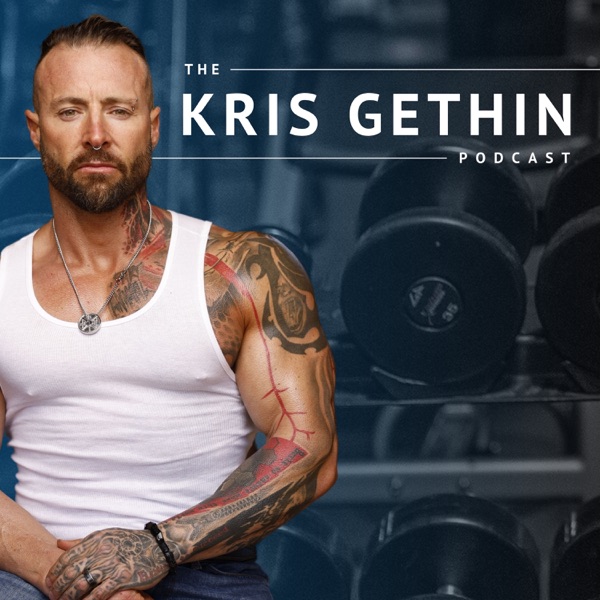
The Kris Gethin Podcast
Kris Gethin is widely known across the health and fitness space as one of the leading body transformation specialists in the world - he has been voted as the worlds #1 transformation coach and personal trainer on various platforms such as Trainerize and Bodybuilding.com and governing bodies such as PT Academy.
As the co-founder of the Kris Gethin Gyms franchise, co-founder of Unmatched Supplements, co-founder of NovaPrime Labs, founder of Biohacked AF, former editor-in-chief of BodyBuilding.com, former editor-at-large at Weider Publications and former publisher of Kaged Muscle magazine, Kris has helped educate and change the lives of millions of people. Kris is the host of The Kris Gethin Podcast and author of the best-selling book Body by Design. Kris has competed as a natural pro bodybuilder, IRONMAN Triathlete, Ultramarathoner, Spartan competitor and Motocross racer of 13 years.
He currently helps celebrities several months of the year, trains clients online year round via www.krisgethin.com and hosts anti-aging/fitness and biohacking seminars and retreats worldwide.
In this podcast, Kris dissects myths of muscle building and endurance, bridges the gap between health and sports supplementation, expands upon the healing benefits of smart nutrition, and strategies to change your perception for a happier, healthier and real way of life.
For more information check out https://www.krisgethin.com/
- Episodes
- 283
- Releases
- Weekly
- Typical length
- 35 min
- On air since
- 2017
- Latest episode
- 1 week ago
Episodes
283 episodes, newest first
-
1 hr 8 min
281. Cardio for Muscle, Fat Loss, and Longevity: The Science of Sprint Training with Ulrich Dempfle
Episode 281
Show notes
You can have your training, nutrition, and supplement stack dialed in and still be neglecting the strongest predictor of how long and how well you live: your cardiovascular fitness. Low cardiorespiratory fitness has been linked to more avoidable deaths than smoking, obesity, and diabetes combined, yet lack of time remains the number one reason people skip the work that improves it.
We dive deeper into this in The Kris Gethin Podcast with Ulrich Dempfle, CEO and co-founder of CAROL Bike, breaking down how two 20-second sprints, done just a few times a week, can raise VO2 max and improve metabolic health. We also chat about whether cardio really kills muscle gains, why expensive biohacks cannot replace a strong cardiovascular base, and why Ulrich rates zone 2 training a 5 out of 10.
Ulrich Dempfle is the CEO and co-founder of CAROL Bike, the AI-powered exercise bike built on Reduced Exertion High-Intensity Interval Training (REHIT). A mechanical engineer by training and former McKinsey and PwC management consultant, he developed CAROL in collaboration with leading exercise scientists.
What's Discussed:
(9:08) Why the strongest predictor of healthspan is the one people skip most.
(14:50) Why low cardio fitness may be deadlier than smoking, obesity, and diabetes combined.
(15:53) Why mitochondrial peptides cannot replace the basics.
(17:42) How much VO2 max can improve in 8 to 20 weeks.
(23:58) What actually happens during two 20-second sprints.
(38:48) Why so many biohackers try to buy their way around the hard work.
(44:00) How your phone is costing you sleep.
(45:04) Calories, the afterburn, and where cardio fits in fat loss.
(48:29) GLP-1s and the skinny-fat trap.
(51:50) How short sprints improve blood sugar control and insulin sensitivity.
(57:37) Two sprints vs. 60 sprints: when more is not better.
(1:00:44) How to fit sprint cardio into a five-day lifting week.
(1:05:30) What to track to prove it is working.
(1:11:04) Rapid fire: cardio and muscle gains, zone 2, and VO2 max.
If you train hard, care about recovery, and want to see the tools, supplements, and products I personally recommend, head to https://krisgethin.com/pages/recommendations
To receive my free book, A Guide to Biohacking, leave an honest review on the platform where you listen to the podcast, then email a screenshot to info@krisgethin.com
Thank You to Our Sponsors!
CAROL Bike: Want a science-backed cardio workout that takes just five minutes? Head to http://carolbike.com/kris and use code KRIS for the best available offer.
Structured Water by Natural Action: Want to upgrade the quality of the water you drink every day? Head to https://naturalaction.com/ and use code KRIS at checkout.
Hydrogen Rich Water: Want an easy way to add molecular hydrogen to your hydration routine? Head to https://drinkhrw.com/pages/h2-in-sports and use code GETHIN for 10% off.
Find More From Kris Gethin:
Website: https://www.krisgethin.com/
Instagram: @krisgethin/
YouTube: https://www.youtube.com/krisgethin
2 Shred: https://www.unmatchedsupps.com/products/2shred
Find Out More About Ulrich Dempfle and CAROL Bike:
Website: http://carolbike.com
Instagram: @thecarolbike
YouTube: http://youtube.com/c/CAROLbike
-
11 min
280. Why Cutting Calories Stopped Working for Me After 40
Episode 280
Show notes
Kris Gethin shares his personal journey and expert insights on how to effectively manage fat loss and maintain muscle after 40, emphasizing the importance of adapting strategies to biological changes.
Chapters
00:00 Introduction to Fat Loss Challenges After 40 02:24 Stress, Cortisol, and Fat Storage 04:36 Cellular Metabolism and Mitochondrial Health 06:33 Using Blood Glucose Monitoring for Better Results 07:01 Hormone Optimization Through Diet and Lifestyle 07:54 Sleep Optimization and Circadian Rhythms 08:20 Biohacking Techniques for Aging Gracefully 09:20 The Importance of Outdoor and Recreational Cardio 10:15 Adapting Strategies to Your Biological Feedback 10:43 Final Thoughts and Practical Advice for Over 40 Fitness
Resources
Carol Bike - uses artificial intelligence to personalize high-intensity workouts in real time, delivering an efficient, science-backed cardio session in just minutes. Code: KRIS - save $300
Better Bodies / GASP — Performance-focused gym apparel and training gear that I have been wearing since 2005 - designed for serious lifters. Code: KRIS15 — 15% off your order
Bahé Trainers — Comfortable running, training and hiking shoes featuring grounding/earthing technology designed to create an electrical connection with the earth. Code: KRIS15 — 15% off your order
Nutrition Solutions — Prepared grass fed, humane raised, organic and antibiotic free meal solutions that make it easier to stay consistent with your nutrition when life gets busy. I have used them weekly since 2015 Code: LEGACY20 for your discount
Find More From Kris Gethin
Website: https://www.krisgethin.com/
Instagram: @krisgethin/
YouTube: https://www.youtube.com/krisgethin
Tik Tok: @krisgethin
-
1 hr 15 min
279. How to Use Light Exposure To Transform Your Health, Recovery, and Performance with Alex Kikel
Episode 279
Show notes
You can have your training, nutrition, supplements, and recovery dialed in and still overlook one of the most powerful inputs your body receives every day: light. From the moment you wake up to the screens, LEDs, office lighting, and nighttime exposure around you, your light environment may influence your circadian rhythm, recovery, sleep, and performance.
In this episode, Alex Kikel and I break down how different wavelengths of light interact with the body, why morning and evening light matter, and where red and near-infrared light may fit into a performance-focused routine. We also look at what you can do for free, what is worth spending money on, and where biohacking starts becoming unnecessary overkill. The goal is simple: understand the mechanism, control the basics first, and use technology only when it actually adds something.
What's Discussed:
(12:47) Why light should matter for performance and body composition.
(19:14) Blue light, near-infrared light, and what your environment is missing.
(23:48) The simplest light protocol you can do for free.
(34:15) How light fits into fat loss, muscle, and recovery.
(42:46) Why the first few minutes of your morning matter.
(54:20) Why sleep supplements cannot fix a bad nighttime environment.
(57:08) Using red and near-infrared light around your workouts.
(1:06:45) Red light for skin, hair, and recovery protocols.
(1:13:35) Light habits: overrated or underrated.
(1:17:28) The $0, $100, and $10,000 light protocol.
(1:20:29) Why jumping straight to expensive biohacks can backfire.
If you train hard, care about recovery, and want to see the tools, supplements, and products I personally recommend, head to https://krisgethin.com/pages/recommendations
To receive my free book, A Guide to Biohacking, leave an honest review on the platform where you listen to the podcast, then email a screenshot to info@krisgethin.com
Thank You to Our Sponsors!
Structured Water by Natural Action: Want to upgrade the quality of the water you drink every day? Head to https://naturalaction.com/ and use code KRIS at checkout.
Hydrogen Rich Water: Want an easy way to add molecular hydrogen to your hydration routine? Head to https://drinkhrw.com/pages/h2-in-sports and use code GETHIN for 10% off.
Find More From Kris Gethin:
Website: https://www.krisgethin.com/
Instagram: @krisgethin/
YouTube: https://www.youtube.com/krisgethin
2 Shred: https://www.unmatchedsupps.com/products/2shred
Find Out More About Alex Kikel:
Website: https://theprepcoach.com/
Instagram:@alex_kikel
YouTube: @alexkikelTPC
TPC Army: https://www.skool.com/tpcarmy/abouthttp://skool.com/tpcarmy/about
-
22 min
278. I Lost My Motivation to Train. Here's What I Learned
Episode 278
Show notes
Kris Gethin shares his personal journey through motivation struggles, the importance of discipline, and how to adapt training routines to maintain health and purpose. This episode offers practical insights for anyone facing a dip in enthusiasm for fitness and life.
Chapters
00:00 Introduction to Kris Gethin's Motivation Struggles 01:54 Why Motivation Cannot Be the Foundation of Your Behavior 04:09 The Changing Reasons for Training as We Age 06:56 The Spiritual and Stewardship Perspective on Taking Care of the Body 11:09 The Power of Discipline and Changing Your Training Routine 14:59 Acting Without Waiting for Motivation to Return 17:52 Recap: Key Lessons for Maintaining Consistency 19:46 Final Thoughts: Responsibility and Moving Forward
Resources
FightCamp — An interactive at-home boxing and kickboxing training system with expert-led workouts, equipment, and performance-tracking technology. I often use this as my functional workout on non-training days Code: GETHIN10 — 10% off your order
Better Bodies / GASP — Performance-focused gym apparel and training gear that I have been wearing since 2005 - designed for serious lifters. Code: KRIS15 — 15% off your order
Bahé Trainers — Comfortable running, training and hiking shoes featuring grounding/earthing technology designed to create an electrical connection with the earth. Code: KRIS15 — 15% off your order
Nutrition Solutions — Prepared grass fed, humane raised, organic and antibiotic free meal solutions that make it easier to stay consistent with your nutrition when life gets busy. I have used them weekly since 2015 Code: LEGACY20 for your discount
Find More From Kris Gethin
Website: https://www.krisgethin.com/
Instagram: @krisgethin/
YouTube: https://www.youtube.com/krisgethin
Tik Tok: @krisgethin
-
17 min
274. My Exact Split at 40+: What Changed From My Pro Bodybuilding Days
Episode 274
Show notes
As we age, our bodies change — and so should our approach to training. In this episode, Kris Gethin shares his journey from competitive bodybuilding to a more functional, sustainable fitness routine as he navigates his 50s. He breaks down his current training split, why recovery now drives his results more than volume ever did, and how he stays mentally locked in even as the workouts themselves have changed.
What You'll Learn
• Why Kris moved away from six-day, heavy-lifting training as he entered his 50s
• How his goals shifted from pure muscle-building to functionality and long-term health
• The training split he follows now, and why fewer days doesn't mean less intensity
• What actually drives hypertrophy at this stage of life (hint: it's not more volume)
• How he approaches sleep, stress, and nutrition to support recovery
• Why seeking out discomfort is still central to his mindset, even with a lighter scheduleChapters
00:00 Introduction and Kris Gethin's background 01:53 Training in his 30s and 40s versus now at 50 04:12 His current workout split and modifications 06:05 Impact of aging on recovery and joint health 07:57 The role of hormonal health and lifestyle factors 09:51 Changes in diet and supplementation over the years 12:12 Maintaining mental intensity and motivation 14:04 Making workouts more challenging and functional 15:52 Final thoughts and advice for aging athletes
Resources
FightCamp — An interactive at-home boxing and kickboxing training system with expert-led workouts, equipment, and performance-tracking technology. I often use this as my functional workout on non-training days Code: GETHIN10 — 10% off your order
Better Bodies / GASP — Performance-focused gym apparel and training gear that I have been wearing since 2005 - designed for serious lifters. Code: KRIS15 — 15% off your order
Bahé Trainers — Comfortable running, training and hiking shoes featuring grounding/earthing technology designed to create an electrical connection with the earth. Code: KRIS15 — 15% off your order
Nutrition Solutions — Prepared grass fed, humane raised, organic and antibiotic free meal solutions that make it easier to stay consistent with your nutrition when life gets busy. I have used them weekly since 2015 Code: LEGACY20 for your discount
Find More From Kris Gethin
Website: https://www.krisgethin.com/
Instagram: @krisgethin/
YouTube: https://www.youtube.com/krisgethin
Tik Tok: @krisgethin
-
1 hr 34 min
277. The Hidden Impact of Technology on Recovery, Sleep, and Performance with Alex Kikel
Episode 277
Show notes
You can nail your training, nutrition, supplements, and sleep routine and still overlook one variable that surrounds you all day: your technological environment. Phones, Bluetooth, Wi-Fi, wearables, cars, and constant connectivity may be adding another layer of physiological stress at the exact time you are trying to recover, perform, and switch your nervous system off.
In this episode, Alex Kikel and I break down how EMFs interact with the body, why professional athletes are beginning to pay attention, and where exposure may be affecting recovery and performance. More importantly, we look at what you can realistically control, what may be overkill, and how to improve your environment without turning optimization into another source of stress.
What's Discussed:
(02:29) Why pro athletes are paying attention to EMFs.
(04:21) Coherent vs. non-coherent EMFs.
(15:26) EMFs, recovery, and fat loss.
(39:23) EMF exposure inside modern cars.
(50:53) Keeping your phone against your body.
(52:31) Phones, EMFs, and your sleep environment.
(58:17) When wearables create more stress.
(1:11:49) When biohacking becomes counterproductive.
(1:22:07) EMF habits: overrated or underrated.
If you train hard, care about recovery, and want to see the tools, supplements, and products I personally recommend, head to https://krisgethin.com/pages/recommendations
To receive my free book, A Guide to Biohacking, leave an honest review on the platform where you listen to the podcast, then email a screenshot to info@krisgethin.com
Thank You to Our Sponsors!
Structured Water by Natural Action: Want to upgrade the quality of the water you drink every day? Head to https://naturalaction.com/ and use code KRIS at checkout.
Hydrogen Rich Water: Want an easy way to add molecular hydrogen to your hydration routine? Head to https://drinkhrw.com/pages/h2-in-sports and use code GETHIN for 10% off.
Find More From Kris Gethin:
Website: https://www.krisgethin.com/
Instagram: @krisgethin/
YouTube: https://www.youtube.com/krisgethin
2 Shred: https://www.unmatchedsupps.com/products/2shred
Find Out More About Alex Kikel:
Website: https://theprepcoach.com/
Instagram:@alex_kikel
YouTube: @alexkikelTPC
TPC Army: https://www.skool.com/tpcarmy/abouthttp://skool.com/tpcarmy/about
-
15 min
276. The Surprising Science of Creatine Beyond Bodybuilding
Episode 276
Show notes
Creatine has long been associated with bodybuilding and strength training — but its potential benefits extend far beyond the gym. In this episode, Kris Gethin dives into the evolving research on creatine's impact on cognitive function, mental health, and even its role during periods of sleep deprivation.
Chapters
00:00 Introduction to creatine's expanding benefits 02:16 Research on creatine and cognitive performance 04:31 Creatine's relevance for sleep-deprived individuals 06:44 Creatine's potential in anxiety and mental health 09:25 The challenge of increasing brain creatine levels 09:52 GAA as a precursor to enhance creatine levels 11:17 Research on GAA and cognitive performance 12:15 Future directions: brain-focused creatine research 13:09 Personal insights and practical applications of creatine 14:35 Conclusion and next steps for research and health
Resources & Links 💪 Shop Unmatched Supps Creatine
This content is for informational purposes only and is not medical advice. Talk to your doctor before starting any new supplement, especially if you are pregnant, managing a health condition, or taking prescribed medication for depression or other mood disorders.
-
1 hr 22 min
275. How Your Water Could Be Affecting Your Pump, Recovery & Physique with Alex Kikel
Show notes
Most bodybuilders have been taught to think about water in one way: drink enough of it and stay hydrated. So it makes sense that the real attention goes to the things we have been told actually move the needle: protein, carbs, creatine, electrolytes, pre-workout, recovery, blood work, and everything else in the stack. But once you start looking at what water is doing inside muscle tissue, what can be in the water you are drinking, and how much of it you put through your body every day, it becomes difficult to treat it as just the liquid you wash your supplements down with.
In this episode, Alex Kikel joins me to bring a completely different perspective to something most of us have never had a reason to question. We get into why the type of water you drink could matter for muscle contractions, pumps, glycogen storage, recovery, and cognition, along with what could be coming from tap and bottled water. We also get into structured water, filtration, remineralization, hydrogen water, and then take it straight into contest prep with fluid retention, sodium, creatine, and why cutting water can sometimes leave a bodybuilder looking flatter instead of tighter.
Alex has spent 14 years working with and tracking thousands of people, including Olympic, NBA, and NFL athletes. His experience across health, physique, and high-level performance gives us a very different way to look at something bodybuilders use every day but rarely treat as part of the protocol itself.
What's Discussed:
04:55 Why the water inside your muscles could affect contractions, pumps, strength, and how much you get from every rep.
11:34 "Structured" vs. "dead" water, and why simply drinking enough may not be the whole hydration story.
20:40 What drinking from plastic every day could be exposing you to, and how realistic it is to avoid microplastics.
25:32 Can light, minerals, vortexing, and water-structuring devices actually change the water you drink?
46:11 Why the water in your shaker could change how your pre-workout, electrolytes, carbs, and supplements perform.
49:24 What hydration has to do with brain fog, memory, mental performance, inflammation, and energy.
58:24 Hydrogen water, fat loss, water retention, sodium, creatine, and the peak-week water mistakes that can ruin your final look.
If you train hard, take supplements, care about recovery, or simply drink litres of water every day, this episode will make you look at what is in your bottle very differently.
To receive my free book, A Guide to Biohacking, leave an honest review on the platform where you listen to the podcast, then email a screenshot to info@krisgethin.com
If you train hard, care about recovery, and want to see the tools, supplements, and products I personally recommend, head to https://krisgethin.com/pages/recommendations
Thank You to Our Sponsors!
Structured Water by Natural Action: Want to upgrade the quality of the water you drink every day? Head to https://naturalaction.com/ and use code KRIS at checkout.
Hydrogen Rich Water: Want an easy way to add molecular hydrogen to your hydration routine? Head to https://drinkhrw.com/pages/h2-in-sports and use code GETHIN for 10% off.
Find More From Kris Gethin:
Website: https://www.krisgethin.com/
Instagram: @krisgethin/
YouTube: https://www.youtube.com/krisgethin
2 Shred: https://www.unmatchedsupps.com/products/2shred
Find Out More About Alex Kikel:
Website: https://theprepcoach.com/
Instagram:@alex_kikel
YouTube: @alexkikelTPC TPC Army: https://www.skool.com/tpcarmy/about
-
51 min
273. The New Wave of Peptides That Could Change How We Age and Perform
Episode 273
Show notes
The peptide space is moving so fast that by the time a compound starts blowing up online, there is already something newer coming behind it. If you care about performance, recovery, body composition, hormones, or longevity, you need to know where this field is heading before the next wave of protocols and opinions hits your feed. Knowing what people are experimenting with now gives you a much better chance of separating something worth watching from another compound getting hyped to hell.
In this episode, Alex Kikel and I get into the new peptides, small molecules, and therapies starting to push this space forward. We talk about what is developing around mitochondria and endogenous hormone production, why Klotho is getting more attention, how far this conversation is moving beyond traditional peptides, and several compounds that could be names you hear a hell of a lot more about over the next few years.
Alex has spent roughly a decade studying and applying peptides, small molecules, bioregulators, and emerging compounds through his own experimentation and work with clients. His background also includes relationships with professionals connected to Eli Lilly and Pfizer, independent chemical synthesizers, consulting work on experimental compounds, and years of hands-on protocol development.
What's Discussed:
(00:00) Where the peptide industry is heading and the compounds starting to come down the pipeline.
(00:57) S-Mitochonic Acid 5-Ethyl Ester and why mitochondrial function is becoming such a major target.
(07:36) Phoenixin-20, neurological signaling, and endogenous hormone production.
(10:19) How Phoenixin-20 compares with enclomiphene, HCG, HMG, and kisspeptin.
(13:03) Klotho, recombinant Klotho, peptide forms, gene therapy, and why it is getting so much attention in longevity.
(21:46) Plasma exchange, EBOO, ozone, and young plasma.
(28:27) HDAP2, why Alex believes it could move beyond SS-31, and what happens when the dose is too much for the individual.
As usual, this episode is for education only. Some of what we discuss is still experimental, investigational, or needs proper medical supervision, so do your homework before you start playing with any of it.
To receive my free book, A Guide to Biohacking, leave an honest review on the platform where you listen to the podcast, then email a screenshot to info@krisgethin.com.
Find More From Kris Gethin
Website: https://www.krisgethin.com/
Instagram: @krisgethin/
YouTube: https://www.youtube.com/krisgethin
2 Shred: https://www.unmatchedsupps.com/products/2shred
Find Out More About Alex Kikel
Website: https://theprepcoach.com/
Instagram:@alex_kikel
YouTube: @alexkikelTPC
TPC Army: https://www.skool.com/tpcarmy/about
-
12 min
272. Overrated or Underrated: Supplement Edition
Episode 272
Show notes
With more than 30 years of experience in the fitness and supplement industry, Kris Gethin breaks down which supplements are actually worth your money—and which ones may be more marketing hype than substance.
In this episode, Kris shares his take on some of the most overrated and underrated supplements on the market, what he personally looks for when evaluating a product, and why popularity doesn't always equal effectiveness. He also dives into supplement quality, formulation, ingredients, dosing, marketing claims, and some of the common mistakes consumers make when deciding what deserves a place in their daily stack.
Whether you're spending hundreds of dollars a month on supplements or just trying to figure out where to start, this episode will help you cut through the noise, question the marketing, and make more informed decisions about what's actually worth your money.
Chapters
00:00 Introduction and overview of supplement industry 01:52 Kris Gethin's background and experience in supplements 03:47 The underrated value of glutamine for healing and gut health 06:05 Chitosan and its questionable effectiveness 06:33 The underrated role of EAAs in fasting and recovery 07:03 Apple cider vinegar gummies: overrated and overpriced 08:00 Peptide 185 and its impact on recovery 08:50 Summary of overrated and underrated supplements 10:12 How marketing influences supplement perception 11:11 Final thoughts and advice for consumers
Find More From Kris Gethin
Website: https://www.krisgethin.com/
Instagram: @krisgethin/
YouTube: https://www.youtube.com/krisgethin
Tik Tok: @krisgethin
Resources
Kris's preferred peps: https://www.novaprimelabs.com (use code KRIS15)
Join Kris's peptide education community: https://www.biohackedaf.com
Kris's preferred Creatine, Fermented Glutamine, and Dileucine Peptide 185 supplements: https://www.unmatchedsupps.com (use code KGC10)
-
56 min
271. The Practical Peptide Guide for Recovery, Muscle, Fat Loss and Focus
Episode 271
Show notes
Peptides have gone mainstream, but the information around them is still a mess. One search brings up five different doses, four delivery methods, and stacks loaded with compounds you may not even need. Too many people copy the protocol, skip the reasoning, and only start asking questions when their energy crashes, the side effects hit, or nothing happens at all.
Alex Kikel and I break down how to approach these compounds with an actual plan. We get into protocols for beat-up joints, lagging muscle groups, stubborn fat, cognitive performance, sleep, and pineal support. We also compare injectable, transdermal, nasal, and oral delivery, because the same compound can perform very differently depending on how and where it is used.
Alex has spent roughly a decade studying and applying peptides, small molecules, and bioregulators through his own experimentation and work with clients. His education has also included direct relationships with professionals connected to Eli Lilly and Pfizer, independent chemical synthesizers, and years of hands-on protocol development, making him a credible voice for a topic that is often buried under hype, conflicting advice, and recycled information.
What's Discussed:
(04:05) Why advanced peptides still cannot replace training, nutrition, sleep, and recovery.
(08:35) Why peptide information has become harder to trust as more online experts enter the space.
(11:11) How BPC-157, TB-500, and Cartalax were discussed for joints, cartilage, and tissue repair.
(12:44) Using GHK-Cu and localized applications to support recovery and lagging muscle groups.
(17:23) The difference between IGF-1 LR3 for nutrient partitioning and IGF-1 DES for localized muscle signaling.
(20:16) BAM-15, yohimbine, SR-9011, and SLU-PP-332 for stubborn and localized body fat.
(28:01) Transdermal Noopept, intranasal NAD, Selank, and Semax for cognitive performance.
(36:16) Epitalon, delivery methods, pineal support, sleep, and the risks of excessive dosing.
(41:31) SANA/MBD-1, Tesamorelin, and growth hormone for fat mobilization and localized fat reduction.
Stay through the end for my TL;DR breakdown, where I condense the major compounds, their discussed applications, and the most important cautions into one final recap.
This conversation is for educational purposes only. Many compounds discussed are experimental, investigational, or require medical supervision.
To receive my free book, A Guide to Biohacking, leave an honest review on the platform where you listen to the podcast, then email a screenshot to info@krisgethin.com.
Find More From Kris Gethin
Website: https://www.krisgethin.com/
Instagram: @krisgethin/
YouTube: https://www.youtube.com/krisgethin
2 Shred: https://www.unmatchedsupps.com/products/2shred
Find Out More About Alex Kikel
Website: https://theprepcoach.com/
Instagram:@alex_kikel
YouTube: @alexkikelTPC
TPC Army: https://www.skool.com/tpcarmy/about
Resources
Kris's preferred peps: https://www.novaprimelabs.com (use code KRIS15)
Join Kris's peptide education community: https://www.biohackedaf.com
Transdermal patches: https://parabolicresearchco.com/?ref=kris10 (use code KRIS10)
-
17 min
270. The Psychology of Overeating
Episode 270
Show notes
Why do we overeat—even when we know better?
In this solo episode, Kris Gethin explores the psychology behind overeating and why willpower alone is rarely the answer. From emotional triggers and stress eating to nutrient deficiencies and eating too quickly, Kris breaks down the hidden factors that drive cravings and offers practical strategies to regain control.
You'll learn how to identify your personal eating patterns, build habits that naturally reduce overeating, and create an environment that supports long-term success. Whether your goal is fat loss, better health, or simply developing a healthier relationship with food, this episode provides actionable tools you can start using today.
In This Episode
•
Why understanding your triggers is the first step to changing your habits
•
How stress, emotions, and environment influence overeating
•
The difference between physical hunger and emotional hunger
•
Why nutrient-dense foods help reduce cravings naturally
•
The role of healthy fats and fiber in improving satiety
•
How eating too quickly leads to consuming more calories
•
Simple techniques to slow down your meals and eat more mindfully
•
Why hydration and electrolytes can impact appetite regulation
•
Practical strategies to create sustainable eating habits without relying on willpower
Timestamps
00:00 – Introduction 02:18 – Why we overeat: understanding the psychology 07:45 – Identifying your personal triggers 13:12 – Emotional eating vs. true hunger 19:08 – Why undernourishment drives cravings 25:41 – The importance of healthy fats and fiber 31:27 – Eating slower and recognizing fullness cues 38:16 – Mindful eating techniques that actually work 44:09 – Hydration, electrolytes, and appetite control 49:52 – Building lasting habits for long-term success
Key Takeaways
•
Lasting change starts with awareness, not restriction.
•
Overeating is often driven by emotional, environmental, or nutritional factors—not simply a lack of discipline.
•
Slowing down your meals allows your body's natural satiety signals to catch up.
•
Prioritizing whole, nutrient-dense foods can significantly reduce cravings.
•
Small, consistent changes create sustainable results over time.
If you enjoyed this episode, be sure to subscribe, leave a review, and share it with someone who could benefit from building a healthier relationship with food.
To apply to 1-on-1 coaching with Kris, email hello@krisgethincoaching.com
Thank you to our sponsors:
NovaPrime Labs - code KRIS15
-
1 hr 10 min
269. Your Gut Is Controlling More Than You Think: Health, Performance & Longevity with Dr. Zach Bush
Episode 269
Show notes
What if optimizing your health isn't just about training, nutrition, supplements, and sleep—but about the trillions of microorganisms living within and around you?
In this episode, Kris sits down with Dr. Zach Bush to explore the microbiome and its potential influence on everything from digestion and brain function to hormones, athletic performance, recovery, and longevity.
Dr. Bush shares how his career evolved from conventional endocrinology into microbiome and environmental health research, and why he believes many of the health challenges we face today cannot be separated from the health of our soil, food systems, and environment.
They discuss the impact of modern agriculture, antibiotics, glyphosate, declining nutrient density, and environmental exposures on the microbiome, along with practical ways to support greater microbial diversity and resilience.
The conversation also explores the gut-brain axis, intermittent fasting, regenerative agriculture, and Dr. Bush's work developing Restore, including his theory that microbial communication may play a much larger role in human health and longevity than we currently understand.
In This Episode:
•
Why Dr. Zach Bush left conventional endocrinology to study the microbiome
•
How soil health and modern agriculture may influence human health and nutrition
•
What antibiotics, glyphosate, and environmental exposures can do to microbial diversity
•
The gut-brain connection and its relationship with mood, cognition, hormones, and neurological health
•
Why gut integrity and microbial diversity may matter for athletic performance and recovery
•
How modern farming practices have changed the nutritional landscape of our food
•
Intermittent fasting and the potential benefits of giving the gut time to repair
•
Why different people can respond very differently to the same foods and diets
•
The connection between our environment and microbiome resilience
•
Regenerative agriculture and rebuilding healthier soil ecosystems
•
The science and thinking behind Restore and microbial communication
•
How supporting the microbiome could influence resilience, healthspan, and longevity
Timestamps:
00:00 – Why microbiome health matters for fitness, health, and longevity 02:12 – Dr. Zach Bush's journey from endocrinology to microbiome research 05:12 – How chemicals, pollutants, and our environment may influence human health 06:57 – The gut-brain axis: microbiome, mental health, and neurochemistry 09:36 – Has modern agriculture changed the nutrient density of our food? 12:24 – Antibiotics, glyphosate, microbiome diversity, and gut integrity 15:41 – Inflammation, gut barrier function, and athletic performance 18:36 – What animal agriculture can teach us about the microbiome and performance 20:27 – Gut health, testosterone, growth hormone, and neurochemicals 22:33 – Organic food, dietary diversity, and finding what works for the individual 26:06 – Intermittent fasting, gut repair, and hormonal health 29:24 – Why there is no universal "perfect diet" for the microbiome 33:03 – How your environment shapes microbiome resilience 36:25 – Supporting microbial diversity through food, lifestyle, and environment 41:15 – Microbial communication and its potential role in chronic disease 45:50 – Soil health, regenerative agriculture, and the future of human health 50:29 – Restore: the formulation, research, and theory behind it 56:28 – Cellular repair, resilience, and longevity 1:03:25 – "Cellular Wi-Fi": understanding microbial communication 1:08:00 – Travel, environmental exposures, and supporting the microbiome 1:10:50 – The bigger picture: restoring the health of our soil, microbiome, and future generations
Resources & Links:
•
PLEASE NOTE: Restore is now Ion* Gut Support
•
Glyphosate / Roundup Information
Connect with Dr. Zach Bush:
Thank you to our sponsors:
-
20 min
268. Biohacking's Blind Spot: What Bryan Johnson's Autoimmune Diagnosis Reveals
Show notes
Bryan Johnson's recent autoimmune diagnosis has sparked an important conversation throughout the biohacking community. In this episode, Kris Gethin explores what this moment means—not as a criticism of Bryan's dedication, but as an opportunity to ask bigger questions about health, longevity, and the limits of optimization.
Kris discusses the difference between collecting health data and creating true health, why modern lifestyles often disconnect us from our biological foundations, and how factors like sunlight, movement, grounding, nutrition, and resilience may matter more than endlessly stacking interventions.
This episode is a reminder that while technology can be an incredible tool, it should support our biology—not replace it. Ultimately, longevity may depend less on eliminating every risk and more on working with the way humans were designed to live.
In This Episode
• What Bryan Johnson's autoimmune diagnosis means for the future of biohacking
• Why more health data doesn't always translate to better health
• The difference between optimizing biomarkers and optimizing human biology
• How modern indoor living affects health, resilience, and longevity
• Why sunlight, movement, grounding, and nature remain foundational
• Animal-based nutrition vs. plant-based diets for performance and healthy aging
• The importance of preserving muscle as we age
• EMF exposure: what we know, what we don't, and practical ways to reduce it
• Why resilience—not eliminating every challenge—is essential for long-term health
• The role of humility, curiosity, and evolving with new scientific evidenceTimestamps
00:00 – Bryan Johnson's autoimmune diagnosis and why it matters 00:23 – The dedication behind modern biohacking 00:50 – Are we pursuing optimization at the expense of biology? 01:17 – Did lifestyle cause the autoimmune condition? 01:46 – Respecting pioneers while continuing to ask questions 02:14 – The difference between tracking health and creating health 02:42 – When technology becomes overcomplication 03:12 – The environment humans were designed for 03:41 – Using technology to support biology—not replace it 04:10 – Why sunlight, movement, and circadian rhythms matter 04:36 – The health costs of modern indoor living 05:03 – Building resilience instead of avoiding every challenge 05:33 – Adaptation as a cornerstone of longevity 05:59 – Animal protein vs. plant-based nutrition 06:27 – Nutrient density and healthy aging 06:55 – Why muscle is one of the greatest predictors of longevity 07:23 – Respecting Bryan Johnson's discipline and consistency 07:52 – The physiological case for animal-based nutrition 08:21 – Personal lessons on maintaining muscle with age 08:50 – Sunlight's role in hormones and circadian health 09:17 – Grounding and reconnecting with nature 09:46 – What we currently know about EMF exposure 10:12 – Practical ways to reduce unnecessary EMF exposure 10:42 – Redefining optimization through simplicity 11:11 – Why resilience is built—not manufactured 11:38 – The downside of chasing certainty through endless interventions 12:06 – The tendency to overcomplicate health 12:36 – How nature helps regulate the nervous system 13:02 – Reinforcing biology with technology 13:30 – The importance of natural environmental inputs 13:56 – The complexity of human biology 14:23 – Balancing risk with resilience 14:49 – Letting go of outdated beliefs 15:19 – How reputation and business can influence health messaging 15:48 – The importance of transparency and humility in science 16:14 – Evolving as evidence evolves 16:40 – Staying curious instead of becoming attached to methods 17:06 – The biggest lesson from Bryan Johnson's journey 17:35 – Why wealth and technology can't override biology 17:59 – Understanding nature instead of trying to conquer it 18:27 – Measuring success beyond biomarkers 18:52 – Asking better questions about health and longevity 19:23 – The future of biohacking: science, humility, and biological principles 19:52 – Building health on timeless foundations 20:21 – Closing thoughts
Resources Mentioned
• Bryan Johnson's longevity and biohacking journey
• Bahe Grounding Shoes - use code KRIS15 to save 15% off
• https://Blushield.com Practical EMF mitigation strategies - use code KRIS for 10% offConnect with Kris Gethin
• Website
• Instagram
• X (Twitter)
• Youtube
• Tik Tok -
51 min
267. Life Update: Getting Sick in India, Social Media Bans, and the Dangers of Unregulated Supplements
Episode 267
Show notes
Kris Gethin shares insights on fitness, biohacking, the challenges of content creation, and personal experiences from recent travels. This episode offers practical advice on training, nutrition, and navigating the complex world of health supplements and social media.
Chapters
00:00 Introduction and studio setup 00:37 New energy drink and market challenges 01:18 Kris Gethin's approach to cardio and the Carol Bike 02:13 Research-backed benefits of Rehit protocol 03:38 Recent travels and seminars in India and UK 05:06 Family, work, and managing distractions 06:27 Dealing with Airbnb and property management 08:22 Workout routines during travel and discipline 09:24 Sleep vs. workout dilemma 10:49 Supplements for mental and physical performance 12:15 Handling fatigue and overtraining 13:37 Client accountability and motivation 14:46 Formulating personalized training plans 17:08 Body composition and fat loss strategies 19:53 Muscle building and body transformation 22:45 Challenges in supplement industry and product launches 24:41 Community building and education in biohacking 27:59 The importance of medical guidance and diagnostics 30:48 The impact of GLP-1 and lifestyle on health 33:39 The future of biohacking and longevity 36:57 Reflections on personal growth and industry challenges 44:44 New product developments and success stories 50:33 Final thoughts and upcoming projects
Resources
Nova Prime Labs - Peptides and Oral Bioregulators - https://novaprimalabs.com/ Biohackedaf.com - Community and Education Platform - https://biohacktaf.com/ Unmatched Supps - Sports Performance Supplements - https://unmatchedsupps.com Biostack Labs - Anti-aging and Longevity Supplements - https://biostacklabs.com
-
30 min
266. The Science Behind Oral Bioregulators for Aging and Performance
Episode 266
Show notes
Understanding Oral Bioregulators: A Deep Dive
In the world of health supplements, oral bioregulators are emerging as a significant topic of discussion, yet many remain unaware of their potential benefits and applications. In this episode, we'll explore what oral bioregulators are, how they function, and why they might be a game-changer in your health regimen.
Chapters
00:00 Introduction and Context 02:26 Understanding Oral Peptide Bioregulators 09:25 Prostate Health and Bioregulators 13:34 Eye Health and Retinal Support 16:53 Kidney Function and Bioregulators 20:33 Liver Health and Detoxification 23:58 Cartilage Repair and Joint Health 24:50 Understanding SLU PP332 and Its Role 27:35 Quality and Sourcing of Bioregulators 28:58 Conclusion and Community Engagement
Thank you to our sponsors:
NovaPrime Labs https://www.novaprimelabs.com
Biostack Labs https://www.biostacklabs.com
Unmatched Supps https://www.unmatchedsupps.com
-
35 min
265. The Free Health Habits That Make Biohacking Work
Show notes
Biohacking has become the new status symbol. Everyone wants the chamber, the wearable, the peptide, the IV, the stem cells, the red light, and the expensive recovery tool. But there is a problem most people do not want to admit: the body may not respond to the expensive stuff if the foundation underneath it is weak.
In this episode, I'm talking about the part of biohacking that does not look impressive online but changes how well everything else works. The part people skip before they spend thousands trying to fix their energy, sleep, recovery, hormones, body composition, inflammation, focus, and health span. It is not that advanced tools have no place. It is that your body has to be in a position to use them.
I also share where advanced biohacking tools fit into my own routine, and why I think the order matters. If you have been chasing the newest longevity tool, tracking every metric, or wondering why you still do not feel the way you want to feel, this episode will make you rethink what actually makes biohacking work.
What's Discussed:
(00:04) Why the most expensive biohacks can still miss the real problem.
(02:26) What people are really trying to buy when they chase better energy, sleep, recovery, and health span.
(04:48) The lifestyle gaps no device, compound, clinic, or recovery tool can cover for you.
(06:31) The free layer of biohacking most people underestimate.
(08:08) Why the body needs the right foundation before advanced tools work well.
(15:30) The fat-loss and health-span mistake that can leave people lighter but weaker.
(23:42) How to use data, recovery tech, supplements, and advanced tools without turning them into expensive entertainment.
If you want my free book, A Guide to Biohacking, leave an honest review on the platform where you listen to this podcast, then email a screenshot to info@krisgethin.com.
Find more from Kris Gethin:
Website: https://www.krisgethin.com/
Instagram: @krisgethin/
YouTube: https://www.youtube.com/krisgethin
2 Shred: https://www.unmatchedsupps.com/products/2shred
Resources Referenced in This Episode:
Red Light Therapy Brand: Red Light Rising Link: https://redlightrising.co.uk/ Code: GETHIN5
Lumaflex, click here and use Code: KRISGETHIN (10% off)
•
Collagen
•
BPC-157
•
TB-500
•
GHK-Cu
•
KPV
•
Cartilax
•
Sigma / Bio Cartilage / Nova Cartilage
•
Vesugen
-
17 min
264. Why Researchers Are Rethinking Tanning: Melanotan Explained
Episode 264
Show notes
Kris Gethin explores the use of melanotan, a peptide that stimulates melanin production, as a healthier alternative to traditional tanning methods. He discusses its benefits for skin health, appearance, confidence, and long-term skin protection, emphasizing research perspectives and safety considerations.
Chapters
00:00 Introduction and Kris Gethin's Personal Tanning Experience
01:22 What is Melanotan and Its Historical Use
03:41 Visual Benefits of a Darker Skin Tone
05:38 Health Risks of Tanning Beds and Overexposure
07:32 Pre-Holiday Skin Preparation with Melanotan
08:52 Reduced Sun Exposure and Skin Aging
10:12 Confidence and Aesthetic Benefits of Tanning
11:39 Research and Protective Aspects of Melanotan
13:03 Supporting Skin Health from Within
14:25 Long-Term Skin Protection and Aging Prevention
15:49 Building a Complete Skin Care Strategy
Resources
Preferred peptides: www.novaprimelabs.com
Join the Biohacked AF Community - https://www.biohackedaf.com
Melanotan Research Overview - https://pubmed.ncbi.nlm.nih.gov/
To enquire about 1 on 1 coaching with Kris email info@krisgethin.com
-
29 min
263. Can Tesamorelin Help You Burn Fat and Age Better?
Episode 263
Show notes
Discover the science behind Tesamorelin, a research peptide targeting visceral fat and promoting health span. Kris Gethin breaks down its mechanisms, research findings, and implications for fat distribution and longevity.
• Tesamorelin is a synthetic analog of growth hormone release hormone (GHRH), stimulating the pituitary to release endogenous growth hormone rather than supplying synthetic GH.
• It primarily targets deep visceral fat, especially around organs, instead of just superficial subcutaneous fat.
• Visceral fat is linked to metabolic diseases, inflammation, insulin resistance, and overall aging; reducing it can extend health span.
• Research shows Tesamorelin reduces visceral fat by approximately 14-18% over 26 weeks without significant weight change.
• Unlike appetite suppressants like GLP-1 agents, Tesamorelin is considered weight-neutral, aiming for fat redistribution rather than broad weight loss.
• The effects on body composition include improved fat distribution, preservation of lean mass, and healthier metabolic markers.
• It can influence glucose tolerance and may cause fluid retention, joint pain, or injection site reactions, especially in older or metabolic-compromised individuals.
• Optimizing lifestyle factors such as sleep, nutrition, and stress management is crucial, as environment impacts visceral fat accumulation.
• Measuring waist circumference, visceral fat via imaging, blood markers, and metabolic health indicators are essential for tracking progress.
• Use of peptides like Tesamorelin should be under medical supervision within a broader health and lifestyle strategy.Timestamps:
00:00 - Introduction to Kris Gethin and peptide content channels 00:27 - What is Tesamorelin and its clinical relevance 00:56 - Mechanism: GHRH analog stimulating growth hormone release 01:23 - Differentiating Tesamorelin from other peptides and its origin 01:50 - Impact on visceral and liver fat, and fat loss models 02:20 - Growth hormone axis and visceral fat interaction 02:44 - Education disclaimer and medical considerations 03:14 - Historical context: HIV-related lipodystrophy and fat redistribution 04:12 - Visceral vs subcutaneous fat differences 04:42 - Psychological and health impacts of visceral fat 05:10 - How Tesamorelin targets internal fat and body composition 05:37 - Fat loss measurement—imaging and metabolic markers 06:06 - Clinical trial outcomes: visceral fat reduction statistics 06:33 - Fat redistribution versus scale weight changes 07:00 - Growth hormone effects on adipose tissue and fat mobilization 07:29 - Localized fat loss and research evidence 07:58 - Impact on organs around visceral fat 08:24 - Clinical trial insights on visceral fat change over 26 weeks 08:53 - Quantitative results: visceral fat reduction percentages 09:21 - Fat loss success indicators: visceral fat, waist size, metabolics 09:49 - Why weight-neutral interventions are vital for health span 10:18 - Visceral fat's role in metabolic aging and liver health 10:45 - External factors influencing visceral fat and lifestyle importance 11:15 - Liver fat, insulin resistance, and metabolic health 11:45 - Impact on HIV-associated liver issues and relevance to non-HIV populations 12:14 - Liver fat's role in glucose regulation and overall health 12:42 - The importance of measuring internal fat and metabolic health 13:10 - How lifestyle interacts with peptide effects and fat storage 13:38 - The complex role of growth hormone and IGF-1 in body health 14:06 - Risks, side effects, and precautions with Tesamorelin 14:36 - The importance of medical oversight and blood work monitoring 15:06 - Peptides as part of broader lifestyle strategies 15:35 - Influence of environment and lifestyle on visceral fat 16:04 - The significance of fat distribution for health and appearance 16:33 - Misconceptions: fat loss vs fat redistribution and muscle preservation 17:02 - The balance of growth hormone signaling and metabolic risks 17:31 - Regulating GH pathways for optimal health outcomes 18:00 - Side effects: fluid retention, joint pain, sleep issues 18:29 - Medical considerations: conditions requiring caution 18:58 - The impact of growth hormone on glucose metabolism 19:27 - Reversibility: why maintaining lifestyle is key to permanence 19:54 - The importance of measuring progress with tools beyond the scale 20:22 - Integrating blood tests, imaging, and lifestyle logs 20:49 - Systemic approach: nutrition, training, stress, sleep 21:18 - Visceral fat as a reflection of metabolic health 21:46 - Peptides as lifestyle adjuncts, not standalone solutions 22:16 - Why deep visceral fat should be prioritized for health risk reduction 22:46 - Visuals of fat distribution and fat loss versus muscle depletion 23:15 - Peptides' role in health span, not just aesthetics 23:44 - Comparing Tesamorelin with traditional growth hormone therapies 24:12 - Muscle gain limitations and realistic expectations 24:39 - Peptides as tools for fat and metabolic health, not muscle building 25:09 - Broader issues: environment, lifestyle, and societal factors in obesity 25:38 - The importance of healthy habits for lasting results 26:05 - Changing environment to sustain fat loss gains 26:33 - Focus on targeted fat loss and biological change over scale weight 27:01 - Practical advice: measure waist, blood markers, and lifestyle factors 27:31 - Summary: deep visceral fat as a sign of aging; the role of Tesamorelin 27:59 - Trusted peptide suppliers and quality control 28:28 - Final thoughts and encouragement for responsible research and use
Resources & Links:
• Biohacked AF Community & Education
• Nova Prime Labs (preferred peps)Connect with Kris Gethin:
-
1 hr 1 min
262. The Food Label Lie: Why Your "Healthy" Food May Not Be What You Think with Will Harris
Show notes
Most people think they know what they're eating because they read the label.
Grass-fed. Organic. High protein. Product of the USA. Low calorie. Clean ingredients.
But that label is the end of the story, not the beginning.
The beginning is the soil. The animal. The feed. The farm. The chemicals. The confinement. The way the food was raised, processed, mixed, marketed, and sold before it ever reached your plate.
And that's where a lot of people are getting fooled.
In this episode of The Kris Gethin Podcast, I sit down with Will Harris, fourth-generation farmer and owner of White Oak Pastures, to break down what most people never see about the food system. We talk about why industrial food became built around cheapness, volume, and taste, why regenerative farming is the opposite of that model, and why knowing your farmer may tell you more than any label ever could.
Will Harris is the fourth-generation owner of White Oak Pastures in Bluffton, Georgia. After decades in industrial cattle farming, he rebuilt the farm into a regenerative, multi-species operation focused on soil health, animal welfare, nutrient-dense food, and restoring local food systems.
What's Discussed:
(03:50) How White Oak Pastures became a fourth-generation family farm.
(07:27) Why Will walked away from the industrial farming model he was trained in.
(09:22) How regenerative farming changed his soil organic matter from 0.5% to 5.5%.
(13:40) Why modern food became built around cheapness, volume, and taste.
(19:23) What "Product of the USA" labeling actually meant for years.
(23:28) What most people don't know about supermarket ground beef.
(44:19) Why real animal welfare includes instinctive behavior, not just food and water.
Listen to this episode if you want to understand what's really behind your food, why the source matters, and why the farmer behind the product may be just as important as the label on the package.
Find more from Kris Gethin: Website: https://www.krisgethin.com/
Instagram: @krisgethin/
YouTube: https://www.youtube.com/krisgethin
2 Shred: https://www.unmatchedsupps.com/products/2shred
Follow Will Harris:
•
Website Link: https://whiteoakpastures.com/
•
Instagram: https://www.instagram.com/whiteoakpastures/
Thank you to our sponsors:
NovaPrime Labs https://www.novaprimelabs.com Unmatched Supps https://www.unmatchedsupps.com Biostack Labs https://www.biostacklabs.com
Resources Referenced in This Episode:
Red Light Therapy Brand: Red Light Rising Link: https://redlightrising.co.uk/ Code: GETHIN5
Lumaflex, click here and use Code: KRISGETHIN (10% off)
•
Collagen
•
•
•
•
KPV
•
•
Sigma / Bio Cartilage / Nova Cartilage
•
Vesugen
Fitness lists
More Fitness shows picked out from the charts









More in Fitness
Placed highest on Apple Podcasts' Fitness chart right now