Podcast
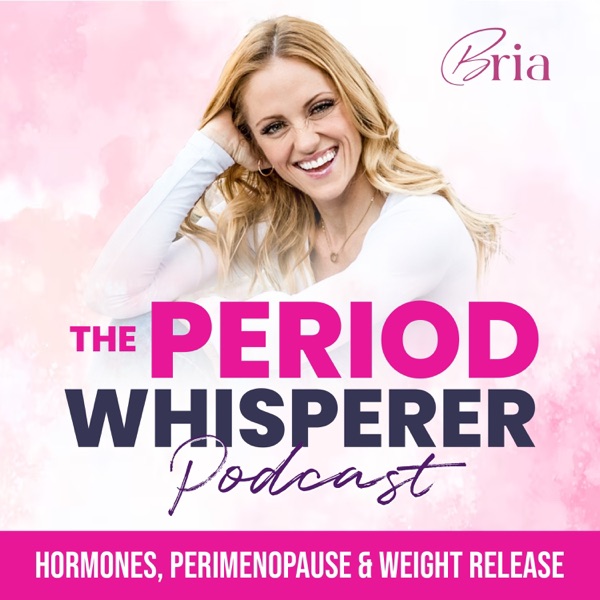
THE PERIOD WHISPERER PODCAST - Perimenopause, Menopause, Cortisol, Weight Loss, Hormone Balancing, Insomnia, Hot Flashes, Nig
In the 35-55 age box and starting to wonder if you will ever feel like you again? Weight gain, night wakings, brain fog, hot flashes, headaches, cravings, bloating, joint pain, mood swings, anxiety are all on the rise and no matter what you try, nothing moves the needle. Your host, Bria Gadd is a Functional Diagnostic Nutrition® Practitioner, Certified Holistic Health Coach, and Personal Trainer who specializes in female hormones. After helping thousands of women lose weight in their 20’s and 30’s, Bria recognized a difficult shift in women’s ability to get results in their body during their perimenopause years. Including her own frustrating 15lb weight gain amidst daily intense workouts and the demands of midlife. Tune in twice a week on Mondays and Thursdays to the top-ranked Period Whisperer Podcast for solo episodes and interviews with real life women and industry experts designed to help you understand the truth about perimenopause, take immediate action on the most important strategies for reducing inflammation and optimizing hormones, and get you in a body that releases weight easily. Whether you’re just starting to question if perimenopause is behind how you are feeling, are in the depths of hormonal chaos, or just want to learn how to feel your best through menopause and beyond, you’re in the right place. If you’re ready to decode the whispers of your body and heal your hormones so you can thrive again, listen to our fan favorite Episode 129: The 3 Nutrition Phases That Will Help You Release Belly Fat Every Time In Perimenopause
- Episodes
- 465
- Releases
- Twice a week
- Typical length
- 41 min
- On air since
- 2022
- Latest episode
- 1 day ago
Episodes
465 episodes, newest first
-
21 min
Why You’re Not Into It Anymore: Low Libido, Marriage & Midlife |Michele Scarlet
Show notes
Why You’re Not Into It Anymore: Low Libido, Marriage & Midlife
Do you still love your partner, but feel like sex is the last thing on your mind?
In episode three of Midlife, Unfiltered, Bria and Functional Diagnostic Nutrition Practitioner Michele Scarlet unpack low libido in midlife, why desire can change, and the many reasons sex can start to feel like a chore instead of a source of connection.
Low libido is not automatically a hormone problem. And it does not automatically mean your marriage is over.
For many women, desire is influenced by a whole picture: perimenopause, postpartum changes, sleep, stress, mental load, pain or dryness, body image, emotional safety, relationship dynamics, medication, and whether you feel connected to your own body.
Bria and Michele talk honestly about the difference between being desired and feeling desire yourself. They explore why women can become disconnected from sex during busy seasons of motherhood and caregiving, how to create room for intimacy without turning it into another obligation, and why pain during sex is never something you should simply push through.
They also discuss when it may be time to look more closely at hormones, vaginal health, low estrogen, low testosterone, stress, or the relationship itself.
This is not a conversation about forcing yourself to want sex. It is about getting curious, removing shame, and understanding what your body may be asking for.
In This Episode
00:00 “Am I dead inside?” Understanding low libido
00:45 Is low desire always hormonal?
03:45 Emotional safety, physical safety, and desire
05:02 Mental load, motherhood, and sex becoming another task
06:56 Partnership, resentment, and carrying everything alone
08:58 Feeling disconnected from your body after pregnancy and breastfeeding
10:24 Should couples schedule sex or schedule intimacy?
12:24 Responsive desire and reconnecting with your partner
13:17 Self-connection, pleasure, and asking better questions
14:39 When low desire can make you question your relationship
15:29 Why shame-free sexual communication matters
15:56 When hormones and health concerns may be part of the picture
17:10 Pain, dryness, and why discomfort during sex deserves support
18:20 Postpartum hormones and feeling like a stranger in your body
19:51 What has helped you reconnect with desire?
Connect with Michele Scarlet
Instagram: @michelescarlet_
Connect with Bria
Instagram: @bria_period_whisperer
Website:https://theperiodwhisperer.comhttps://theperiodwhisperer.com
Low libido is part of perimenopause and health debt, too.
A change in desire can be one clue in a much bigger picture: hormones, sleep, stress, nervous-system support, body changes, pain, nourishment, relationship capacity, and recovery all matter.
Take Bria’s free Health Debt Quiz to explore where your body may be asking for more support right now and get a clearer, more personalized place to begin:
http://healthdebt.briatheperiodwhisperer.com/
This is not a diagnosis. It is a practical way to stop guessing and start asking better questions about your health.
-
21 min
What Is the Manosphere? Why Women Need to Pay Attention |Michele Scarlet
Show notes
Have you ever felt uncomfortable in a conversation, workplace, relationship, or online space, then talked yourself out of saying anything because you did not want to make things awkward?
In episode two of Midlife, Unfiltered, Bria sits down with Functional Diagnostic Nutrition Practitioner Michele Scarlet to talk about the manosphere, misogyny on social media, emotional safety, boundaries, and the ways women have been conditioned to stay quiet so everyone else can stay comfortable.
If you have ever replayed a moment and thought, “That was not okay,” this conversation is for you.
The manosphere is not only an internet trend. Its messages can shape how young men see women, how young women navigate dating, and how all of us absorb the idea that women should be agreeable, accommodating, and responsible for managing other people’s behavior.
Bria and Michele share personal stories about workplace comments, relationships, the pressure to laugh things off, and the quiet self-abandonment that can happen when we minimize our own alarm bells.
They also tie this back to midlife health. Because this season is not only about hormones, sleep, labs, nutrition, and physical symptoms. It can also be a time to notice where you have been carrying stress, suppressing your voice, abandoning your boundaries, or making yourself smaller to keep the peace.
This episode is an invitation to trust your discomfort, speak up when something is not right, and model something different for the next generation.
In This Episode
00:01 What is manosphere culture?
01:20 Why women are not responsible for preventing men’s behavior
02:26 Social media, online influence, and harmful messaging
03:43 Why misogyny is not a new problem
06:07 Emotional safety and feeling judged in relationships
09:51 Workplace experiences women never forget
12:06 Why women stay quiet to avoid making others uncomfortable
13:17 What boundaries can sound like in real life
13:47 “This is not normal”: why conversations matter
14:23 The fear of being called difficult or a “bitch”
16:17 Learning to be more bold and less self-abandoning
17:34 What we need to teach our sons and daughters
19:28 Speaking up, self-trust, and getting back into integrity
20:09 A question for women who stayed quiet and women who speak up
Connect with Michele Scarlet
Instagram: @michelescarlet_
Connect with Bria
Instagram: @bria_period_whisperer
Website:https://theperiodwhisperer.comhttps://theperiodwhisperer.com
Not sure where to focus first in your midlife health journey?
Take Bria’s free Health Debt Quiz to explore the area of health that may need more support:
http://healthdebt.briatheperiodwhisperer.com/
This episode is for education and conversation. It does not replace individualized mental-health or medical care.
-
46 min
GLP-1s: Are We Ignoring the Psychological Impact|Michele Scarlet
Show notes
Are GLP-1 medications a cheat code for weight loss, or are we overlooking the emotional impact they can have on women in midlife?
In the first episode of Midlife, Unfiltered, Bria sits down with Functional Diagnostic Nutrition Practitioner Michele Scarlet for an honest conversation about GLP-1s, weight loss, body image, food noise, shame, privacy, and the pressure women feel to get smaller.
If you are considering a GLP-1, already taking one, or wondering why this conversation feels so emotionally loaded, this episode is for you.
GLP-1 medications are changing the weight-loss industry quickly. For some women, they may offer support with blood sugar, appetite, or the mental load of constantly thinking about food. For others, the conversation brings up secrecy, fear of judgment, past dieting patterns, body-image pressure, or concern about using a powerful tool without enough support.
Bria and Michele make space for the nuance. They discuss why GLP-1s are not inherently “cheating,” why the goal cannot simply be to get smaller at any cost, how to think about side effects and body signals, and why your relationship with food, your health history, and your emotional wellbeing belong in the conversation too.
In This Episode
00:00 Midlife transitions, motherhood, and changing seasons
02:39 Is GLP-1 the cheat code to weight loss?
03:20 Why women want weight loss to feel easier
05:23 Celebrity culture, judgment, and GLP-1 misuse
06:49 GLP-1s as a tool, not a moral failure
10:54 Why this conversation carries so much shame
12:03 Feeling shame around GLP-1 use
12:51 Privacy versus hiding your health choices
14:31 Blood sugar, insulin resistance, and testing
16:45 When GLP-1s may not be the right fit
17:38 Eating-disorder history and misuse concerns
18:23 Side effects women should not have to suffer through
19:06 Why women override their body’s messages
21:05 What “appropriately hungry” can look like
21:44 Using more mental space to build healthier foundations
22:49 The question: would you take a GLP-1 if nobody knew?
Connect with Michele Scarlet
Instagram: @michelescarlet_
Connect with Bria
Instagram: @bria_period_whisperer
Website:https://theperiodwhisperer.comhttps://theperiodwhisperer.com
Not sure where to focus first in your midlife health journey?
Take Bria’s free Health Debt Quiz to explore the area of health that may need more support:
http://healthdebt.briatheperiodwhisperer.com/
Coming next in Midlife, Unfiltered: Bria and Michele unpack the influence of social media, the manosphere, and the messages shaping how women think about their bodies, health, and worth.
This episode is for education only and does not replace individualized medical advice. Speak with a qualified healthcare professional before starting, stopping, or changing medication.
-
46 min
Eps 462: How to Naturally Support GLP-1 After 40: Protein, Fiber & Gut Health with Simone Lovell
Show notes
Why are you hungry again an hour after eating, craving sugar by midafternoon, or finding weight loss harder in perimenopause?
In this episode, Bria sits down with Simone Lovell, a mama, author, food coach, and mentor with more than 25 years of experience helping women change their relationship with food and health.
They unpack the growing conversation around GLP-1, appetite regulation, blood sugar, gut health, food noise, protein, fiber, and why midlife women deserve more than another restrictive plan.
Your body naturally produces GLP-1, a hormone involved in appetite, fullness, and blood-sugar regulation. Simone shares her perspective on using food and daily habits to support those systems, including protein-forward breakfasts, fiber, meal timing, sleep, strength training, stress regulation, and the role gut health may play.
This is not an anti-medication episode. GLP-1 medications can be appropriate tools for some people under qualified medical care. It is also not a promise that one food, a glucose monitor, or a “perfect” routine can solve every symptom. The goal is to help you understand why hunger, cravings, energy, and weight may feel different in midlife, then give you practical, non-punishing places to begin.
If you are tired of dieting, obsessing over food, skipping meals, or believing that more discipline is the answer, this conversation offers a more compassionate framework for supporting your body.
IN THIS EPISODE
00:00 Why hunger, cravings, and stubborn weight feel different in midlife
00:48 What GLP-1 is and the conversation around naturally supporting it
01:01 Meet Simone Lovell and her work with women
08:28 The gut, GLP-1, and appetite regulation
09:31 Hunger, cravings, energy crashes, and blood-sugar patterns
11:00 Sleep, stress, and the hunger hormones
17:35 Why Bria prioritizes protein at breakfast
18:17 Coffee, butter, fasting, and workout fueling
20:01 Long runs, strength training, and exercise intensity
27:21 Foods that may support fullness and GLP-1 signaling
27:45 Fiber after 40 and practical sources of fiber
30:00 Meal order, glucose monitoring, and food flexibility
35:00 Processed foods, gut health, and digestion
40:00 Building an approach that supports energy, muscle, and longevity
45:00 Simone’s first practical step for women feeling overwhelmed
CONNECT WITH SIMONE LOVELL
Instagram: @simonenlovell
Website:https://simonelovell.com
CONNECT WITH BRIA
Instagram: @bria_period_whisperer
Website:https://theperiodwhisperer.com
HAVE A QUESTION, WIN, OR SOMETHING YOU NEED SUPPORT WITH IN MIDLIFE?
Bria would love to hear from you. Leave a voice message with a question, a win, something you are noticing in your body, or a topic you want covered on the podcast. No perfect wording needed.
🎙️ Leave a voice note here:https://www.speakpipe.com/ThePeriodWhisperer
READY FOR MORE SUPPORT THROUGH PERIMENOPAUSE AND MENOPAUSE?
Inside Midlife Mojo, Bria helps women build the foundations that support healthier metabolism, strength, sleep, recovery, nutrition, and sustainable weight loss. You will find practical education on lab testing, hormones, HRT, peptides, workouts, stress, and more, alongside a community of women navigating this season with you.
Take the FREE Health Debt Quiz Here:
-
52 min
Eps 461: Perimenopause Is Bullsh*t: Body Image, HRT & Chin Whiskers with Jen Laughlin
Episode 461
Show notes
Perimenopause and menopause can be exhausting, absurd, emotional, and deeply unglamorous. If you are tired of pretending you are handling every symptom perfectly, this episode is for you.
You are not the only woman wondering what happened to her body, why she suddenly has chin whiskers, itchy ears, body-image spirals, sleep changes, or a much lower tolerance for everyone’s nonsense.
This is your reminder that you do not have to navigate midlife alone, silently, or perfectly.
In this episode, I sit down with my friend and midlife creator Jen Laughlin for a candid, funny, and refreshingly real conversation about perimenopause, menopause, aging, body image, hormones, HRT, and all the strange symptoms nobody prepared us for.
We talk about the things women are often embarrassed to say out loud: feeling disconnected from your body, obsessing over weight changes, struggling with the version of yourself in the mirror, drinking the beer, trying the Botox, getting back into running, and attempting to make choices that support your health without turning your life into one giant wellness project.
Jen shares what it was like when her symptoms hit hard, why finding a menopause-informed clinician mattered, and why women deserve to keep asking questions when they do not feel like themselves.
This conversation will not give you a perfect perimenopause routine. It will give you something more important: perspective, laughter, and the feeling of sitting down with a friend who gets it.
If you are experiencing new or postmenopausal bleeding, please speak with a qualified clinician promptly.
IN THIS EPISODE
00:00 Why this is the perimenopause rant session we all need
03:11 Jen’s symptoms, HRT journey, and finding better support
07:55 Bodies, beer, and the tug of war around health choices
09:18 How Jen accidentally became a midlife-humor creator
13:23 Why women laugh so they do not cry in the closet
14:00 Botox, FaceTime, and looking in the mirror in midlife
17:42 The power of a comment section that truly gets it
18:31 Chin whiskers and the weirdest midlife symptoms
23:24 Itchy ears and symptoms that deserve attention
25:04 Beer, enjoyment, and deciding how to spend your energy
29:25 Returning to running, strength training, and feeling athletic
35:22 Body image at 51 and what Jen would tell her 18-year-old self
39:43 What “age wildly” means
43:06 Giving fewer f*cks and finally asking for help
45:53 Why you should not accept feeling miserable
48:54 You do not have to perform perimenopause perfectly
CONNECT WITH JEN LAUGHLIN
Instagram: @jenlaughlin_18
CONNECT WITH BRIA
Instagram: @bria_period_whisperer
Website:https://theperiodwhisperer.com
HAVE A QUESTION, WIN, OR NEED IN MIDLIFE?
I would love to hear from you. Leave a voice message with what you are navigating, what has helped, or the topic you want me to cover next.
🎙️ Leave a voice note here:https://www.speakpipe.com/ThePeriodWhisperer
READY FOR MORE SUPPORT THROUGH PERIMENOPAUSE AND MENOPAUSE?
Inside Midlife Mojo, you will find practical education around nutrition, weight loss, strength, sleep, lab testing, HRT, peptides, stress, and recovery, plus a community of women navigating this season with you.
Take the FREE Health Debt Quiz Here
-
52 min
Eps 460: Why Perimenopause Can Be Your Golden Era, Not Your Breakdown with JJ Flizanes
Episode 460
Show notes
What if perimenopause is not only asking you to manage symptoms, but asking you to finally pay attention to the needs you have spent years putting last?
In this episode, I sit down with empowerment strategist, author, and podcast host JJ Flizanes for a deeply honest conversation about midlife identity, emotional health, resentment, relationships, empty nesting, and nervous system regulation.
We talk about what can happen when women spend decades caring for everyone else, becoming useful to everyone but disconnected from themselves. For many women, perimenopause and menopause arrive alongside changing relationships, more independent children, career shifts, body changes, and the uncomfortable question: who am I when I am no longer needed in the same way?
JJ shares why understanding your needs is not selfish, why asking for help can feel so difficult, and how unmet needs can show up as resentment, overgiving, and a nervous system that never truly gets to settle.
If midlife has made you feel emotional, restless, disconnected, or unsure of who you are becoming, this conversation is a reminder that you are not broken. You may simply be ready to come back to yourself.
IN THIS EPISODE
00:00 Why this conversation goes beyond physical perimenopause symptoms
01:45 Why JJ started podcasting during a difficult marriage
02:52 Why your partner is not meant to be your trainer, mother, or therapist
07:37 Reframing perimenopause and menopause as a powerful new era
10:17 Empty nesting, identity, and the question of purpose
10:50 Why many women were never taught to name or meet their needs
11:03 The role of unmet needs in resentment and emotional overwhelm
14:00 Emotional patterns, caregiving, and a nervous system carrying too much
18:40 Why vulnerability can feel harder than overfunctioning
21:20 Learning to meet your needs so your nervous system can settle
25:00 Relationships, communication, and asking for what you actually need
30:00 Reclaiming pleasure, creativity, and personal power in midlife
36:00 What it can look like to stop abandoning yourself
41:00 Final reflections on becoming the woman you need now
CONNECT WITH JJ FLIZANES
Instagram: @jjflizanes
Website:https://jjflizanes.com
Podcast: Spirit, Purpose & Energy
Book: https://jjflizanes.com/map
CONNECT WITH BRIA
Instagram: @bria_period_whisperer
Website:https://theperiodwhisperer.com
HAVE A QUESTION, WIN, OR NEED IN MIDLIFE?
I would love to hear from you. Leave a voice message with what you are navigating, what has helped, or the topic you want me to cover next.
🎙️ Leave a voice note here:https://www.speakpipe.com/ThePeriodWhisperer
Are you in Health Debt OR Perimenopasue?
Take the FREE Quiz: https://healthdebt.briatheperiodwhisperer.com/
-
29 min
Eps 459: 3 Free Ways to Support Bloating in Perimenopause, From a Functional Nutrition Practitioner
Episode 459
Show notes
Are you eating more protein, taking supplements, training consistently, and still dealing with bloating, gas, constipation, reflux, fatigue, brain fog, or weight that feels harder to manage in perimenopause?
In this solo episode, I break down gut health debt: what can happen when your digestive system is not keeping up with the demands placed on it, even when you are trying to make healthy choices.
We talk about why eating more protein can sometimes bring digestive symptoms to the surface, why “I eat well” does not always mean your body is breaking down and absorbing everything it needs, and why gut health is connected to muscle, recovery, energy, immune health, hormones, metabolism, and healthy aging.
I also share my own gut-testing story, including the clue that made me look more closely at protein digestion and why I call it having a “desert gut.” This episode is not about treating every symptom as a gut problem or buying every supplement marketed online. It is about learning to notice patterns, reduce your digestive workload, and know when testing may help you and your practitioner make more targeted decisions.
You will hear practical starting points to try before expensive testing, including slowing down at meals, chewing thoroughly, considering cooked foods when bloating is high, taking a short walk after meals, and paying attention to how your digestion changes from morning to night.
In This Episode
00:00 Why healthy habits may not be giving your body the return you expect
02:39 More protein, more digestive symptoms, and what that may tell us
04:22 What gut health debt means in perimenopause
08:25 Bloating, constipation, reflux, growing bloat, and other gut signals
09:04 My “desert gut” story and why symptoms do not always begin in your belly
12:26 Protein digestion, nutrient absorption, and the testing clue I found
16:29 Gut health, hormones, estrogen metabolism, and HRT conversations
17:14 Three practical ways to start supporting digestion
20:16 Eating pace, chewing, raw foods, walking after meals, and supplement roulette
24:31 When GI-MAP or stool testing may offer more context
25:20 Your three-day gut-health check-in
Connect with Bria
Instagram: @bria_period_whisperer
Website:https://theperiodwhisperer.comhttps://theperiodwhisperer.com
Have a question, win, or something you need support with in midlife?
Leave a voice message with what you are navigating, what has helped, or the topic you want me to cover next. You can be vulnerable, unstructured, and completely yourself.
🎙️ Leave a voice note here:https://www.speakpipe.com/ThePeriodWhispererhttps://www.speakpipe.com/ThePeriodWhisperer
Ready for more support through perimenopause and menopause?
Inside Midlife Mojo, I help women build the foundations that support healthier hormones, metabolism, strength, sleep, recovery, and sustainable weight loss. You’ll find practical education around nutrition, lab testing, HRT, peptides, workouts, stress, and nervous system support, plus a community of women who understand this season.
Your membership includes:
💜 The 90-Day Hormone Revival
💜 Midlife weight-loss and metabolism education
💜 Nutrition guidance, recipes, and meal-planning support
💜 Strength-training plans for women over 40
💜 Lab-testing, HRT, and peptide resources
💜 Guided meditations and nervous system support
💜 Live coaching, Q&A sessions, and community support
Start your 7-day free trial here:
-
41 min
Eps 458: The Hot Flash Survival Guide Every Woman In Their 40s Needs with Jennifer Gularson
Episode 458
Show notes
Why do hot flashes arrive at the most inconvenient moments, and why can midlife suddenly feel like your body has no margin for error?
In this episode, I sit down with Jennifer Galarson, a board-certified physician assistant, Institute for Functional Medicine Certified Practitioner, and women’s midlife health expert with more than two decades of clinical experience.
Together, we explain what is happening during a hot flash, why fluctuating estrogen can affect your brain’s temperature regulation, and why some women experience occasional warmth while others deal with hot flashes, night sweats, heart palpitations, poor sleep, and a body that feels increasingly sensitive to stress.
We cover common contributors, including sleep, hydration, alcohol, smoking, stress, medications, metabolic health, and environmental triggers, plus practical ways to manage a hot flash in the moment.
This is not a “just deal with it” conversation. Midlife can make it feel like you have to manage everything just to feel okay. You are not broken, and you have options.
We also discuss when symptoms may deserve a closer look beyond perimenopause, how to prepare for an HRT conversation, symptom tracking, lab work, and why personalized care matters.
In This Episode
00:00 Introduction to hot flashes in perimenopause and menopause
02:49 Jennifer’s path from conventional medicine to women’s midlife health
05:06 What happens in your body during a hot flash
06:36 Why some women experience more frequent or intense hot flashes
09:34 Night sweats, alcohol, blood sugar, and cortisol
10:44 What to do when a hot flash hits
14:09 Why midlife can make your body feel more sensitive
17:14 Symptoms that should not automatically be blamed on menopause
18:44 When thyroid, gut health, nutrients, and cortisol may deserve attention
20:00 The biggest misconception about hormone replacement therapy
21:02 Can women discuss HRT before menopause?
22:27 Symptom tracking, labs, and personalized hormone care
26:22 Different forms of estrogen and progesterone
31:03 Testosterone therapy for women and monitoring
33:52 How long HRT may take to help
35:42 The daily habits Jennifer prioritizes for midlife health
38:00 Longevity, inflammation, and building a trusted care team
39:55 Why women need to talk about menopause more openly
Connect with Jennifer Galarson
Instagram: @jennifergalarson
Connect with Bria
Instagram: @bria_period_whisperer
Website:https://theperiodwhisperer.comhttps://theperiodwhisperer.com
Have a question, win, or something you need support with in midlife?
I would love to hear from you.
Leave me a voice message with what you are navigating, what has helped, or the topic you want me to cover next on the podcast.
🎙️ Leave a voice note here:https://www.speakpipe.com/ThePeriodWhispererhttps://www.speakpipe.com/ThePeriodWhisperer
Don’t be shy. Feel free to be vulnerable, unstructured, and completely yourself. That is what this space is for.
Ready for more support through perimenopause and menopause?
Inside Midlife Mojo, I help women build the foundations that support healthier hormones, metabolism, strength, sleep, recovery, and sustainable weight loss. You’ll find practical education around nutrition, lab testing, HRT, peptides, workouts, stress, and nervous system support, alongside a community of women who understand this season.
Your membership includes:
💜 The 90-Day Hormone Revival
💜 Midlife weight-loss and metabolism education
💜 Nutrition guidance, recipes, and meal-planning support
💜 Strength-training plans for women over 40
💜 Lab-testing, HRT, and peptide resources
💜 Guided meditations and nervous system support
💜 Live coaching, Q&A sessions, and community support
Start your 7-day free trial here:
-
33 min
Eps 457: How to Ask Your Doctor for Better Blood Tests in Perimenopause with Bria Gadd
Show notes
Your labs are “normal,” but you are exhausted, gaining weight, craving sugar, losing hair, or simply do not feel like yourself. What do you do next?
In this episode, I break down five blood markers that can help women in perimenopause and menopause have more informed conversations about their health: ferritin, fasting insulin, SHBG, free T3, and homocysteine.
This is not an episode about demanding every test from your doctor or diagnosing yourself from a lab portal. It is about understanding what each marker may help investigate, why a result within a reference range does not always explain every symptom, and how to bring your concerns to a qualified healthcare professional with clarity.
We talk about the common midlife symptoms women often normalize, including stubborn weight gain, fatigue, hair changes, heavier periods, brain fog, cravings, energy crashes, low libido, and poor recovery. You will learn how iron stores, metabolic health, thyroid function, hormone availability, and nutrient status can become part of a wider conversation when the usual advice is not working.
I also share the exact questions you can take into your appointment so you can move beyond, “my labs are normal,” and into, “what does this result tell us, what does it not tell us, and what should we explore next?”
You do not need to become your own doctor. But you deserve to understand your symptoms, participate in your care, and feel confident asking for context.
In This Episode
00:00 Introduction
02:07 Five blood markers that may help uncover health debt
04:00 Why symptoms still matter when labs are “normal”
05:20 Ferritin, iron stores, fatigue, hair changes, and heavy periods
08:38 Stubborn weight, cravings, energy crashes, and metabolic health
09:35 GLP-1 medications and understanding your baseline first
10:32 Why we get healthy to lose weight, not the other way around
11:21 How to ask about fasting insulin
13:00 Thyroid symptoms and when TSH may not be the entire conversation
16:01 How to advocate for yourself without becoming overwhelmed
20:55 The right way to ask your provider about specific testing
22:00 SHBG, hormone availability, and looking beyond total hormones
25:00 Free T3, homocysteine, and the wider health picture
28:00 Final thoughts on asking better questions in midlifeConnect with Bria
Instagram: @bria_period_whisperer
Website:https://theperiodwhisperer.comStill trying to lose weight, sleep better, build muscle, and understand what your body is asking for in midlife?
Inside Midlife Mojo, I help women get back to the foundations that support a healthier metabolism, stronger body, and more sustainable results. You’ll find practical education around nutrition, strength training, hormones, lab testing, sleep, stress, recovery, HRT, and peptides, plus a community of women navigating this season with you.
Your membership includes:
💜 The 90-Day Hormone Revival
💜 Midlife weight-loss and metabolism education
💜 Nutrition guidance, recipes, and meal-planning support
💜 Strength-training plans for women over 40
💜 Lab-testing education
💜 HRT and peptide resources
💜 Guided meditations and nervous system support
💜 Live coaching, Q&A sessions, and community supportYou do not need to keep guessing or work harder without understanding what your body may need.
Start your 7-day free trial here:
https://bit.ly/midlifemojonow -
51 min
Eps 456: Why You Don’t Want Sex Anymore: Low Libido in Perimenopause Explained with Dr. Laurie Mintz
Show notes
Why does your libido disappear in perimenopause, even when you still love your partner and miss feeling connected?
In this episode, I sit down with psychologist, sex therapist, University of Florida professor, and bestselling author Dr. Laurie Mintz to talk honestly about low libido, responsive desire, orgasms, and sexual health after 40.
Many women feel ashamed when they no longer think about sex, look forward to it, or respond the way they once did. They may worry that they are broken, failing their relationship, or destined to lose this part of themselves forever. But desire is more complex than simply feeling spontaneously “in the mood.”
Dr. Laurie explains the difference between spontaneous and responsive desire, why stress and the mental load can change how desire begins, and why responsive desire is never the same as duty sex. It does not mean forcing yourself, pushing through pain, or performing for a partner. It describes allowing desire to grow from connection, touch, safety, and pleasure that you genuinely want.
We also unpack the orgasm gap and why intercourse alone is not the most reliable route to orgasm for most women. Dr. Laurie explains the importance of clitoral stimulation, how blood flow and nerve sensitivity may change with age, and why self-pleasure and vibrators can be valuable tools in perimenopause and menopause.
If psychological and relational strategies are not enough, women still have options. We discuss Addyi, Vyleesi, and off-label topical testosterone, along with when to consult a qualified sexual medicine physician. These are not universal libido boosters, and low desire may also relate to pain, medications, hormones, stress, exhaustion, relationship dynamics, or sex that is not pleasurable.
No woman owes anyone sex. But if you miss your desire, pleasure, confidence, or connection, you deserve better information than “this is just aging.”
In This Episode
00:00 What happened to my libido?
02:29 How losing her own sex drive changed Dr. Laurie’s career
06:16 What women mean when they say they have no libido
07:39 Spontaneous versus responsive desire
10:21 Hormones, testosterone, and the mental load
12:06 Why desire changes in long-term relationships
14:03 Reconnecting with pleasure without creating another obligation
17:19 Why “I don’t want sex” can mean 100 different things
18:50 When to consider medical or hormonal support
21:50 Sexual satisfaction and quality of life
22:55 The orgasm gap and the importance of clitoral stimulation
26:16 What every woman deserves to know about her anatomy
28:05 Vibrators during perimenopause and menopause
30:26 Blood flow, nerve sensitivity, SSRIs, and orgasm changes
38:14 Scheduling intimacy without making it feel like duty
41:07 Dr. Laurie’s books for desire and orgasm
42:52 Self-pleasure and reconnecting with your body
44:45 Psychological versus physical sexual concerns
47:11 Teaching the next generation that sex should be pleasurableConnect with Dr. Laurie Mintz
Instagram: @drlauriemintz
Books: Becoming Cliterate and A Tired Woman’s Guide to Passionate Sex
Resources:https://mymojo.comConnect with Bria
Instagram: @bria_period_whisperer
Website:https://theperiodwhisperer.comTO ADD CTA TO BRIAS PAGE
-
32 min
Eps 455: My Perimenopause Workout Routine to Build Muscle Without Burning Out
Show notes
What is the best workout routine for perimenopause if you want to build muscle without feeling exhausted, sore, or burned out?
In this solo episode, I’m sharing exactly how I train at almost 45 after learning that more exercise does not always produce better results. For years, I completed intense workouts six days a week. That approach helped until my sleep, energy, recovery, hormones, and body composition began changing in my late 30s.
I initially assumed I needed to work out harder. What I eventually realized was that my body no longer had the capacity to adapt to everything I was asking it to do. Exercise is a valuable stressor, but your body still needs enough energy, protein, sleep, metabolic support, and recovery to turn that training stimulus into muscle.
I walk through my current weekly workout split, including daily walking, four strength-training sessions, dedicated mobility and yoga, warmups, cooldowns, and at least one full recovery day. My rhythm is simple: strength, strength, recover, strength, strength, recover.
You’ll also learn why I no longer train completely fasted, how I fuel before and after workouts, why I use deload weeks around my cycle, and how I am experimenting with blood flow restriction training to create a muscular stimulus with lighter loads.
This is not a workout schedule every woman should copy. Your ideal perimenopause exercise plan depends on your symptoms, recovery capacity, stage of perimenopause, hormone status, nutrition, sleep, stress, and whether your body is already carrying health debt.
If your old workouts stopped working, the answer may not be another intense program. The better question is: What does my body currently have the capacity to recover from?
In This Episode
00:00 How my workouts changed in perimenopause
01:39 Why the hardest workout is not always the most productive
02:12 When pushing harder stopped producing results
04:09 Why you cannot outtrain health debt
05:54 Exercise creates a stimulus, but recovery builds muscle
07:23 Why I temporarily stopped intense workouts
08:32 Fitness as an investment when your body is already in debt
10:12 Learning to train smarter, not harder
10:54 My daily walking routine and step goal
13:31 My current seven-day workout split
13:44 Monday and Tuesday strength training
14:06 Warmups, cooldowns, mobility, and workout length
15:24 Wednesday recovery with yoga and mobility
15:50 Thursday and Friday strength training
16:13 Weekend rest and Yin yoga
16:45 Strength, strength, recover
17:13 Progressive overload and the smallest effective dose
18:08 How I fuel before and after workouts
19:12 Why building muscle and eating less can conflict
20:05 How I became leaner and more muscular while exercising less
20:48 My experiment with blood flow restriction training
22:25 Adjusting training around the menstrual cycle
23:19 What a deload week looks like
24:18 Training for the next 30 years
25:51 Signs your body may not be recovering
27:24 Why your workout plan must match your current body
28:23 When walking, eating, sleeping, and recovering should come first
30:01 The muscle-building lesson I want every woman to rememberTake the Next Step
If conflicting midlife fitness advice has left you wondering whether you should lift heavier, do more cardio, try HIIT, or pull back and recover, take my free Perimenopause and Health Debt Quiz.
It will help you begin identifying your current stage of perimenopause and whether health debt may be affecting your workouts, energy, recovery, and results.
Use the link in the episode description to take the quiz.
Connect with Bria
Instagram: @bria_period_whisperer
Website:https://theperiodwhisperer.com -
31 min
Eps 454: Healthy, Active, and Still Gaining Weight: Client Jesse’s Midlife Health Breakthrough
Show notes
What do you do when you work in wellness, understand nutrition, train five days a week, and still wake up exhausted, anxious, bloated, and unable to get the results you expect?
In this episode, I sit down with my former client Jess Rezac, a health-conscious woman who was already doing “all the right things” but still knew something was off.
Jess opens up about the symptoms she had learned to live with, the testing that changed the direction of our work, and what happened when she stopped guessing and began following a strategy built around her body.
We also discuss her experiences with functional lab testing, personalized protocols, peptides, and tirzepatide, including why two approaches produced very different results for her.
This is an honest client conversation about what it can look like when the workouts, clean eating, and wellness knowledge are not enough to explain why you still feel stuck.
In This Episode
00:00 Introduction and why I invited Jess to share her story
01:22 Jess’s life, wellness background, and stress level
02:50 Poor sleep, anxiety, exhaustion, bloating, and stomach pain
04:19 Why Jess assumed her symptoms were hormonal
04:59 Working out five days a week and already eating well
05:35 Tracking macros and weighing food for 18 months
06:32 The foundational changes we made before testing
08:30 The DUTCH test, GI-MAP, and thyroid panel
09:05 Why the GI-MAP changed the direction of our investigation
10:01 When sex hormones were not the primary concern
11:21 How Jess feels after following her personalized protocol
12:25 Committing to a six-month process
13:15 Why having real information made the work easier
15:16 Exploring peptides after addressing the foundations
15:45 Jess’s experience with tesamorelin and ipamorelin
17:34 Why she was initially hesitant to consider tirzepatide
18:04 The changes Jess noticed during the first several weeks
19:20 Why I believe foundational work and timing matter
20:46 Returning to strength training and lifting heavier
21:50 What women should understand before considering peptides
22:31 Jess’s advice for women who know something feels wrong
23:30 How much testing moved the needle for her
24:29 How feeling better affected her marriage, parenting, and work
26:42 Jess’s daily health habits
28:46 Her protein-rich breakfast and four-to-five-hour satisfaction
31:04 Final thoughts
Connect with Bria
Instagram: @bria_period_whisperer
Website:https://theperiodwhisperer.com
Are you doing all the things but still struggling with stubborn weight, exhaustion, poor sleep, or symptoms no one has connected?
Inside Midlife Mojo, I help women understand the foundations of midlife health and learn when their symptoms may deserve a deeper conversation. You’ll find practical education around hormones, metabolism, nutrition, strength training, digestion, lab testing, HRT, peptides, sleep, and recovery, plus a community of women navigating these changes with you.
Your membership includes:
💛 The 90-Day Hormone Revival
💛 Midlife weight-loss and metabolism education
💛 Nutrition guidance, recipes, and meal-planning support
💛 Strength-training plans for women over 40
💛 Lab-testing education
💛 HRT and peptide resources
💛 Guided meditations and nervous system support
💛 Live coaching, Q&A sessions, and community support
You do not need to keep guessing or work harder without understanding what your body may need.
Start your 7-day free trial here:
-
32 min
Eps 453: Why You Can’t Lose Weight in Perimenopause: The Health Debt Method
Show notes
Why is it so difficult to lose weight during perimenopause, even when you eat well and exercise regularly?
In this episode of The Period Whisperer Podcast, I explain health debt, my framework for understanding why stubborn weight and other midlife symptoms may persist even when you are doing all the “right” things.
Using personal finance as an analogy, I explain why something considered “healthy” may still be the wrong investment for your body right now. Strength training, fasting, supplements, peptides, HRT, cold plunges, and biohacks may have value. But adding more is not always the smartest first step when you are exhausted, sleeping poorly, or unable to recover.
You’ll learn:
• Why perimenopause weight loss may require more than eating less and exercising more
• How poor sleep and chronic stress affect appetite, energy, and recovery
• Why overtraining may make a depleted body feel worse
• When HRT, peptides, supplements, or biohacks may not be the first investment
• How nutrition, restorative movement, and recovery support your health
• Why consistency matters more than perfectionIf you are over 40 and struggling with stubborn weight, exhaustion, poor sleep, digestive symptoms, or workouts that have stopped producing results, this episode may help you understand what your body needs before you push harder.
In This Episode
00:00 Why perimenopause can make your body feel different
00:33 Living “paycheck to paycheck” with your energy
01:35 What health debt means
02:18 Moving from health debt to health wealth
03:35 When a “healthy” choice is the wrong investment
04:49 The $50,000 credit-card analogy
05:56 Mistake one: investing while your health account is overdrawn
07:00 Why intense workouts may stop producing results
08:26 Peptides, fasting, supplements, wearables, and biohacks
09:26 Foundations before GLP-1 medications
10:43 Mistake two: addressing the wrong health debt first
11:20 Why not every midlife symptom is hormonal
13:00 Why the body may conserve resources
14:08 What makes weight loss harder for your body
14:52 Using symptoms to guide deeper investigation
16:30 Mistake three: cutting expenses without increasing energy income
17:37 How eating less and exercising more can overdraw your account
18:30 Food, restorative movement, pleasure, and joy as energy income
20:27 Mistake four: ignoring compounding health debt
21:00 Why I recommend walking, stretching, and yoga
22:04 What ignoring symptoms looked like in my life
23:00 Mistake five: expecting perfection instead of integrity
24:10 Why rest and enjoyment do not erase progress
25:02 Keeping the next promise instead of waiting until Monday
26:26 Shortening the distance between slipping and showing up again
26:47 A health debt audit for women in midlife
28:20 Finding the mistake costing your body the most
29:00 Where health debt may be showing up for youConnect with Bria
Instagram: @bria_period_whisperer
Website:https://theperiodwhisperer.comInside Midlife Mojo, you’ll find practical guidance on hormones, metabolism, nutrition, strength training, digestion, lab testing, HRT, peptides, sleep, and recovery, plus a community of women navigating midlife with you.
Membership includes the 90-Day Hormone Revival, nutrition support, strength-training plans, lab-testing education, guided meditations, live coaching, Q&A sessions, and community support.
Start your 7-day free trial:
https://bit.ly/midlifemojonow -
42 min
Eps 452: Perimenopause Burnout: Why Women Feel Exhausted, Disconnected, and “Not Like Themselves” with Maraya Brown
Show notes
When was the last time you felt truly vibrant, not simply “fine”?
For many high-achieving women, “fine” means sleeping poorly, waking up exhausted, dragging themselves through workouts, losing interest in intimacy, and continuing to take care of everyone else without stopping long enough to ask what they need.
In this episode, I sit down with Maraya Brown CNM, MSN, Yale and functional medicine-trained women’s health expert, founder of The Women’s Vibrancy Code, and host of The Women’s Vibrancy Code podcast.
Together, we explore why ambitious women can become so connected to productivity and achievement that rest begins to feel uncomfortable. We discuss perimenopause burnout, nervous system regulation, loneliness, receiving support, and why optimizing your hormones is only the beginning of feeling like yourself again.
You deserve more than getting through midlife feeling “fine.” You deserve to feel connected, supported, energized, and fully present in your life.
In This Episode
00:00 When was the last time you felt truly vibrant?
02:24 How Maraya’s work with women has evolved
05:50 What vibrancy actually means in midlife
06:20 Why “fine” has become the standard for so many women
09:24 Why high-achieving women struggle to rest
10:50 Who are you when you are not achieving or producing?
12:50 The dull-knife analogy and the productivity of rest
13:41 How feeling unsafe can affect our ability to think clearly
17:02 Rest, hydration, nutrition, breathwork, and time in nature
19:17 Why no protocol can replace the ability to rest and digest
20:24 It is not only what we do, but who we are while doing it
22:17 What a truly vibrant woman in midlife looks and feels like
24:14 The women’s experiences that still happen behind closed doors
25:26 Shame, loneliness, and why women isolate when they feel like they are failing
27:12 Learning how to receive meaningful support
31:02 Small practices for returning to yourself
35:20 When a personalized health protocol becomes another stressful checklist
36:12 Moving out of comparison and into possibility
38:21 Maraya’s most important takeaway for women
42:38 Where to connect with Maraya
Connect with Maraya Brown
Instagram: @marayabrown
Website:https://marayabrown.com
Connect with Bria
Instagram: @bria_period_whisperer
Website:https://theperiodwhisperer.com
Ready for more than simply feeling “fine” in midlife?
Inside Midlife Mojo, you’ll find comprehensive guidance, practical tools, and a community of women who understand what it is like to navigate changing hormones, stubborn weight, exhaustion, brain fog, relationships, and the emotional shifts of perimenopause and menopause.
Your membership includes:
💛 The 90-Day Hormone Revival
💛 Midlife weight-loss and metabolism education
💛 Hormone, nutrition, sleep, and strength-training courses
💛 Lab-testing, HRT, and peptide education
💛 Guided meditations and nervous system support
💛 Live coaching and Q&A sessions
💛 A community of women learning how to feel stronger, healthier, and more connected through midlife
You do not have to figure this season out alone.
Start your 7-day free trial here:
-
41 min
Eps 451: Is It Perimenopause or Something Else? Symptoms Women Over 40 Should Investigate
Show notes
What if the symptoms you are blaming on perimenopause are not only about your hormones?
Many health-conscious women reach their 40s and suddenly begin gaining weight, waking up exhausted, struggling through workouts, feeling bloated, losing hair, and wondering why everything that used to work has stopped working.
In this episode, I explain why changing estrogen and progesterone may be part of the picture without necessarily being the entire explanation. Perimenopause can reveal underlying issues involving blood sugar, thyroid function, digestion, inflammation, nutrient status, stress, and recovery that your body may have previously been able to compensate for.
Your symptoms are real, but “it’s just perimenopause” may not be the end of the conversation.
In This Episode
00:00 Why health-conscious women suddenly feel like nothing is working
02:16 What happens to estrogen and progesterone during perimenopause
03:15 Menstrual changes that may be part of the menopause transition
04:41 Hot flashes, vaginal changes, libido, sleep, and HRT
05:45 Symptoms that may deserve a deeper investigation
08:55 Insulin resistance, blood sugar, thyroid function, and gut health
10:20 Why habits your body tolerated before may affect you differently now
12:05 How perimenopause can reveal problems your body previously compensated for
13:03 A client who assumed her symptoms were entirely hormonal
17:18 The five foundational areas I recommend addressing first
18:25 Reducing inflammatory foods and creating clearer information from your body
21:24 Blood sugar regulation and why eating less may not be helping
23:30 Protein, regular meals, cravings, and stubborn abdominal weight
25:44 Why high-achieving women may need to pull back from intense workouts
27:19 When temporarily taking a break from training may be appropriate
28:50 Rebuilding capacity through walking, mobility, and recovery
30:22 Why muscle requires both training and repair
31:35 Hydration, electrolytes, and trace minerals
33:20 Why constipation and digestive symptoms should not be ignored
34:34 What changed when one client returned to the foundations
35:25 When symptoms may require functional lab testing and medical support
38:46 Final thoughts
Connect with Bria
Instagram: @bria_period_whisperer
Website:https://theperiodwhisperer.com
Looking for comprehensive support through perimenopause and menopause?
Inside Midlife Mojo, I help women understand what is changing in their bodies, get the basic foundations in place, and stop trying to piece together their midlife health from random advice online.
Your membership includes:
💛 The 90-Day Hormone Revival
💛 Midlife weight-loss and metabolism education
💛 Nutrition guidance, recipes, and meal-planning support
💛 Strength training and exercise plans for women over 40
💛 Hormone, thyroid, digestion, and lab-testing education
💛 HRT and peptide resources
💛 Guided meditations and nervous system support
💛 Live coaching, Q&A sessions, and a community of women navigating these changes with you
You do not have to keep guessing or figure this out alone.
Start your 7-day free trial here:
-
51 min
Eps 450: Looking Younger vs. Feeling Better: Which Midlife Biohacks Actually Work? | Lauren Sambataro and Renee Belz
Show notes
Do you really need a cold plunge, continuous glucose monitor, red-light panel, wearable, sauna, and cabinet full of supplements to feel better after 40?
In this episode, I sit down with sisters Lauren Sambataro and Renee Belz, hosts of the Biohacker Babes podcast, to simplify biohacking for women in midlife.
We explore why the best biohacks are not always the newest or most expensive. Lauren and Renee explain how sleep, morning light, hydration, movement, nutrition, and recovery create the foundation that technology cannot replace.
We also discuss why women can respond very differently to the same routine, how health optimization can become another stressful checklist, and how to determine whether a wearable or wellness device is providing useful information or simply giving you one more thing to worry about.
Biohacking should make your life easier, not turn your health into another full-time job.
In This Episode
00:00 Introduction
02:03 Growing up in a family that questioned conventional health advice
05:28 What biohacking actually means
06:09 Why biohacking should be personalized and efficient
09:03 How two sisters can need completely different health strategies
12:13 Lauren’s experience changing her nutrition
13:02 Renee’s experience with chronic fatigue and learning to slow down
15:25 When biohacking becomes another stressful checklist
18:25 Why women become more interested in biohacking during midlife
20:25 Using technology to support meditation and nervous system regulation
24:26 Why the foundations should come before devices and peptides
26:18 Morning sunlight, screen exposure, and waiting before checking your phone
28:50 Building a calmer morning routine
33:03 Red-light therapy and its potential uses
35:12 Air filters, water filters, and your everyday environment
37:19 Why habits from your 20s and 30s may feel different after 40
39:48 Continuous glucose monitors and personalized health information
40:53 How long to test a biohack before deciding whether it works
42:00 Worth it, skip it, or it depends: cold plunges, saunas, wearables, mouth tape, PEMF, blue-light glasses, and more
47:54 Where to connect with Lauren and Renee
50:06 Final thoughts
Connect with the Biohacker Babes
Instagram: @biohacker_babes
Website:https://thebiohackerbabes.com
Podcast: Biohacker Babes
Connect with Bria
Instagram: @bria_period_whisperer
Website:https://theperiodwhisperer.com
Ready to stop turning your midlife health into another overwhelming checklist?
Inside Midlife Mojo, you’ll learn how to understand your changing body and build the foundations that support sustainable weight loss, hormone health, energy, sleep, strength, and long-term wellness.
Your membership includes:
💛 The 90-Day Hormone Revival
💛 Midlife weight-loss and metabolism education
💛 Strength-training plans designed for women over 40
💛 Nutrition guidance, recipes, and meal-planning support
💛 Hormone, lab testing, HRT, and peptide education
💛 Guided meditations and nervous system support
💛 Live coaching, Q&A sessions, and a community of women navigating midlife with you
✨ Start your 7-day free trial here:
-
22 min
Eps 449: How Long Does HRT Take to Work? 5 Factors That May Affect Your Results
Show notes
How long does hormone replacement therapy take to work, and what does it mean when you still do not feel like yourself after starting it?
HRT can be life-changing for an appropriately screened woman. It may improve hot flashes, night sweats, sleep, mood, and overall quality of life while supporting bone health through midlife. But two women can receive the same hormone dose and have very different experiences.
In this episode, I explain why HRT does not work in isolation and what may deserve attention before starting treatment or when the transformation you expected has not happened.
We explore how estrogen and testosterone can be absorbed and processed differently, why symptoms such as bloating, breast tenderness, headaches, hair changes, acne, and stubborn weight deserve follow-up, and how thyroid function, sleep, stress, medications, and other health concerns can influence how you feel.
HRT may take several weeks to begin improving certain symptoms and up to three months to reach its fuller effect. But waiting longer is not always the answer. Your follow-up is part of the treatment.
In This Episode
00:00 Why HRT does not work in isolation
02:47 The potential benefits of beginning HRT during the hormonally shifting years
04:37 What happens after you take estrogen
05:17 Why the same estradiol dose can affect two women differently
07:51 Testosterone, DHT, and unwanted androgenic symptoms
09:08 How the gut and liver may influence hormone processing
12:25 A client story about bloating, inflammation, and weight changes after starting HRT
13:34 Thyroid function and symptoms commonly blamed on menopause
15:35 Cortisol, sleep, energy, and the stress response
17:07 Why adding hormones does not erase existing health concerns
18:04 Using HRT intelligently, comprehensively, and with relevant data
Connect with Bria
Instagram: @bria_period_whisperer
Website:https://theperiodwhisperer.com
Looking for more support as you navigate hormones, stubborn weight, and your changing body?
Inside Midlife Mojo, you’ll find practical education, tools, and a community of women navigating perimenopause and menopause with you.
Your membership includes:
💛 The 90-Day Hormone Revival
💛 The Whisper Room with symptom-specific trainings
💛 Live coaching and Q&A sessions
💛 Hormone, metabolism, nutrition, and strength-training courses
💛 Lab-testing education
💛 HRT, GLP-1, and peptide resources
💛 Recipes, meal-planning tools, guided meditations, and more
Stop trying to piece everything together alone. Join us inside Midlife Mojo and start building a plan that supports your changing body.
✨ Start your 7-day free trial here:
-
54 min
Eps 448: Gaining Weight Despite Diet and Exercise? Your Thyroid May Be the Missing Piece with Dr. Amie Hornaman
Show notes
Have you been eating well, exercising consistently, and still gaining weight, only to be told that your thyroid labs are “normal”?
For many women in their 40s and 50s, stubborn weight, exhaustion, brain fog, constipation, thinning hair, low mood, and feeling unusually cold are quickly blamed on perimenopause or aging. But because these symptoms can overlap with thyroid dysfunction, it may be worth asking what was actually evaluated.
In this episode, I sit down with Dr. Amie Hornaman, also known as The Thyroid-Fixer, to explore the connection between thyroid health, metabolism, and perimenopause.
Dr. Amie breaks down the language of thyroid health, including TSH, free T4, free T3, reverse T3, T2, and thyroid antibodies. She also shares why she believes symptoms and medical history should be considered alongside laboratory results.
We also discuss why women should not automatically respond to unexplained weight gain by eating less or exercising harder, which thyroid questions they can bring to their healthcare provider, and why sleep, nutrition, stress, gut health, and foundational habits still matter.
In This Episode
00:00 Introduction
02:54 Dr. Amie’s experience with unexplained weight gain
06:02 Being dismissed by six doctors before receiving a thyroid diagnosis
09:50 Why thyroid dysfunction can begin before midlife
11:06 “Thyropause” and the overlap between thyroid symptoms and perimenopause
12:51 Hashimoto’s disease and autoimmune thyroid dysfunction
16:21 How the body converts T4 into active T3
18:00 TSH, free T4, free T3, and reverse T3 explained
24:07 What T2 is and Dr. Amie’s perspective on supplementation
26:04 TPO and thyroglobulin antibodies
30:16 Questions to ask when requesting thyroid testing
32:29 Connecting thyroid symptoms with laboratory results
35:40 Why thyroid treatment should be individualized and medically supervised
40:43 T2 supplements, metabolism, and body composition
44:04 Nutrition, sleep, stress, and foundational thyroid support
48:30 Dr. Amie’s book, The Thyroid Fixer
51:17 Where to learn more from Dr. Amie
Connect with Dr. Amie Hornaman
Website:https://dramie.com
Podcast: The Thyroid Fixer
Book: The Thyroid Fixer
Connect with Bria
Instagram: @bria_period_whisperer
Ready to stop second-guessing what your changing body is trying to tell you?
Inside Midlife Mojo, you’ll find practical education and support for navigating stubborn weight, hormones, metabolism, thyroid health, nutrition, strength training, peptides, HRT, lab testing, sleep, and recovery in midlife.
You’ll also have access to courses, symptom-specific trainings, live coaching, recipes, guided meditations, and a community of women going through perimenopause and menopause with you.
Comment MOJO on Instagram, or start your 7-day free trial here:
-
35 min
Eps 447: Why Your Body Holds Onto Weight: The Physiology of Feeling Safe
Show notes
What if we have been approaching weight loss in the wrong order?
For years, women have been told that losing weight is how we become healthy. But when you are eating well, exercising, and doing all the “right” things without seeing results, pushing harder may place even more demand on a body that is already struggling to keep up.
In this episode, I explain what I call survival mode or health debt, a state in which the energy available to your body is no longer keeping up with everything being asked of it.
I also share my own experience of eating less, exercising more, gaining weight, and feeling progressively worse at 37. What I initially blamed on perimenopause was part of a much bigger picture involving my energy demands, recovery, nutrition, stress, and underlying health.
This is the paradigm shift: you do not simply lose weight to become healthy. Supporting your mental, biological, and physiological health may be the first step toward helping your body respond differently.
In This Episode
00:00 Introduction
01:02 What watching Outlast taught me about women’s health
02:01 Why the strongest shelter changed the survival game
04:29 How the survival-show analogy applies to women in midlife
05:13 How I realized my body had entered survival mode at 37
07:22 What “survival mode” means inside the body
08:17 Why fat loss and muscle building require energy
09:00 Stress, libido, reproductive function, and energy conservation
11:22 Why we may have the relationship between health and weight loss backwards
13:17 Why perimenopause may expose a deeper problem
13:25 The three reasons your energy supply may not meet its demand
17:47 Signs that your body may be struggling with health debt
19:00 Why normal conventional labs do not always explain how you feel
21:57 What functional lab testing may help investigate
23:18 Building your health foundation before reaching for another quick fix
25:34 GLP-1s, HRT, and why foundational health still matters
26:41 The three steps I use to begin rebuilding the body
30:20 Symptoms worth noticing and choosing your next step
Connect with Bria
Instagram: @bria_period_whisperer
Ready to stop exhausting yourself and start with the foundations?
Inside Lose Weight Smarter in 7 Days, we focus on the nutrition, movement, sleep, recovery, and daily practices that can support your body before you reach for another extreme workout or restrictive diet.
Start here:https://bit.ly/mojowins
-
57 min
Eps 446: GLP-1s for Women Over 40: Benefits, Risks and Mistakes to Avoid with Jay Campbell
Show notes
GLP-1 medications and peptides are everywhere right now. But how do you separate thoughtful, medically supervised use from another weight-loss trend?
In this episode, I sit down with Jay Campbell, six-time international bestselling author, co-founder of BioLongevity Labs, and author of **Metabolic Awakening. Jay has been researching and personally exploring hormone optimization and therapeutic peptides for more than two decades, long before peptides became a mainstream social media conversation.
Together, we explore what peptides actually are, why GLP-1 medications should be treated as tools rather than magic solutions, and what women in perimenopause and menopause should understand before considering them.
We also discuss the risks of unverified products, inappropriate dosing, poor medical supervision, and using appetite suppression without a plan to support nutrition, muscle, metabolic health, and long-term results. Jay shares his perspective on testosterone therapy for women, hormone testing, choosing an experienced prescriber, and why stacking several peptides at once can create more confusion than clarity.
This conversation is essential because it is about becoming an informed woman who understands the questions to ask before using a powerful intervention.
In This Episode
00:00 Introduction
02:14 Jay’s 20-year journey with hormones and therapeutic peptides
08:55 What peptides are and how they work in the body
11:30 Why GLP-1 education, dosing, and supervision matter
16:28 Supporting the body versus overriding its biology
17:07 The health foundations Jay recommends before using peptides
21:50 Labs, metabolic health, and the bigger hormone picture
28:16 What women should understand about testosterone levels
30:20 Testosterone delivery methods and individualized treatment
35:19 Creams, dosing, side effects, and monitoring
40:15 Why testosterone requires a qualified prescriber
41:15 Questions to ask a potential hormone provider
44:42 The different categories and purposes of peptides
46:00 GLP-1 medications and fat-loss goals in midlife
48:27 Jay’s perspective on other therapeutic peptides
52:32 Why you should avoid peptide “shiny object syndrome”
53:58 Jay’s books, resources, and where to learn more
Connect with Jay Campbell
Instagram: @jaycampbell1971
Connect with Bria
Instagram: @bria_period_whisperer
Want to lose weight without relying on weight-loss drugs? Start with the foundations.
Whether you eventually choose to use a GLP-1 or not, your body still needs enough protein, nourishing meals, daily movement, quality sleep, recovery, and habits you can sustain. Medication cannot build those foundations for you.
Inside Lose Weight Smarter in 7 Days, I’ll help you begin putting these pieces into place through seven simple daily actions. No extreme workouts, restrictive diets, or expensive wellness trends. Just a practical starting point designed for women in midlife, with support and accountability along the way.
Join Lose Weight Smarter in 7 Days for free:
Alternative Health lists
More Alternative Health shows picked out from the charts











More in Alternative Health
Placed highest on Apple Podcasts' Alternative Health chart right now