Podcast
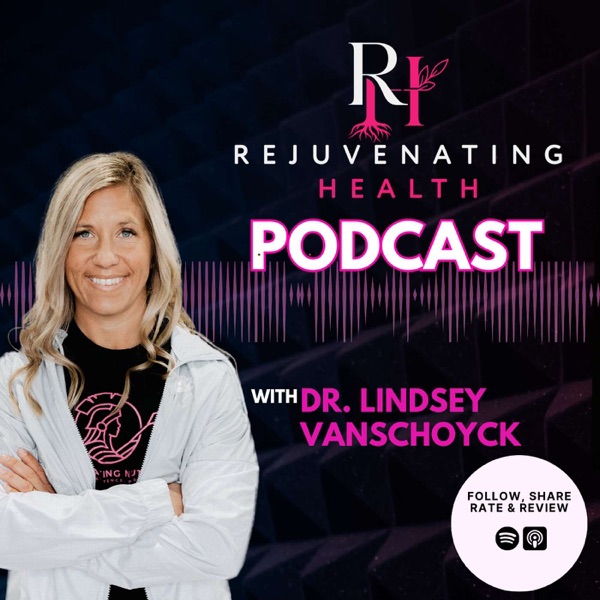
The Rejuvenating Health Podcast
Join Women's Health Nurse Practitioner, Lindsey VanSchoyck for a weekly dose of Precision Medicine as she addresses the hot-button topics specific to Women's Health, Fitness and Nutrition, interviews expert guests and hosts round table discussions with the team of dedicated functional health care specialists.
- Alternative Health chart
- #171
- Episodes
- 190
- Releases
- Weekly
- Typical length
- 32 min
- On air since
- 2023
- Latest episode
- 6 days ago
Episodes
190 episodes, newest first
-
22 min
REPLAY: E155 | The Real Reason Your Healthy Habits Stop Working
Season 2, Episode 183
Show notes
In today's episode, we wind it back to Episode 155 and connect chronic stress and nervous system safety to inflammation, hormones, digestion, sleep, and the frustrating experience of weight loss resistance. We lay out what “toxic” really means, how to spot the signals your body is sending, and the small boundaries and micro-recovery moves that can start shifting you out of survival mode.
• toxic defined as chronic unpredictability, tension, emotional threat, lack of agency, ongoing conflict, hyper-responsibility
• survival physiology explained in plain language, stress response overriding fat loss and recovery
• how cortisol rhythm, blood sugar, digestion, thyroid signaling, sex hormones, immune function, and sleep get disrupted
• real world examples from relationships, family dynamics, and workplace stress that keep the system braced
• symptom patterns that show up as fatigue, cravings, insomnia, bloating, cycle changes, low libido, elevated CRP, plateaued weight loss, rising resting heart rate, lower HRV
• the trap of treating stress symptoms like a discipline problem, piling restriction and punishment on top of overload
• a two-layer plan, reduce exposure where possible and build regulation capacity no matter what
• identifying your main stressor by tracking where your body tightens and where you lose your voice
• setting one boundary that protects your body, clear phrases and no overexplaining
• regulation before decisions, breath downshifts and next stabilizing choice
• micro-recovery blocks, scheduled walks, breath resets, decompression rituals, phone cutoffs, protein at breakfast
• when a bigger boundary or life change may be required for real healing
Give us a five-star review. Share with us what you're struggling with and what changes that you need to make.If you liked this episode, please consider sharing it out with a loved one and telling us what you think below with a kind review and rating on Apple or Spotify:
To rate and review the show on Apple Podcasts, click here
To rate and review the show on Spotify, click here
Feel free to reach out at www.rejuvenatinghealth.net
And be sure to follow along on the socials:
Instagram
-
38 min
E182 | Why Nighttime Eating Happens
Season 2, Episode 182
Show notes
You know that moment: you did “everything right” all day, then somehow you’re standing in the pantry at night eating something you didn’t even plan. We’ve both lived this, and we want to pull it out of the shame zone and into the real world where physiology, stress, and patterns actually matter. We talk through why nighttime snacking is so common for women and why “just be more disciplined” is usually the least helpful advice you can get.
We break down the difference between true physical hunger and emotional eating, plus how decision fatigue and a day of ignoring your own needs can set up a perfect storm. You’ll hear practical ways to pause without guilt, get curious about what the food is doing for you, and create more options so food isn’t the only coping tool. We also draw a clear line between emotional eating and binge eating disorder, and we talk about how the fitness space can accidentally praise obsession as “discipline,” including when macro tracking stops being a tool and starts becoming a trap.
Then we zoom out to the medical side: cortisol, sleep disruption, perimenopause hormones like progesterone shifts, and how poor sleep can affect ghrelin and leptin, cravings, and food choices. We add context on thyroid and blood sugar without blaming every craving on one lab value. Finally, we cover intermittent fasting and GLP-1 medications, including how reducing food noise can help, but doesn’t automatically heal your relationship with food without support and intention.
If you want a healthier relationship with food that lasts longer than the next Monday reset, listen now, share this with a friend who needs it, and please subscribe, rate, and review the podcast.
If you liked this episode, please consider sharing it out with a loved one and telling us what you think below with a kind review and rating on Apple or Spotify:
To rate and review the show on Apple Podcasts, click here
To rate and review the show on Spotify, click here
Feel free to reach out at www.rejuvenatinghealth.net
And be sure to follow along on the socials:
Instagram
-
44 min
E181 | The Wild West Of Functional Medicine
Show notes
The wellness world is loud right now and it’s getting harder to tell the difference between real medical care and a shiny sales page. We’re seeing hormone clinics everywhere, peptide “stacks” marketed as miracle fixes, lab panels sold like subscriptions, and GLP-1 programs that focus on fast weight loss while ignoring long-term health. If you’ve ever felt dismissed by conventional medicine and then overwhelmed by functional medicine marketing, you’re not alone.
We talk honestly about where functional medicine helps and where it can go off the rails. We dig into the lab testing obsession and why more biomarkers don’t automatically mean better outcomes. We also explain why “optimal” lab ranges can create anxiety and lead to treating numbers instead of treating the person, and how a good provider should be able to tell you exactly why a test is being ordered and what they’ll do with the result.
From there we get specific about hormone therapy for perimenopause and menopause, including why progesterone is being misused like a sleeping pill and why testosterone is being oversold as a fix for everything. We also break down the peptide Wild West, the risks of unapproved or poorly sourced injectables, and what “FDA approved” really means when you’re considering a treatment. Finally, we cover GLP-1 medications: why we believe in them for obesity and metabolic health, what a responsible GLP-1 program includes, and why preserving muscle with protein and resistance training matters as much as the number on the scale.
We close with seven questions you can bring to any functional medicine provider, hormone clinic, peptide clinic, or longevity program so you can make an informed decision without pressure. Subscribe, share this with a friend who’s feeling overwhelmed by wellness marketing, and leave a rating and review so more women can find evidence-based help.
If you liked this episode, please consider sharing it out with a loved one and telling us what you think below with a kind review and rating on Apple or Spotify:
To rate and review the show on Apple Podcasts, click here
To rate and review the show on Spotify, click here
Feel free to reach out at www.rejuvenatinghealth.net
And be sure to follow along on the socials:
Instagram
-
37 min
E180 | When Familiar Feels Like Safe
Season 2, Episode 180
Show notes
*Warning - This episode includes sensitive material relating to domestic abuse.* If you need confidential support, contact the National Domestic Violence Hotline at 1-800-799-7233, or text START to 88788.
If the phrase “but it’s not that bad” has ever crossed your mind, this conversation may land hard. We’re talking about domestic abuse and abusive relationship dynamics in a way that’s clear, trauma-informed, and grounded in what we actually see with women in real life: patterns that start small, escalate gradually, and get mislabeled as normal conflict, complicated love, or “just a stressful season.”
We unpack what abuse can look like beyond physical violence, including coercive control, emotional abuse, psychological manipulation, gaslighting, isolation, surveillance, financial control, sexual pressure, and threats involving children. We also address the question people love to ask from the outside “Why doesn’t she just leave?” and why that framing can be both unhelpful and dangerous. Leaving can be one of the highest-risk moments, which is why safety planning, personalized support, and trained advocates matter so much.
Then we connect it back to health and the nervous system. When your body is stuck in hypervigilance, familiar chaos can feel safer than unknown peace. That survival wiring affects sleep, digestion, inflammation, hormones, cravings, anxiety, and the ability to follow through on any health plan. We also share practical guidance for safer next steps, including why you shouldn’t use this conversation as a script to confront a partner who may retaliate.
If you need confidential support, contact the National Domestic Violence Hotline at 1-800-799-7233, or text START to 88788. If you found this helpful, subscribe, share it with someone you care about, and leave a review so more women can find it when they need it most.
If you liked this episode, please consider sharing it out with a loved one and telling us what you think below with a kind review and rating on Apple or Spotify:
To rate and review the show on Apple Podcasts, click here
To rate and review the show on Spotify, click here
Feel free to reach out at www.rejuvenatinghealth.net
And be sure to follow along on the socials:
Instagram
-
29 min
E179 | The Test That Tells You What To Eat
Season 2, Episode 179
Show notes
Your metabolism is not a guess, and it definitely is not whatever your smartwatch says after a workout. We’re back in the lab with Lindsay as our very willing “test subject,” walking through her PNOE metabolic testing results and what they actually mean for real women trying to feel better, perform better, and stay healthy for the long haul. We get into the basics of indirect calorimetry, why measuring oxygen consumption and carbon dioxide production can reveal what’s happening under the hood, and why this kind of data can be a game changer for personalized nutrition and training.
We talk through the resting test first: resting metabolic rate (RMR), daily calorie needs, and why “maintenance” can be way higher than the numbers many women aim for. From there we dig into fuel utilization, metabolic flexibility, and the practical problem a lot of us have: we want to burn fat efficiently at low intensity, then switch smoothly to carbs when intensity climbs, but our training habits don’t always support that. If you’ve ever wondered whether you should eat fewer carbs, cut fat, or overhaul your macros, this will help you stop guessing and start thinking in terms of what your body is actually doing.
Then we get into the active test: VO2 max, accurate heart rate training zones, and the most humbling part of Lindsey’s results, recovery. Great performance does not automatically mean you’re recovering well, and a poor recovery score can point to the real fix being more sleep, more food, fewer grind days, and more true zone two sessions that stay easy on purpose. We also cover who this testing is best for, what it typically costs, and where to find it if you’re not local. If you enjoy actionable health data and want a clearer path to fat loss, performance, and longevity, hit play, subscribe, and leave a review, then share this with a friend who’s stuck in the “eat less, do more” loop.
If you liked this episode, please consider sharing it out with a loved one and telling us what you think below with a kind review and rating on Apple or Spotify:
To rate and review the show on Apple Podcasts, click here
To rate and review the show on Spotify, click here
Feel free to reach out at www.rejuvenatinghealth.net
And be sure to follow along on the socials:
Instagram
-
31 min
E178 | Why Labs Alone Won't Cut It
Show notes
A pile of lab results can feel like certainty, until you realize you still do not feel like yourself. Coach Laken and Dr. Lindsey get real about the question we hear constantly: “Can you just run my labs?” Even as two people who genuinely love data, we explain why labs without context are not healthcare and why we will not sell you an expensive PDF of numbers with no plan for real change.
We break down what “normal” actually means, how lab reference ranges are built, and why a normal value does not automatically match your symptoms. We also push back on the other extreme: chasing perfect “optimal” targets for every biomarker. Using clear examples like fasting insulin and metabolic health, we walk through how we connect glucose, A1C, lipids, inflammation, blood pressure, body composition, sleep, stress, medications, and family history to understand the whole picture.
Then we go straight into the areas that frustrate women most: perimenopause hormone testing and thyroid labs. Perimenopause is volatile by nature, so a single hormone snapshot can miss the story. Thyroid symptoms overlap with iron deficiency, underfueling, overtraining, poor sleep, anxiety, and menopause, which is why clinical reasoning matters as much as the lab panel itself.
We close with the part nobody can outsource: implementation. Labs are a map, not the intervention, and progress comes from picking a few high-impact habits, following up, and adjusting as life changes. If this resonates, subscribe, share it with a friend who feels dismissed by “normal labs,” and leave us a review with the biggest question you want answered next.
If you liked this episode, please consider sharing it out with a loved one and telling us what you think below with a kind review and rating on Apple or Spotify:
To rate and review the show on Apple Podcasts, click here
To rate and review the show on Spotify, click here
Feel free to reach out at www.rejuvenatinghealth.net
And be sure to follow along on the socials:
Instagram
-
39 min
E177 | a Deep Dive into Dr. Lindsey's Labs
Season 2, Episode 177
Show notes
Your labs can look “fine” or even impressive while a major risk hides in plain sight. Today we do something different: we walk through Dr. Lindsey’s own blood work and show why symptoms and body composition are not a real risk assessment, especially for busy, high-performing women who train, eat well, and still want to protect their long-term health.
We start with the good news: excellent metabolic health markers like fasting glucose, insulin, A1C, triglycerides, HDL, and CRP. Then we dig into the surprising part: a high LDL and total cholesterol that would trigger a quick medication conversation in a typical appointment. From there, we explain the advanced lipid panel pieces most people never get, including ApoB, LDL particle number, particle size, ratios, and the marker that changes the entire story for Lindsey: lipoprotein(a) or Lp(a). We talk about why Lp(a) is often genetic, why you can’t outwork it, and how you can still meaningfully reduce overall cardiovascular disease risk with the right next steps.
We also cover why “TSH is normal” doesn’t automatically mean your thyroid is fine, especially if you’re taking T4 and T3, plus a real-world look at unexplained anemia when iron and ferritin are strong. Along the way we share practical lab prep guidance (fasting, exercise, cycle timing, meds, supplements) and why lab interpretation is an art that requires context, not just red and green flags.
If you want a clearer, more proactive approach to women’s health, preventative care, and precision medicine, hit play. Subscribe, share this with a friend who “feels fine,” and leave a review with the one lab marker you want to understand better.
If you liked this episode, please consider sharing it out with a loved one and telling us what you think below with a kind review and rating on Apple or Spotify:
To rate and review the show on Apple Podcasts, click here
To rate and review the show on Spotify, click here
Feel free to reach out at www.rejuvenatinghealth.net
And be sure to follow along on the socials:
Instagram
-
32 min
E176 | The Vagus Nerve Reset
Season 2, Episode 176
Show notes
Your brain can swear you’re fine while your body keeps bracing for impact, and that gap is where so many women get stuck. We’re talking about the vagus nerve: what it is, why it’s trending, and why it matters for everyday health markers like digestion, sleep, cravings, inflammation, recovery, and heart rate variability (HRV). Think of it as a communication highway between your brain and body that helps decide whether you’re safe enough to “rest and digest” or stuck in survival mode.
We walk through the three nervous system states we see most often: regulated (calm, connected, clear), activated (urgent, irritated, wired), and shut down (numb, autopilot, “I’ll start Monday”). If you’ve ever wondered why a protein breakfast feels easy one day and like punishment the next, or why your bedtime routine turns into rebellion, we connect those patterns to nervous system state and vagal tone rather than “lack of motivation.”
Then we get practical with free, realistic tools you can use in real life: longer exhales, orienting to the room, humming or singing, jaw and shoulder release, and finding safe connection that doesn’t require you to perform. We also share a weekly reflection prompt and a simple challenge: pick one practice and repeat it for seven days, long enough for your body to start believing you.
If this helps, share it with a friend who’s been stuck in tired-but-wired mode, and please subscribe, leave a five-star review, and tell us which practice you’re trying this week.
If you liked this episode, please consider sharing it out with a loved one and telling us what you think below with a kind review and rating on Apple or Spotify:
To rate and review the show on Apple Podcasts, click here
To rate and review the show on Spotify, click here
Feel free to reach out at www.rejuvenatinghealth.net
And be sure to follow along on the socials:
Instagram
-
35 min
E175 | Eliminate These Four Foods For a Clearer You (REPLAY)
Show notes
Today's episode is a replay from last November. One of our most popular topics for ladies looking to feel great, while the school season comes back into full swing this Labor Day weekend. The Core Four.
If your body feels “random” right now, bloating after meals, cravings you cannot shut off, brain fog, skin flare-ups, joint pain, or PMS and perimenopause symptoms that seem louder every month, you might not need another complicated plan. You might need a clean baseline. We sit down and walk through the Core Four protocol we use with clients: a short-term elimination of gluten, dairy, sugar, and seed oils to reduce inflammation and make your signals easier to interpret.
We explain the science in plain language: how gut permeability can amplify systemic inflammation, how blood sugar spikes and crashes can fuel cravings and cortisol, and why histamine load matters for women under stress. We also connect inflammation to hormone balance, including estrogen detox through the liver and gut, and why patterns like estrogen dominance and PCOS often improve when glucose regulation and gut function improve. If you have ever wondered whether your symptoms are “just hormones” or “just stress,” this gives you a practical framework to test what is actually driving them.
Then we get tactical. We break down why each Core Four category can cause problems, what to eat instead (simple proteins, fruits, vegetables, fiber-rich options, and better fats like olive oil and avocado oil), and why alcohol is a non-starter during a true elimination reset. We also cover the part most people skip: reintroduction. You will learn how to add foods back one at a time and what markers to watch for, from bloating and acne to cravings, mucus, sleep issues, and mood swings, so you stop guessing and start collecting real data.
If you want a clearer gut, steadier energy, and a calmer relationship with food, hit play now. Subscribe, share this with a friend who is always bloated, and leave us a five-star review so more women can find a safe, structured way to lower inflammation.
If you liked this episode, please consider sharing it out with a loved one and telling us what you think below with a kind review and rating on Apple or Spotify:
To rate and review the show on Apple Podcasts, click here
To rate and review the show on Spotify, click here
Feel free to reach out at www.rejuvenatinghealth.net
And be sure to follow along on the socials:
Instagram
-
40 min
E174 | Steps Aren’t Strength: A Complete Guide To Strength Training For Women
Season 2, Episode 174
Show notes
Ten thousand steps a day can change your health, but it won’t automatically build muscle, protect your bone density, or give you the strength you need for the second half of life. Today, Coach Laken and Dr. Lindsey, draw a hard line between “moving” and “training”. A lot of women are doing plenty of activity while still losing muscle, feeling stuck with body composition, and wondering why their workouts don’t translate to real strength.
We break down the layered difference between movement, exercise, and training, then make progressive overload feel practical instead of intimidating. We talk about what “lifting heavy” actually means, how close to muscular failure you need to be for results, and the simplest ways to progress even if you only have limited dumbbells at home. We also unpack the decades of messaging that taught women to stay small, fear discomfort, and avoid resistance, and why that mindset can backfire as we move through perimenopause and menopause.
From a clinical lens, we get into why muscle matters beyond aesthetics: higher resting metabolic rate, better glucose disposal and insulin sensitivity, stronger joints, improved mobility, and the underrated concept of muscle “reserve” for illness, injury, or surgery. We also cover underfueling, why carbs can be essential for intense training, and how wearables and lab work only help when they lead to an action plan. If you want stronger bones, better metabolism, and a body that can carry groceries, travel, and get off the floor with confidence, this one is for you. Share this with a friend, subscribe, and leave us a five-star rating and review.
If you liked this episode, please consider sharing it out with a loved one and telling us what you think below with a kind review and rating on Apple or Spotify:
To rate and review the show on Apple Podcasts, click here
To rate and review the show on Spotify, click here
Feel free to reach out at www.rejuvenatinghealth.net
And be sure to follow along on the socials:
Instagram
-
32 min
E173 | Ask Us Anything Part 2: More Midlife Health Myths Unpacked
Season 2, Episode 173
Show notes
Peptides, GLP-1s, carb fear, menopause facial hair, and the dreaded “I’m doing everything” weight plateau all show up in the same place: a health world overflowing with confident advice that often ignores context. We pick up the second half of our Ask Us Anything with a grounded take on what actually helps midlife women feel better, get stronger, and make progress without getting pulled into expensive trends or fear-based rules.
We start with peptides and the bigger issue behind them: the rise of “Big Wellness.” We talk about why buying peptides off the internet is a hard no, why medical supervision matters, and why there’s still no free lunch when it comes to long-term risk. From there we move into midlife nutrition, explaining why carbohydrates can be a powerful tool for active women, gut health, fiber, and training performance, and how to reintroduce carbs slowly without panicking about temporary water weight. We also share practical food choices and pairing strategies to support steadier blood sugar.
Next we tackle building visible muscle in your 60s, including anabolic resistance, progressive resistance training, protein needs, and why strength matters beyond aesthetics for bone health, glucose disposal, and independence. Then we break down the most common reasons the scale stalls despite effort, from timeline and tracking bias to sleep, stress, medications, thyroid issues, insulin resistance, and the need for better data. We close with nuanced answers on menopause facial hair, preventing hair loss and micronutrient deficiencies on GLP-1 medication, and when a bedtime snack can actually improve sleep.
If this helped you cut through the noise, subscribe, share it with a friend, and leave a quick review so more women can find trustworthy midlife health guidance.
If you liked this episode, please consider sharing it out with a loved one and telling us what you think below with a kind review and rating on Apple or Spotify:
To rate and review the show on Apple Podcasts, click here
To rate and review the show on Spotify, click here
Feel free to reach out at www.rejuvenatinghealth.net
And be sure to follow along on the socials:
Instagram
-
25 min
E172 | Ask Us Anything Is Back!
Season 2, Episode 172
Show notes
We answer rapid-fire midlife health questions with a simple filter: stop searching for one universal rule and start matching the tool to the person. We walk through hair loss after estradiol, when HRT makes sense, how to use GLP-1s safely, and why carbs and protein still matter when you want strength and energy.
• hair shedding after starting an estradiol patch and why timing can mislead
• hair loss basics including telogen effluvium, stress lag, ferritin and thyroid checks
• EAAs explained, why leucine is not enough, powder vs pill practicality
• deciding when to start HRT based on symptoms, quality of life, risks, route, dose
• GLP-1 medications as a tool alongside lifestyle, not instead of it
• protein, resistance training, adequate intake, and monitoring as non-negotiables on GLP-1s
• sore teeth and oral sensitivity, plus the need to rule out dental causes first
• hormonal IUD vs micronized oral progesterone, local vs systemic effects, tolerability
• peptides like BPC-157, KPV, TB-500 and the gap between animal data and human evidence
• carbs in midlife, glycogen and water weight, gradual reintroduction, higher-quality sourcesIf you can think of any other questions that these sparked today that you want to add to our next Ask Us Anything episode, please message us. We'd love to hear. And as always, rate and review, send us all those five stars, and we will see you next time.
If you liked this episode, please consider sharing it out with a loved one and telling us what you think below with a kind review and rating on Apple or Spotify:
To rate and review the show on Apple Podcasts, click here
To rate and review the show on Spotify, click here
Feel free to reach out at www.rejuvenatinghealth.net
And be sure to follow along on the socials:
Instagram
-
32 min
E171 | Stop The Comparison Spiral
Season 2, Episode 171
Show notes
One scroll can flip the switch from “I’m doing fine” to “I’m failing” and your body reacts like it’s danger. We get honest about comparison, why it hits so hard for women, and how it quietly sabotages your health journey through stress, urgency, and plan-hopping. We also celebrate a fun life update with Dr. Lindsay stepping fully into her new title, then we pivot into a topic we see constantly in real client conversations.
We define comparison as measuring your worth or progress against someone else’s visible life, not their full reality. That’s why Instagram before-and-after photos, gym selfies, and perfectly staged meal prep can trigger shame, panic, and the “I should be doing what she’s doing” spiral. We walk through the full comparison loop (trigger, thought, feeling, behavior, aftermath) and explain the “comparison hangover” that lingers long after you put your phone down. If you’ve ever felt disconnected from your body, anxious about your timeline, or tempted to swing into extreme restriction or over-exercising, you’ll recognize the pattern fast.
Then we get practical. We share a simple nervous system friendly pattern interrupt: pause, name, redirect. You’ll learn how to decode envy as useful data, choose values over metrics, and take one aligned action that builds self-trust instead of panic. We also give you a weekly “comparison audit” to pinpoint your triggers, the exact story you tell yourself, and what you actually want underneath it all.
If this hits home, subscribe, share it with a friend who needs it, and leave us a five-star review so more women can find the tools to stay in their own lane.
If you liked this episode, please consider sharing it out with a loved one and telling us what you think below with a kind review and rating on Apple or Spotify:
To rate and review the show on Apple Podcasts, click here
To rate and review the show on Spotify, click here
Feel free to reach out at www.rejuvenatinghealth.net
And be sure to follow along on the socials:
Instagram
-
24 min
E170 | Root Cause and Corrine's Success Story: Blood Work, Lifestyle Optimization, and Overcoming Psychological Barriers (E72 REPLAY)
Season 2, Episode 170
Show notes
You can’t “lab test” your way out of poor sleep, chronic stress, or diet culture rules that keep you stuck, and you also can’t mindset your way out of a real metabolic problem. That’s why we’re laying out what we mean by a true root cause approach to women’s health and sustainable weight loss, and why it’s bigger than a single blood draw or a one-time nutrition plan.
Today's show is a replay from Season 1. Lindsey walks through the three-part framework: comprehensive blood work (thyroid health, hormone health, insulin resistance, inflammation markers, cortisol and stress markers, plus core labs like cholesterol and organ function), deep lifestyle coaching (weekly calls and daily check-ins to find the real friction points), and mindset work (the beliefs and old experiences that make “healthy” feel unsafe or impossible). We talk about how training and nutrition should match your age, recovery, and injuries, and why “eat less and work out more” often backfires.
Then you’ll hear a client story from Corinne, that puts it all into motion. At the time of recording, she’s heading toward her 60th birthday, dealing with knee replacements, and watching her numbers trend the wrong way despite doing everything she was told. After committing to a food-first plan and moderate exercise, she drops 26 pounds in under nine weeks, lowers fat mass, gains skeletal muscle, and does it without Ozempic, punishing workouts, or feeling hungry. We also get real about trust, misinformation online, and why a supportive coach can be the difference between quitting early and finally getting results.
If this resonates, subscribe, share this with a friend who feels stuck, and leave a review so more women can find a smarter path to better health.
If you liked this episode, please consider sharing it out with a loved one and telling us what you think below with a kind review and rating on Apple or Spotify:
To rate and review the show on Apple Podcasts, click here
To rate and review the show on Spotify, click here
Feel free to reach out at www.rejuvenatinghealth.net
And be sure to follow along on the socials:
Instagram
-
32 min
E169 | Behind The Scenes Lab Review (REPLAY E101)
Season 2, Episode 169
Show notes
Your routine can be dialed in, your workouts consistent, your food choices careful and your sleep “pretty good” and you can still feel tired, inflamed, and stuck. That disconnect is exactly why we recorded this behind-the-scenes look at how we run and review functional lab testing inside Rejuvenating Health. In today's replay episode, Lindsey and Laken use Laken’s own blood work to show what we look for, what “optimal” really means, and how to translate biomarkers into practical, sustainable moves.
We start with metabolic health and insulin markers, because fasting glucose and A1C can look perfect while fasting insulin quietly climbs. We talk about what that can mean for cravings, afternoon slumps, fatigue, and inflammation, plus why stress can push blood sugar and insulin higher even when nutrition is solid. From there we move into thyroid function testing the way it should be done: a full thyroid panel with free T4, free T3, reverse T3, antibodies, and the conversion story that often explains low energy and slow metabolism better than TSH ever will.
Then we dig into nutrient markers and inflammation clues like ferritin and liver enzymes, and we open up the hormone conversation with cycle day 21 labs, luteal-phase estrogen and progesterone, and the realities of low testosterone in women. We unpack DHEA, pregnenolone, and testosterone replacement as personalized tools, not trends, and we explain why there’s rarely a single “magic pill” hiding in your lab report. You’ll also hear the exact kind of step-by-step strategy we use with clients: protein-forward mornings, blood sugar stability, realistic stress support, vitamin D absorption tweaks, and food-first folate boosts that fit real life.
If your body is sending signals, this is your sign to stop guessing and start measuring. Subscribe, share this with a friend who’s doing “everything right” but still feels off, and leave us a five-star review so more women can find smarter lab-based coaching.
If you liked this episode, please consider sharing it out with a loved one and telling us what you think below with a kind review and rating on Apple or Spotify:
To rate and review the show on Apple Podcasts, click here
To rate and review the show on Spotify, click here
Feel free to reach out at www.rejuvenatinghealth.net
And be sure to follow along on the socials:
Instagram
-
30 min
E168 | Why Your Husband Loses Weight Faster
Season 2, Episode 168
Show notes
Your husband swaps soda for walks and drops 20 pounds, and you’re over here meal prepping, tracking, and grinding for a single pound. That gap is real, it’s common, and it doesn’t mean you’re broken. Laken and Lindsey are laying out the physiology that explains why fat loss often looks different for women, especially when hormones and stress are in the mix.
We talk through the biggest biological drivers: why women naturally carry more essential body fat, why men usually have more skeletal muscle, and how that muscle advantage boosts basal metabolic rate (BMR) and makes carbs easier to “burn through.” We also get practical about what muscle actually does for metabolism, insulin sensitivity, and blood sugar regulation, plus why lifting heavy won’t magically make you look like a man.
Then we zoom in on perimenopause and menopause. Progesterone often falls first, sleep can unravel, estrogen can swing month to month, and testosterone can decline, creating the perfect storm for cravings, plateaus, and new belly fat. We connect the dots between visceral fat, inflammation, cortisol, and insulin resistance, and we explain why slashing calories and adding more cardio can backfire by downshifting NEAT, thyroid function, and hunger hormones.
Finally, we share the “what now” checklist: the labs that can reveal what’s actually blocking progress and the core habits we come back to again and again: strength training, protein at each meal, fewer naked carbs, better sleep, stress support, and a plan that works with your body instead of against it.
If this helped you, subscribe, share it with a friend whose husband can shed pounds just by thinking about it and needs the explaination why. If you got value, the trade off is to leave a quick rating and review.If you liked this episode, please consider sharing it out with a loved one and telling us what you think below with a kind review and rating on Apple or Spotify:
To rate and review the show on Apple Podcasts, click here
To rate and review the show on Spotify, click here
Feel free to reach out at www.rejuvenatinghealth.net
And be sure to follow along on the socials:
Instagram
-
35 min
E167 | Sleep Is a Boundary
Season 2, Episode 167
Show notes
You know sleep matters, but why do so many of us still blow past bedtime and wake up feeling wired, puffy, hungry, and foggy? We’re getting real about the patterns that keep women stuck, even when they’ve tried the classic sleep hygiene tips like magnesium glycinate, a colder room, or “just getting off your phone.”
We talk about the second wind problem and what’s really happening when you get sleepy around 9, push through it, and suddenly find yourself energized at 10:30. We name revenge bedtime procrastination for what it is: a fight for decompression, autonomy, pleasure, or avoidance when your day felt like it belonged to everyone else. Then we connect the dots to real physiology, including cortisol rhythm, melatonin timing, blood sugar swings, cravings, and the way a constantly upregulated nervous system makes it hard to feel safe enough to shut down.
From the mindset side, we get practical. We unpack why “I should go to bed” creates pressure and resistance, and how tiny, realistic promises rebuild self-trust. You’ll leave with repeatable tools that support circadian rhythm and calmer nights: a consistent wake time, morning light, caffeine boundaries, a work cutoff tied to a ritual, getting your phone out of your bed, and a minimal nighttime routine that doesn’t require a 12-step checklist.
If this hit home, pick one sleep boundary to test for a week and tell us what you chose. Subscribe for more, share this with a friend who’s tired of feeling tired, and leave a five-star review so more women can find the show.
If you liked this episode, please consider sharing it out with a loved one and telling us what you think below with a kind review and rating on Apple or Spotify:
To rate and review the show on Apple Podcasts, click here
To rate and review the show on Spotify, click here
Feel free to reach out at www.rejuvenatinghealth.net
And be sure to follow along on the socials:
Instagram
-
29 min
E166 | PMOS Explained
Season 2, Episode 166
Show notes
PCOS gets talked about like it’s an ovarian problem, but that framing keeps a lot of women stuck. We’re breaking down the newer term PMOS, polyendocrine metabolic ovarian syndrome, and why it’s a better fit for what’s happening in the body: a metabolic and endocrine pattern that can affect cycles, skin, hair, weight, mood, energy, and long-term health. If you’ve ever been told your labs are “normal,” to just eat less and move more, or that birth control is the only answer, this conversation gives you a clearer map.
We dig into what the “string of pearls” ultrasound finding actually represents, why insulin resistance is often the main driver, and how elevated insulin can push the ovaries to make more testosterone and disrupt ovulation. We also talk about the domino effect that follows: low progesterone, shifting estrogen, worsening insulin sensitivity, and inflammation that can keep the cycle going. Along the way, we call out common myths like “only overweight women have it,” “you’ll grow out of it,” and “you can’t get pregnant with PMOS.”
You’ll hear how PMOS can show up differently depending on root cause, including lean PMOS, stress or adrenal-driven patterns, inflammation-driven cases, and symptoms that appear after stopping birth control. We also cover how PMOS can intensify during perimenopause and why it doesn’t automatically disappear after menopause, plus the key labs that help you and your clinician confirm what’s going on. Then we get practical: protein and fiber targets, strength training and walking, sleep support, stress recovery, targeted supplements like inositol and vitamin D, and when medications like metformin or GLP-1s may be appropriate.
If this helped you connect the dots, subscribe on Apple Podcasts, Spotify, or YouTube, share it with a friend who needs answers, and leave a review so more women can find this conversation.
If you liked this episode, please consider sharing it out with a loved one and telling us what you think below with a kind review and rating on Apple or Spotify:
To rate and review the show on Apple Podcasts, click here
To rate and review the show on Spotify, click here
Feel free to reach out at www.rejuvenatinghealth.net
And be sure to follow along on the socials:
Instagram
-
25 min
165 | Gallbladder Reset
Show notes
Right-sided pain after a fatty meal. New nausea you can’t explain. Bloating that shows up the minute you try to “eat healthier.” If you’re in perimenopause or menopause, those symptoms can point to something most women never hear about until it becomes a crisis: the gallbladder.
On today's show, Coach Laken and nurse practitioner Lindsey break down why gallbladder issues and gallstones become more common as hormones shift. We walk through what bile actually does for fat digestion, fat-soluble vitamin absorption, cholesterol clearance, and estrogen detox, then explain how estrogen and progesterone influence the system in totally different ways. Estrogen can push more cholesterol into bile and change bile composition, while progesterone can slow gallbladder motility, creating the “perfect storm” for stagnant bile and stone formation, especially when insulin resistance, fatty liver, or metabolic dysfunction is already in the mix.
We also get practical about hormone replacement therapy. Not all HRT carries the same gallbladder risk, and the route matters: oral estrogen goes through first-pass liver metabolism and can affect bile more than transdermal patches or creams. We cover common red flags to watch for, what changes after gallbladder removal (your liver still makes bile, but storage and timing change), and supportive options people ask about like TUDCA, taurine, glycine, choline, magnesium, and bitter herbs. Finally, we talk about GLP-1 medications and why rapid weight loss can raise gallstone risk, plus how the gut microbiome ties bile acids, inflammation, cholesterol, and hormone balance together.
If this helps you connect dots you’ve been missing, subscribe, share it with a friend, and leave us a review so more women can find the info before symptoms get worse.
If you liked this episode, please consider sharing it out with a loved one and telling us what you think below with a kind review and rating on Apple or Spotify:
To rate and review the show on Apple Podcasts, click here
To rate and review the show on Spotify, click here
Feel free to reach out at www.rejuvenatinghealth.net
And be sure to follow along on the socials:
Instagram
-
32 min
E164 | Menopause Is Not One Size Fits All
Season 2, Episode 164
Show notes
Standardized menopause protocols leave too many women exhausted, inflamed, and convinced they are the problem. We break down why symptoms can persist even with “normal labs” or HRT and what truly individualized menopause care looks like across hormones, metabolism, and the nervous system. On today's show, Laken and Lindsey discuss:
• why one size fits all menopause care falls short
• how hormone receptors and cellular response shape symptoms
• why menopause is more than low estrogen and impacts full-body metabolism
• the weight gain cycle: insulin resistance, muscle loss, cortisol, and undereating
• how evidence-based guidelines support individualized HRT decisions
• FDA-approved hormones vs compounded hormones and when each makes sense
• testosterone therapy for women: potential benefits, risks, and why dosing matters
• why nervous system regulation and stress patterns change hormone outcomes
• how coaching supports consistency, boundaries, sleep, and sustainable change
• building care around symptom patterns, labs, lifestyle, and personal goalsIf this episode resonated with you, please like and subscribe, rate and review and share this episode out with one woman in your life who needs to hear this.
If you liked this episode, please consider sharing it out with a loved one and telling us what you think below with a kind review and rating on Apple or Spotify:
To rate and review the show on Apple Podcasts, click here
To rate and review the show on Spotify, click here
Feel free to reach out at www.rejuvenatinghealth.net
And be sure to follow along on the socials:
Instagram
Alternative Health lists
More Alternative Health shows picked out from the charts











More in Alternative Health
Placed highest on Apple Podcasts' Alternative Health chart right now