Podcast
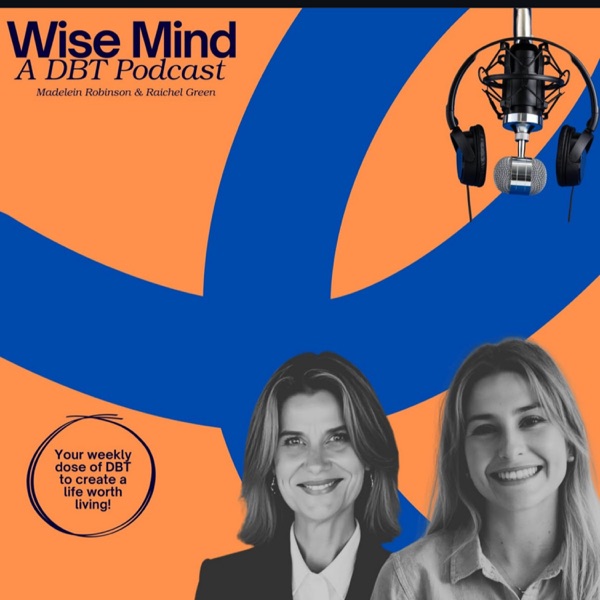
Wise Mind: A DBT Podcast
Welcome to Wise Mind: A DBT Podcast with Raichel Green and Madelein Robinson — your weekly dose of DBT skills to create a life worth living.
Grounded in trauma-informed care, we explore tools , skills and insights from Dialectical Behavior Therapy (DBT) — the gold standard for treating mental health challenges like complex trauma, BPD, eating disorders, substance abuse, anxiety, depression, and much more!
Whether you're here for yourself, someone else, a mental health clinician or just curious about DBT — you're in the right place.
- Mental Health chart
- #177
- Episodes
- 69
- Releases
- Weekly
- Typical length
- 49 min
- On air since
- 2025
- Latest episode
- 6 days ago
Episodes
69 episodes, newest first
-
47 min
Where Did I Just Go? Intro To Dissociation
Show notes
Dissociation: What Is It, Really?
Ever feel like you’re there… but not really there? Or like the world suddenly feels distant, dreamlike, or strangely unfamiliar?
In this episode of Wise Mind: A DBT Podcast, we’re diving into dissociation , what it actually is, why it happens, and what it can look and feel like.
We break down some of the common signs and symptoms of dissociation, including feeling disconnected from yourself or your surroundings, emotional numbness, “spacing out,” memory gaps, and experiences of depersonalisation or derealisation.
We also explore why dissociation can be a protective response, particularly when our brains and nervous systems are overwhelmed, and why understanding what’s happening can be an important first step towards responding with curiosity rather than fear.
No jargon, no diagnosing yourself from TikTok , just a practical, trauma- informed introduction to understanding dissociation.
If you enjoy the episode, please like, follow, subscribe, leave a review, and share to help support the podcast.
Wanting more weekly wise Mind?! For bonus episodes and exclusive resources every week, join us on Patreon, the link via wisemindcollective.com.au.
Contact us:
www.wisemindcollective.com.au
wisemindcollective.com.au
Instagram + Facebook + TIK TOK - Wisemind: A DBT Podcast
Crisis Support
This space may include discussions that bring up strong emotions or difficult topics. If you’re feeling overwhelmed, please know you're not alone and support is available.
If you or someone you know is in crisis, we encourage you to reach out to:
Lifeline – 13 11 14 (24/7)
Beyond Blue – 1300 22 4636
13YARN – 13 92 76 (A 24/7 national support line for Aboriginal and Torres Strait Islander people)
Emergency Services – 000 (if you are in immediate danger)
26/9
Acknowledgment of Dr. Marsha M. Linehan and the Origins of DBT
We honor Dr. Marsha M. Linehan, psychologist and professor who created Dialectical Behavior Therapy.
It’s thanks to Dr. Linehan that DBT has become a proven intervention for a range of mental health challenges.
Wise Mind A DBT Podcast gratefully acknowledges that DBT is Dr. Linehan’s work, not ours, and we honor her legacy.
-
56 min
HOLIDAY MODE | WHAT & HOW Skills Re-Shared
Show notes
HOLIDAY MODE | Re-Share: Mindfulness - WHAT & HOW Skills
Welcome back to Wise Mind! 🧡
We’re taking a much-needed DBT break! Here in Australia, it’s school holidays and summer is in full swing, so we’re pressing pause on the podcast for the next two weeks to soak up some sunshine, rest and recharge.
And a big welcome to all our new listeners! While we’re away, we’re bringing you an oldie but a goodie from the early days of Wise Mind — an episode we think is definitely worth revisiting.
So, settle in and enjoy this throwback episode all about mindfulness and our WHAT & HOW Skills. 🧠
And if you’re missing your weekly Wise Mind fix, don’t worry! We’re still releasing new content every week over on Patreon, including bonus content and resources. Head to our website to find the link and join us over there!
We’ll see you back here after the break with more Wise Mind, more DBT and more conversations about making sense of our wonderfully messy brains.
See you in two weeks!
If you enjoy the episode, please like, follow, subscribe, leave a review, and share to help support the podcast.
Wanting more weekly wise Mind?! For bonus episodes and exclusive resources every week, join us on Patreon, the link via wisemindcollective.com.au.
Contact us:
www.wisemindcollective.com.au
wisemindcollective.com.au
Instagram + Facebook + TIK TOK - Wisemind: A DBT Podcast
Crisis Support
This space may include discussions that bring up strong emotions or difficult topics. If you’re feeling overwhelmed, please know you're not alone and support is available.
If you or someone you know is in crisis, we encourage you to reach out to:
Lifeline – 13 11 14 (24/7)
Beyond Blue – 1300 22 4636
13YARN – 13 92 76 (A 24/7 national support line for Aboriginal and Torres Strait Islander people)
Emergency Services – 000 (if you are in immediate danger)
Acknowledgment of Dr. Marsha M. Linehan and the Origins of DBT
We honor Dr. Marsha M. Linehan, psychologist and professor who created Dialectical Behavior Therapy.
It’s thanks to Dr. Linehan that DBT has become a proven intervention for a range of mental health challenges.
Wise Mind A DBT Podcast gratefully acknowledges that DBT is Dr. Linehan’s work, not ours, and we honor her legacy.
-
1 hr 3 min
HOLIDAY MODE | Revisiting ABC Skills
Show notes
HOLIDAY MODE 🌴 | Re-Share: ABC Skills
Welcome back to Wise Mind! 🧡
We’re taking a much-needed DBT break! Here in Australia, it’s school holidays and summer is in full swing, so we’re pressing pause on the podcast for the next two weeks to soak up some sunshine, rest and recharge.
And a big welcome to all our new listeners! While we’re away, we’re bringing you an oldie but a goodie from the early days of Wise Mind an episode we think is definitely worth revisiting.
So, settle in and enjoy this throwback episode all about ABC Skills.
And if you’re missing your weekly Wise Mind fix, don’t worry! We’re still releasing new content every week over on Patreon, including bonus content and resources. Head to our website to find the link and join us over there!
We’ll see you back here after the break with more Wise Mind, more DBT and more conversations about making sense of our wonderfully messy brains.
See you in two weeks!
If you enjoy the episode, please like, follow, subscribe, leave a review, and share to help support the podcast.
Wanting more weekly wise Mind?! For bonus episodes and exclusive resources every week, join us on Patreon, the link via wisemindcollective.com.au.
Contact us:
www.wisemindcollective.com.au
wisemindcollective.com.au
Instagram + Facebook + TIK TOK - Wisemind: A DBT Podcast
Crisis Support
This space may include discussions that bring up strong emotions or difficult topics. If you’re feeling overwhelmed, please know you're not alone and support is available.
If you or someone you know is in crisis, we encourage you to reach out to:
Lifeline – 13 11 14 (24/7)
Beyond Blue – 1300 22 4636
13YARN – 13 92 76 (A 24/7 national support line for Aboriginal and Torres Strait Islander people)
Emergency Services – 000 (if you are in immediate danger)
Acknowledgment of Dr. Marsha M. Linehan and the Origins of DBT
We honor Dr. Marsha M. Linehan, psychologist and professor who created Dialectical Behavior Therapy.
It’s thanks to Dr. Linehan that DBT has become a proven intervention for a range of mental health challenges.
Wise Mind A DBT Podcast gratefully acknowledges that DBT is Dr. Linehan’s work, not ours, and we honor her legacy.
-
48 min
Meeting People Where They’re At
Show notes
In Part 2, Maddy and Raich from Wise Mind are continuing the conversation around self-harm but this time, we’re getting practical. What do we do when someone isn’t ready to stop? We explore harm minimisation, how to support someone without judgement, and why meeting people where they’re at can be an important part of the work. We chat about what helpful support can actually look like, how to have these conversations safely, and how we can stay connected with someone even when they’re not ready to make a change!!
If you enjoy the episode, please like, follow, subscribe, leave a review, and share to help support the podcast.
Wanting more weekly wise Mind?! For bonus episodes and exclusive resources every week, join us on Patreon, the link via wisemindcollective.com.au.
Contact us:
www.wisemindcollective.com.au
wisemindcollective.com.au
Instagram + Facebook + TIK TOK - Wisemind: A DBT Podcast
Crisis Support
This space may include discussions that bring up strong emotions or difficult topics. If you’re feeling overwhelmed, please know you're not alone and support is available.
If you or someone you know is in crisis, we encourage you to reach out to:
Lifeline – 13 11 14 (24/7)
Beyond Blue – 1300 22 4636
13YARN – 13 92 76 (A 24/7 national support line for Aboriginal and Torres Strait Islander people)
Emergency Services – 000 (if you are in immediate danger)
26/9
Acknowledgment of Dr. Marsha M. Linehan and the Origins of DBT
We honor Dr. Marsha M. Linehan, psychologist and professor who created Dialectical Behavior Therapy.
It’s thanks to Dr. Linehan that DBT has become a proven intervention for a range of mental health challenges.
Wise Mind A DBT Podcast gratefully acknowledges that DBT is Dr. Linehan’s work, not ours, and we honor her legacy.
-
47 min
Why Does It Feel Like Relief? The Brain & Self-Harm
Show notes
In this episode, Maddy and Raich from Wise Mind are diving into a topic that can be difficult, misunderstood and sometimes pretty uncomfortable to talk about self-harm (In all its many forms). We chat about what it actually is, why people might turn to it, and what purpose it can serve. We also share how we approach working with self-harm in our clinical practice and why our approach differs slightly from the way Marsha Linehan talks about it in traditional DBT. As always, we’re keeping it real, compassionate and practical because understanding the behaviour is often the first step towards finding a different way through.
If you enjoy the episode, please like, follow, subscribe, leave a review, and share to help support the podcast.
Wanting more weekly wise Mind?! For bonus episodes and exclusive resources every week, join us on Patreon, the link via wisemindcollective.com.au.
Contact us:
www.wisemindcollective.com.au
wisemindcollective.com.au
Instagram + Facebook + TIK TOK - Wisemind: A DBT Podcast
Crisis Support
This space may include discussions that bring up strong emotions or difficult topics. If you’re feeling overwhelmed, please know you're not alone and support is available.
If you or someone you know is in crisis, we encourage you to reach out to:
Lifeline – 13 11 14 (24/7)
Beyond Blue – 1300 22 4636
13YARN – 13 92 76 (A 24/7 national support line for Aboriginal and Torres Strait Islander people)
Emergency Services – 000 (if you are in immediate danger)
26/9
Acknowledgment of Dr. Marsha M. Linehan and the Origins of DBT
We honor Dr. Marsha M. Linehan, psychologist and professor who created Dialectical Behavior Therapy.
It’s thanks to Dr. Linehan that DBT has become a proven intervention for a range of mental health challenges.
Wise Mind A DBT Podcast gratefully acknowledges that DBT is Dr. Linehan’s work, not ours, and we honor her legacy.
-
42 min
Small Signals, Bigger Connections
Show notes
Social Signals & Connection: The Skills That Help Us Connect
Why can connecting with others sometimes feel so difficult, even when we really want connection? In this episode of Wise Mind, we explore the role of social signalling the small verbal and non-verbal cues we use to communicate warmth, interest and openness to others.
We explore the “flat face” and how our facial expressions, body language and tone can unintentionally communicate disinterest or distance, even when we’re feeling anxious or wanting connection. We unpack the fear of rejection that can make us pull back, avoid eye contact, or wait for others to make the first move.
Most importantly, we explore practical skills for creating connection, including noticing our social signals, practising warmth and curiosity, showing genuine interest, initiating conversations and tolerating the discomfort that can come with vulnerability.
Because connection isn't always about finding the “right” people sometimes it starts with learning how to signal, “I'm open to connecting.”
If you enjoy the episode, please like, follow, subscribe, leave a review, and share to help support the podcast.
Wanting more weekly wise Mind?! For bonus episodes and exclusive resources every week, join us on Patreon, the link via wisemindcollective.com.au.
Contact us:
www.wisemindcollective.com.au
wisemindcollective.com.au
Instagram + Facebook + TIK TOK - Wisemind: A DBT Podcast
Crisis Support
This space may include discussions that bring up strong emotions or difficult topics. If you’re feeling overwhelmed, please know you're not alone and support is available.
If you or someone you know is in crisis, we encourage you to reach out to:
Lifeline – 13 11 14 (24/7)
Beyond Blue – 1300 22 4636
13YARN – 13 92 76 (A 24/7 national support line for Aboriginal and Torres Strait Islander people)
Emergency Services – 000 (if you are in immediate danger)
Acknowledgment of Dr. Marsha M. Linehan and the Origins of DBT
We honor Dr. Marsha M. Linehan, psychologist and professor who created Dialectical Behavior Therapy.
It’s thanks to Dr. Linehan that DBT has become a proven intervention for a range of mental health challenges.
Wise Mind A DBT Podcast gratefully acknowledges that DBT is Dr. Linehan’s work, not ours, and we honor her legacy.
-
41 min
The Loneliness Epidemic
Show notes
The Loneliness Epidemic: Why We Feel So Alone
Loneliness is becoming increasingly recognised as a significant public health concern but what actually happens when we feel disconnected from others? In this episode of Wise Mind, we explore the research behind the loneliness epidemic and why feeling connected is such a fundamental human need.
We unpack the difference between being alone and feeling lonely, and explore what research tells us about the impact of chronic loneliness on our emotional wellbeing, stress response, physical health and relationships. We also look at why loneliness can become a cycle: feeling disconnected can lead us to withdraw, which can make meaningful connection even harder to find.
From the neuroscience of social connection to the psychology of belonging, we explore what loneliness might be trying to communicate and how we can respond to it more effectively.
Because loneliness isn't a personal failure it's a deeply human experience and a signal that connection matters.
If you enjoy the episode, please like, follow, subscribe, leave a review, and share to help support the podcast.
Wanting more weekly wise Mind?! For bonus episodes and exclusive resources every week, join us on Patreon, the link via wisemindcollective.com.au.
Contact us:
www.wisemindcollective.com.au
wisemindcollective.com.au
Instagram + Facebook + TIK TOK - Wisemind: A DBT Podcast
Crisis Support
This space may include discussions that bring up strong emotions or difficult topics. If you’re feeling overwhelmed, please know you're not alone and support is available.
If you or someone you know is in crisis, we encourage you to reach out to:
Lifeline – 13 11 14 (24/7)
Beyond Blue – 1300 22 4636
13YARN – 13 92 76 (A 24/7 national support line for Aboriginal and Torres Strait Islander people)
Emergency Services – 000 (if you are in immediate danger)
Acknowledgment of Dr. Marsha M. Linehan and the Origins of DBT
We honor Dr. Marsha M. Linehan, psychologist and professor who created Dialectical Behavior Therapy.
It’s thanks to Dr. Linehan that DBT has become a proven intervention for a range of mental health challenges.
Wise Mind A DBT Podcast gratefully acknowledges that DBT is Dr. Linehan’s work, not ours, and we honor her legacy.
-
51 min
Your Brain on Self-Compassion
Show notes
The Neuroscience of Self-Compassion 🧠💛
In this episode of Wise Mind, Raich and Maddy dive into the science behind self-compassion and explore why being kind to ourselves can sometimes feel surprisingly uncomfortable.
We unpack what actually happens in the brain and nervous system when we practise compassion, how self-compassion can influence stress, emotional regulation and our ability to cope with difficult experiences, and why it is so much more than simply “being nice to yourself.”
We also explore practical ways to begin building self-compassion into everyday life, including the often-overlooked yang side of compassion — the protective, courageous and action-oriented side that might challenge everything you thought compassion was supposed to look like.
If self-compassion makes you cringe, feel uncomfortable, or sounds a little too “woo woo,” this episode is for you!
If you enjoy the episode, please like, follow, subscribe, leave a review, and share to help support the podcast.
Want More Wise Mind?!
Wanting more weekly Wise Mind? Join us on Patreon for bonus episodes and exclusive resources every week.
Find the link via wisemindcollective.com.au.
http://www.wisemindcollective.com.au
Instagram + Facebook + TikTok: Wise Mind: A DBT Podcast
This space may include discussions that bring up strong emotions or difficult topics. If you’re feeling overwhelmed, please know you're not alone and support is available.
If you or someone you know is in crisis, we encourage you to reach out:
• Lifeline: 13 11 14 (24/7)
• Beyond Blue: 1300 22 4636
• 13YARN: 13 92 76 (24/7 national support line for Aboriginal and Torres Strait Islander people)
• Emergency Services: 000 (if you are in immediate danger)We honour Dr. Marsha M. Linehan, psychologist and professor who created Dialectical Behavior Therapy (DBT).
It’s thanks to Dr. Linehan that DBT has become a proven intervention for a range of mental health challenges.
Wise Mind: A DBT Podcast gratefully acknowledges that DBT is Dr. Linehan’s work, not ours, and we honour her legacy.
Contact UsCrisis SupportAcknowledgment of Dr. Marsha M. Linehan and the Origins of DBT
-
40 min
This Episode Is Going to Trigger You
Show notes
This Episode Will Trigger You…
In this episode, Raich and Maddy explore something they’re pretty sure will trigger you: compassion.
We dive into the science behind self-compassion, why it actually works, and practical ways to begin developing this skill in your everyday life.
But there’s a twist… compassion isn’t always soft, gentle and soothing. We explore the Yang side of compassion , the active, courageous and sometimes uncomfortable side of compassion that might surprise you.
Because sometimes compassion looks like kindness and acceptance… and sometimes it looks like setting a boundary, taking action, or doing the hard thing.
If you enjoy the episode, please like, follow, subscribe, leave a review, and share to help support the podcast. 🧡
Wanting more weekly Wise Mind? Join us on Patreon for bonus episodes and exclusive resources every week.
Find the link via wisemindcollective.com.au.
http://www.wisemindcollective.com.au/
Instagram + Facebook + TikTok: Wise Mind: A DBT Podcast
This space may include discussions that bring up strong emotions or difficult topics. If you’re feeling overwhelmed, please know you're not alone and support is available.
If you or someone you know is in crisis, we encourage you to reach out:
•
Lifeline: 13 11 14 (24/7)
•
Beyond Blue: 1300 22 4636
•
13YARN: 13 92 76 (24/7 national support line for Aboriginal and Torres Strait Islander people)
•
Emergency Services: 000 (if you are in immediate danger)
We honour Dr. Marsha M. Linehan, psychologist and professor who created Dialectical Behavior Therapy (DBT).
It’s thanks to Dr. Linehan that DBT has become a proven intervention for a range of mental health challenges.
Wise Mind: A DBT Podcast gratefully acknowledges that DBT is Dr. Linehan’s work, not ours, and we honour her legacy.
Want More Wise Mind?!Contact UsCrisis SupportAcknowledgment of Dr. Marsha M. Linehan and the Origins of DBT
-
43 min
Polyvagal Theory: Mapping Your Nervous System - Part 2
Show notes
In Part 2, we explore sympathetic and dorsal vagal nervous system states. what they can look and feel like, and how we can recognise our own signs of activation, shutdown or disconnection.
We discuss fight, flight and shutdown responses, and how these states can influence our thoughts, emotions, bodies and behaviours.
Most importantly, we explore the idea that there are no “bad” nervous system states. Each state serves a protective purpose. Rather than judging or trying to eliminate these responses, we can learn to notice them with curiosity, understand what our nervous system is communicating, and gently support ourselves back towards regulation and our window of tolerance.
If you enjoy the episode, please like, follow, subscribe, leave a review, and share to help support the podcast.
Wanting more weekly wise Mind?! For bonus episodes and exclusive resources every week, join us on Patreon, the link via wisemindcollective.com.au.
Contact us:
www.wisemindcollective.com.au
wisemindcollective.com.au
Instagram + Facebook + TIK TOK - Wisemind: A DBT Podcast
Crisis Support
This space may include discussions that bring up strong emotions or difficult topics. If you’re feeling overwhelmed, please know you're not alone and support is available.
If you or someone you know is in crisis, we encourage you to reach out to:
Lifeline – 13 11 14 (24/7)
Beyond Blue – 1300 22 4636
13YARN – 13 92 76 (A 24/7 national support line for Aboriginal and Torres Strait Islander people)
Emergency Services – 000 (if you are in immediate danger)
Acknowledgment of Dr. Marsha M. Linehan and the Origins of DBT
We honor Dr. Marsha M. Linehan, psychologist and professor who created Dialectical Behavior Therapy.
It’s thanks to Dr. Linehan that DBT has become a proven intervention for a range of mental health challenges.
Wise Mind A DBT Podcast gratefully acknowledges that DBT is Dr. Linehan’s work, not ours, and we honor her legacy.
-
43 min
Polyvagal Theory: What Is Your Nervous System? Part 1
Show notes
Polyvagal Theory: Part 1 - What Is Your Nervous System Doing?
In this episode, we introduce Polyvagal Theory and explore how understanding our nervous system can help us make sense of our emotions, behaviours and responses to stress.
We discuss the nervous system ladder, the concepts of ventral vagal, sympathetic and dorsal vagal states, and how these relate to our window of tolerance. We also take a critical look at Polyvagal Theory, exploring some of the scientific debate and criticisms surrounding it.
Most importantly, we turn the focus towards ourselves — learning to notice the signs that our nervous system is becoming activated or shutting down, recognising our individual cues, and exploring ways we can move towards greater regulation, connection and flexibility.
A practical introduction to understanding what your nervous system is doing, why it matters, and how you can begin to notice your own nervous system states.
If you enjoy the episode, please like, follow, subscribe, leave a review, and share to help support the podcast.
Wanting more weekly wise Mind?! For bonus episodes and exclusive resources every week, join us on Patreon, the link via wisemindcollective.com.au.
Contact us:
www.wisemindcollective.com.au
wisemindcollective.com.au
Instagram + Facebook + TIK TOK - Wisemind: A DBT Podcast
Crisis Support
This space may include discussions that bring up strong emotions or difficult topics. If you’re feeling overwhelmed, please know you're not alone and support is available.
If you or someone you know is in crisis, we encourage you to reach out to:
Lifeline – 13 11 14 (24/7)
Beyond Blue – 1300 22 4636
13YARN – 13 92 76 (A 24/7 national support line for Aboriginal and Torres Strait Islander people)
Emergency Services – 000 (if you are in immediate danger)
Acknowledgment of Dr. Marsha M. Linehan and the Origins of DBT
We honor Dr. Marsha M. Linehan, psychologist and professor who created Dialectical Behavior Therapy.
It’s thanks to Dr. Linehan that DBT has become a proven intervention for a range of mental health challenges.
Wise Mind A DBT Podcast gratefully acknowledges that DBT is Dr. Linehan’s work, not ours, and we honor her legacy.
-
43 min
Fixed? Fatalistic ? Flexible?
Show notes
Episode Show Notes – Introducing RO-DBT Mind States & Building Flexible Mind
What if the biggest thing keeping you stuck isn't your emotions but the way your mind responds to uncertainty?
In this episode of the Wise Mind DBT Podcast, we introduce one of the core concepts of Radically Open DBT (RO-DBT): the three mind states, Fixed Mind, Fatalistic Mind, and Flexible Mind.
We explore why there are no "bad" mind states. Both Fixed Mind and Fatalistic Mind are protective responses that have evolved to keep us safe. The challenge isn't that these mind states exist, it's when we become stuck in them. When we stay in Fixed Mind, we can become rigid, certain, and resistant to new information. When we're caught in Fatalistic Mind, we may feel hopeless, powerless, or believe that nothing will ever change. Both can leave us feeling stuck, make problem-solving difficult, reduce opportunities for learning, and push away meaningful social connection.
The goal isn't to get rid of these protective mind states it is to build Flexible Mind. Flexible Mind allows us to stay open to new experiences, be curious about what we don't yet know, adapt when life changes, and deepen our relationships with others. It's where growth, learning, and genuine connection become possible.
Tune in as we unpack each mind state, discuss how to recognise when you've become stuck, and share practical RO-DBT strategies to help you cultivate a more flexible, open way of responding to life's challenges.
Whether you're a clinician, someone interested in DBT or RO-DBT, or simply looking to become more psychologically flexible, this episode will give you practical skills you can start using today.
Wanting more weekly Wise Mind?! For bonus episodes and exclusive resources every week, join us on our Patreon, the link via wisemindcollective.com.au.
Contact us:
www.wisemindcollective.com.au
wisemindcollective.com.au
Instagram + Facebook + TIK TOK - Wisemind: A DBT Podcast
Crisis Support
This space may include discussions that bring up strong emotions or difficult topics. If you’re feeling overwhelmed, please know you're not alone and support is available.
If you or someone you know is in crisis, we encourage you to reach out to:
Lifeline – 13 11 14 (24/7)
Beyond Blue – 1300 22 4636
13YARN – 13 92 76 (A 24/7 national support line for Aboriginal and Torres Strait Islander people)
Emergency Services – 000 (if you are in immediate danger)
Acknowledgment of Dr. Marsha M. Linehan and the Origins of DBT
We honor Dr. Marsha M. Linehan, psychologist and professor who created Dialectical Behavior Therapy.
It’s thanks to Dr. Linehan that DBT has become a proven intervention for a range of mental health challenges.
Wise Mind A DBT Podcast gratefully acknowledges that DBT is Dr. Linehan’s work, not ours, and we honor her legacy.
-
47 min
Bend, Don't Break: The Power of Psychological Flexibility
Show notes
What is psychological flexibility, and why is it one of the most important skills for mental health?
In this episode, Maddy and Raich explore what psychological flexibility is and why it plays a key role across all therapy approaches. We discuss closed mind, open mind, and flexible mind states, exploring when each is helpful and when it can keep us stuck.
You'll also learn about the skill of Radical Openness and be introduced to Flexible Mind DEF a practical skill that helps you build openness by acknowledging unwanted emotions, engaging in self-enquiry, and responding with humility.
🎧 Tune in wherever you get your podcasts!
If you enjoy the episode, please like, follow, subscribe, leave a review, and share to help support the podcast.
Patreon:
Wanting more weekly wise Mind?! For bonus episodes and exclusive resources every week, join us on Patreon, the link via wisemindcollective.com.au.
Contact us:
https://www.wisemindcollective.com.au/
wisemindcollective.com.au
Instagram + Facebook + TIK TOK - Wisemind: A DBT Podcast
Crisis Support
This space may include discussions that bring up strong emotions or difficult topics. If you’re feeling overwhelmed, please know you're not alone and support is available.
If you or someone you know is in crisis, we encourage you to reach out to:
Lifeline – 13 11 14 (24/7)
Beyond Blue – 1300 22 4636
13YARN – 13 92 76 (A 24/7 national support line for Aboriginal and Torres Strait Islander people)
Emergency Services – 000 (if you are in immediate danger)
Acknowledgment of Dr. Marsha M. Linehan and the Origins of DBT
We honor Dr. Marsha M. Linehan, psychologist and professor who created Dialectical Behavior Therapy.
It’s thanks to Dr. Linehan that DBT has become a proven intervention for a range of mental health challenges.
Wise Mind A DBT Podcast gratefully acknowledges that DBT is Dr. Linehan’s work, not ours, and we honor her legacy.
-
46 min
Open Mind vs Closed Mind
Show notes
Closed Mind vs Open Mind: The Courage to Be Open | Wise Mind: A DBT Podcast
Why do we become closed-minded? Is it a choice, or is it something we learn to survive?
In this episode, Rachi and Maddy explore the concept of closed-mindedness through a trauma-informed and Radically Open DBT (RO-DBT) lens. Together, they unpack how our early life experiences, environments, and relationships can teach us to become guarded, rigid, and resistant to new experiences not because we're "difficult," but because these patterns once helped keep us safe.
We discuss how a closed mind can impact our relationships, emotional wellbeing, learning, and connection with others, often leaving us feeling isolated or stuck.
You'll also be introduced to one of the core concepts of RO-DBT: openness. While opening ourselves to uncertainty, feedback, vulnerability, and new perspectives can feel incredibly uncomfortable, it is also the pathway to deeper relationships, greater flexibility, and a richer, more meaningful life.
If you've ever found yourself thinking, "I'm right," "Nothing will change," or "I already know," this episode offers a gentle invitation to explore what might happen if you became just a little more open.
Join us as we discuss why openness isn't weakness it's courage and why we believe it's one of the most powerful skills for creating a life worth sharing... and a life truly worth living.
🎧 Available wherever you get your podcasts.
https://www.wisemindcollective.com.au/
Contact us:
wisemindcollective.com.au
Or
Instagram + Facebook - Wisemind DBT Podcast
Crisis Support
This space may include discussions that bring up strong emotions or difficult topics. If you’re feeling overwhelmed, please know you're not alone and support is available.
If you or someone you know is in crisis, we encourage you to reach out to:
Lifeline – 13 11 14 (24/7)
Beyond Blue – 1300 22 4636
13YARN – 13 92 76 (A 24/7 national support line for Aboriginal and Torres Strait Islander people)
Emergency Services – 000 (if you are in immediate danger)
Acknowledgment of Dr. Marsha M. Linehan and the Origins of DBT
We honor Dr. Marsha M. Linehan, psychologist and professor who created Dialectical Behavior Therapy.
It’s thanks to Dr. Linehan that DBT has become a proven intervention for a range of mental health challenges.
Wise Mind A DBT Podcast gratefully acknowledges that DBT is Dr. Linehan’s work, not ours, and we honor her legacy.
-
50 min
The Need to Belong & the Signals That Get in the Way
Show notes
The Need to Belong & the Signals That Get in the Way
In this episode of Wise Mind, Raich and Maddy explore why humans are wired for connection and why loneliness, rejection and abandonment can feel so painful. We unpack the science of social signalling and how our facial expressions, body language and behaviours influence the quality of our relationships. Drawing on DBT and RO DBT, we discuss how trauma, overcontrol and emotional inhibition can unintentionally block connection, and share practical strategies to strengthen belonging, improve relationships and reduce loneliness. Join us as we explore the hidden signals that shape our social world and how small changes can make a big difference.
The best way to support us is to like, follow, and subscribe to Wise Mind: A DBT Podcast 💙
If you're loving our episodes and want even more Wise Mind each week, head over to our Patreon! You'll get access to:
Weekly bonus episodes
A chance to connect with our community
Exclusive DBT resources and contentThanks for being part of the Wise Mind community, we couldn't do it without your support! 💙
Find all details and register at: https://www.wisemindcollective.com.au/
Contact us:
wisemindcollective.com.au
Or
Instagram + Facebook - Wisemind DBT Podcast
Crisis Support
This space may include discussions that bring up strong emotions or difficult topics. If you’re feeling overwhelmed, please know you're not alone and support is available.
If you or someone you know is in crisis, we encourage you to reach out to:
Lifeline – 13 11 14 (24/7)
Beyond Blue – 1300 22 4636
13YARN – 13 92 76 (A 24/7 national support line for Aboriginal and Torres Strait Islander people)
Emergency Services – 000 (if you are in immediate danger)
Acknowledgment of Dr. Marsha M. Linehan and the Origins of DBT
We honor Dr. Marsha M. Linehan, psychologist and professor who created Dialectical Behavior Therapy.
It’s thanks to Dr. Linehan that DBT has become a proven intervention for a range of mental health challenges.
Wise Mind A DBT Podcast gratefully acknowledges that DBT is Dr. Linehan’s work, not ours, and we honor her legacy.
-
59 min
Too Much Self-Control? The RO-DBT Perspective
Show notes
We have been so excited to bring you this episode!
In this episode of Wise Mind: A DBT Podcast, Raich and Maddy dive into the concept of overcontrol and explore why having too much self-control isn't always a good thing.
When we think about self-control, we often see it as a strength—but what happens when it becomes excessive? We discuss how people with overcontrolled coping styles often experience significant emotional suffering that can go unnoticed or be misunderstood by others. This hidden struggle is commonly seen in individuals experiencing treatment-resistant depression, anorexia nervosa and restrictive eating patterns, autism, obsessive and perfectionistic personality styles, and chronic loneliness.
Together, we unpack the key characteristics of overcontrol, how it differs from undercontrol, and the ways it can impact relationships, emotional expression, and overall wellbeing. We also explore why traditional treatments don't always meet the needs of overcontrolled individuals.
Finally, we introduce you to Radically Open Dialectical Behaviour Therapy (RO DBT)—an evidence-based treatment developed specifically for disorders of overcontrol. We discuss why we're so passionate about RO DBT, how it complements the traditional DBT model we know and love from Marsha Linehan, and why we believe it's one of the most exciting developments in modern psychotherapy.
Whether you're a clinician, student, or someone who has always been told you're "too controlled," this episode is a fantastic introduction to the world of RO DBT. Trust us, you won't want to miss this one!
Find all details:
https://www.wisemindcollective.com.au/
Contact us:
wisemindcollective.com.au
Or
Instagram + Facebook - Wisemind DBT Podcast
Crisis Support
This space may include discussions that bring up strong emotions or difficult topics. If you’re feeling overwhelmed, please know you're not alone and support is available.
If you or someone you know is in crisis, we encourage you to reach out to:
Lifeline – 13 11 14 (24/7)
Beyond Blue – 1300 22 4636
13YARN – 13 92 76 (A 24/7 national support line for Aboriginal and Torres Strait Islander people)
Emergency Services – 000 (if you are in immediate danger)
Acknowledgment of Dr. Marsha M. Linehan and the Origins of DBT
We honor Dr. Marsha M. Linehan, psychologist and professor who created Dialectical Behavior Therapy.
It’s thanks to Dr. Linehan that DBT has become a proven intervention for a range of mental health challenges.
Wise Mind A DBT Podcast gratefully acknowledges that DBT is Dr. Linehan’s work, not ours, and we honor her legacy.
-
49 min
Disorganised Attachment: How Trauma Shapes Relationships
Show notes
Welcome back to Wise Mind: A DBT Podcast! We’re wrapping up our attachment series with the final episode on disorganised attachment, the last of the insecure attachment styles.
In this episode, we explore what disorganised attachment is, how it develops, and what it can look like in relationships and everyday life. We also discuss the mixed experience of wanting connection while simultaneously fearing it, and how these patterns can impact emotions, communication, and trust.
If you’re wanting more Wise Mind, head over to our Patreon for bonus episodes and weekly resources, all available through wisemindcollective.com.au.
The best way to support the podcast is to listen, leave feedback, like, follow, subscribe, comment, and share wherever you get your podcasts!!
Find all details and register at: www.wisemindcollective.com.au
Contact us:
wisemindcollective.com.au
Or
Instagram + Facebook - Wisemind DBT Podcast
Crisis Support
This space may include discussions that bring up strong emotions or difficult topics. If you’re feeling overwhelmed, please know you're not alone and support is available.
If you or someone you know is in crisis, we encourage you to reach out to:
Lifeline – 13 11 14 (24/7)
Beyond Blue – 1300 22 4636
13YARN – 13 92 76 (A 24/7 national support line for Aboriginal and Torres Strait Islander people)
Emergency Services – 000 (if you are in immediate danger)
Acknowledgment of Dr. Marsha M. Linehan and the Origins of DBT
We honor Dr. Marsha M. Linehan, psychologist and professor who created Dialectical Behavior Therapy.
It’s thanks to Dr. Linehan that DBT has become a proven intervention for a range of mental health challenges.
Wise Mind A DBT Podcast gratefully acknowledges that DBT is Dr. Linehan’s work, not ours, and we honor her legacy.
-
56 min
Everything You Need to Know Before DBT Group
Show notes
In this episode of Wise Mind: A DBT Podcast, we're answering one of the biggest questions people have before starting DBT: What actually happens in the pre-group assessment?
We take you behind the scenes of the DBT pre-group assessment, exploring what to expect, the questions we ask (and why we ask them), and why this process is so much more than just an intake appointment. We discuss how the assessment helps determine whether DBT is the right fit for you, sets you up for success in the program, and ensures you have the support you need before beginning group.
Whether you're considering joining a DBT skills group, have an assessment coming up, or you're simply curious about how the process works, this episode will answer your questions and help take some of the mystery out of getting started.
Tune in wherever you get your podcasts, and don't forget to like, follow, subscribe, and share to help more people discover Wise Mind!
Find all details and register at: https://www.wisemindcollective.com.au/
Contact us:
wisemindcollective.com.au
Or
Instagram + Facebook - Wisemind DBT Podcast
Crisis Support
This space may include discussions that bring up strong emotions or difficult topics. If you’re feeling overwhelmed, please know you're not alone and support is available.
If you or someone you know is in crisis, we encourage you to reach out to:
Lifeline – 13 11 14 (24/7)
Beyond Blue – 1300 22 4636
13YARN – 13 92 76 (A 24/7 national support line for Aboriginal and Torres Strait Islander people)
Emergency Services – 000 (if you are in immediate danger)
Acknowledgment of Dr. Marsha M. Linehan and the Origins of DBT
We honor Dr. Marsha M. Linehan, psychologist and professor who created Dialectical Behavior Therapy.
It’s thanks to Dr. Linehan that DBT has become a proven intervention for a range of mental health challenges.
Wise Mind A DBT Podcast gratefully acknowledges that DBT is Dr. Linehan’s work, not ours, and we honor her legacy.
-
54 min
The Walls We Build: Avoidant Attachment
Show notes
This week we're exploring Avoidant Attachment, one of the three insecure attachment styles. In this episode, we unpack what avoidant attachment is, how it develops, and the ways it can show up in relationships, emotions, and everyday life.
We discuss common traits of avoidant attachment, why people may struggle with vulnerability and closeness, and most importantly, how change is possible. We explore practical strategies for building awareness, strengthening relationships, and moving toward a more secure attachment style.
Plus, we have a very exciting announcement to share with our Wise Mind community! 🎉
If you're interested in attachment theory, personal growth, relationships, or DBT skills, this is an episode you won't want to miss.
If you're enjoying the podcast and would like access to additional resources and exclusive content, visit Wise Mind Collective and follow the links to our Patreon community.
The best way to support us is to like, follow, rate, share, and leave a comment wherever you listen to your podcasts. Your support helps us continue creating free, evidence-based mental health and DBT content for our listeners.
🎧 Tune in now and join the conversation!
Find all details and register at: https://www.wisemindcollective.com.au/
Contact us:
wisemindcollective.com.au
Or
Instagram + Facebook - Wisemind DBT Podcast
Crisis Support
This space may include discussions that bring up strong emotions or difficult topics. If you’re feeling overwhelmed, please know you're not alone and support is available.
If you or someone you know is in crisis, we encourage you to reach out to:
Lifeline – 13 11 14 (24/7)
Beyond Blue – 1300 22 4636
13YARN – 13 92 76 (A 24/7 national support line for Aboriginal and Torres Strait Islander people)
Emergency Services – 000 (if you are in immediate danger)
Acknowledgment of Dr. Marsha M. Linehan and the Origins of DBT
We honor Dr. Marsha M. Linehan, psychologist and professor who created Dialectical Behavior Therapy.
It’s thanks to Dr. Linehan that DBT has become a proven intervention for a range of mental health challenges.
Wise Mind A DBT Podcast gratefully acknowledges that DBT is Dr. Linehan’s work, not ours, and we honor her legacy.
-
55 min
Anxious Attachment: Craving Connection, Fearing Abandonment
Show notes
In Part 2 of our attachment series, Raichel and Maddy from Wise Mind: A DBT Podcast explore anxious attachment, also known as preoccupied or anxious-preoccupied attachment. This is one of the three insecure attachment styles and is often marked by a strong need for closeness alongside fears of rejection, abandonment, and disconnection.
The episode explains how anxious attachment develops through early experiences and relationships, and why patterns that were once protective can become maladaptive in adulthood. Rachel and Maddy discuss the cycle of reassurance-seeking, overthinking, emotional intensity, and relationship anxiety that can unintentionally push loved ones away, creating the very abandonment fears people are trying to avoid.
They also connect these patterns to brain pathways, the nervous system, and emotional responses, helping listeners understand why anxious attachment can feel so overwhelming and automatic. The episode explores common traits of anxious attachment and offers practical ways to move towards healthier, more secure relationships including of course where DBT fits in!
Most importantly, this episode emphasises a hopeful message: attachment styles are not fixed. With self-awareness, DBT skills, healthy relationships, and intentional healing, it is possible to develop greater security, confidence, and emotional balance in relationships.
Not enough Wise Mind in your week?
Join us on Patreon for bonus episodes, exclusive content, and extra DBT goodness every week! Your support means the world to us and helps keep the podcast going. Find the link on our website and come join the community! 💛
Find all details: https://www.wisemindcollective.com.au/
Contact us:
wisemindcollective.com.au
Or
Instagram + Facebook - Wisemind: A DBT Podcast
Crisis Support
This space may include discussions that bring up strong emotions or difficult topics. If you’re feeling overwhelmed, please know you're not alone and support is available.
If you or someone you know is in crisis, we encourage you to reach out to:
Lifeline – 13 11 14 (24/7)
Beyond Blue – 1300 22 4636
13YARN – 13 92 76 (A 24/7 national support line for Aboriginal and Torres Strait Islander people)
Emergency Services – 000 (if you are in immediate danger)
Acknowledgment of Dr. Marsha M. Linehan and the Origins of DBT
We honor Dr. Marsha M. Linehan, psychologist and professor who created Dialectical Behavior Therapy.
It’s thanks to Dr. Linehan that DBT has become a proven intervention for a range of mental health challenges.
Wise Mind A DBT Podcast gratefully acknowledges that DBT is Dr. Linehan’s work, not ours, and we honor her legacy.
Mental Health lists
More Mental Health shows picked out from the charts











More in Mental Health
Placed highest on Apple Podcasts' Mental Health chart right now